Tag: Mechanical Engineering

Transformer Cooling

Transformer Cooling

Transformer Cooling

08/09/18

“How can we control a transformer’s temperature?”


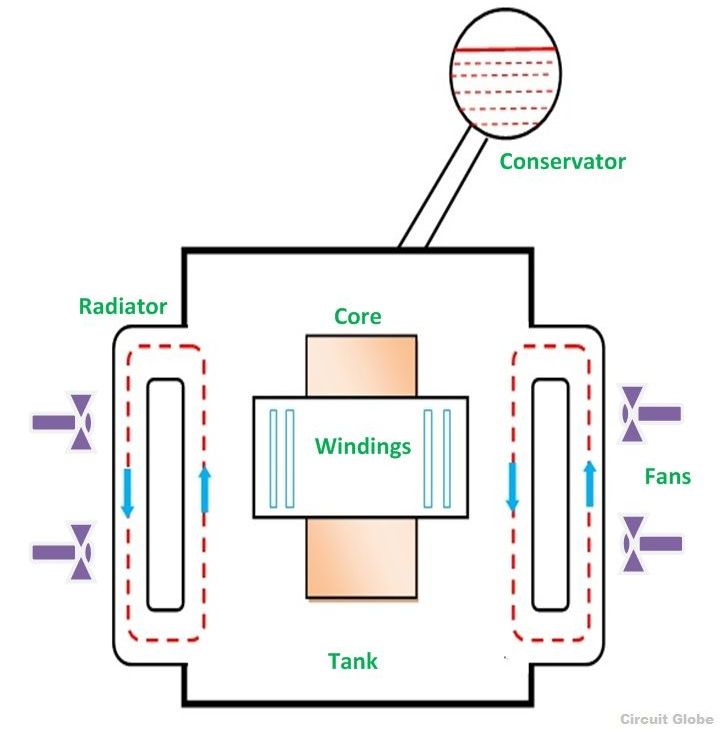
A transformer fault from overheating can rupture an entire distribution grid. So how can we use our engineering mindset to prevent this? Well, how about we take a note from other cooling systems and run a coolant around the wires and core and reject the heat to the ambient space? This is the fundamental idea behind Transformer Cooling which saves tons of transformers each year.

Transformer Oil

Transformer Oil

Transformer Oil

08/07/18

“Is oil used to insulate transformers?”


Transformers are an inseparable part of Critical Grid Infrastructure. And part of their day-to-day functioning requires insulation material. However, such material will have to be able to withstand high temperatures and sudden electric discharges. This is commonly solved using Transformer Oil, a substance employed all around the world.

Winding Failures

Winding Failures

Winding Failures

08/04/18

“How can the winding in a transformer fail?”


Transformers are some of the most essential pieces of critical infrastructure. However, like every other machine, they can break down from time to time. One instance of this is known as Winding Failures. These occur when the voltage on the transformer windings are too close to the ground and fail.

A New Guide For High-Performance Energy-Efficient Buildings in India

A New Guide For High-Performance Energy-Efficient Buildings in India

A New Guide For High-Performance Energy-Efficient Buildings in India

07/26/18

“Is there a new guide for energy efficient buildings in India?”


India is a massive country. With an area larger than the Arabian Peninsula and a population size equal to four times the United States, it definitely has something to say about size. And every single one of those people probably lives, works, and plays in some sort of building. That must be a lot of buildings. And to keep everyone cool and productive in the hot Indian Climate, a lot of energy is going to go towards HVAC and Lighting Systems. Combine this with a large population growth and intense economic development, and it looks like more and more people are going to be in these buildings.


So like any nation with these factors, India should be looking to see how it could supply this future growth in energy. After much studying into this issue, the nation of the Ganges has decided that one of its primary directives must be to vastly increase energy efficiency in the building sector. After working with Lawrence Berkeley National Laboratory, the same center that produced The Rosenfeld Effect, a new Guide For High-Performance Energy-Efficient Buildings in India has been produced. This series of documents delves into how India can achieve its climate change reduction goals with regards to the building sector by addressing its unique workforce, construction activity, culture, and climate.


Bottom line, I recommend that everyone in the energy space should take at least a few peaks at it right here!
Mechanical Ballasts

Mechanical Ballasts

Ship Ballasts

07/21/18

“How can we provide stability to a vessel?”


One of the most important things that a vessel must watch out for is its stability. If the weight is not distributed correctly, then the entire ship can capsize! So how can we use our engineering mindset to solve this problem? Well, what if we were to add some additional weight to another part of the ship to increase its inertia and resilience. This extra weight is called a Ship Ballast and is an essential part of modern Seafair.

Fusegates

Fusegates

Fusegates

07/19/18

“How can we have an extra secure flood control system?”


With the ever-increasing proliferation of climate-change-induced natural disasters, humanity needs to focus on making it’s built infrastructure more resilient. And since floods are becoming more powerful on average with each passing day, our floodgate designs must become stronger in proportion. Fusegates are an illustration of this commitment. Fusegates are formed by placing an inlet well behind ballast in an angled bucket on top of a concrete sill. When water floods into the well, the exceptionally strong stability of the system will be able to counteract the pressure. If an overflow occurs, then the inlet well will be able to stabilize the flow of water. If an exceptionally strong flood occurs, then some of the water will be able to be leaked into the basement and through the inlet for further control.

Drum Gates

Drum Gates

Drum Gates

07/16/18

“How can we control water in a reservoir using valves?”


Water in reservoirs can be difficult to control. If there is too much rain, it can easily overflow. But how can we control this using our engineering mindsets? Well, what if we were to modify the height of the reservoir using a floating drum? And what if we were to place this floating drum in between two mounds, and use a valve to let water in to raise in and another one to lower it? This is the main idea behind Drum Gates and are applied to Floodgates all over the world.