Tag: HVAC

Fault Detection and Diagnosis

Fault Detection and Diagnosis

Fault Detection and Diagnosis

11/25/17

“How can we monitor a facility for component breakdowns?”


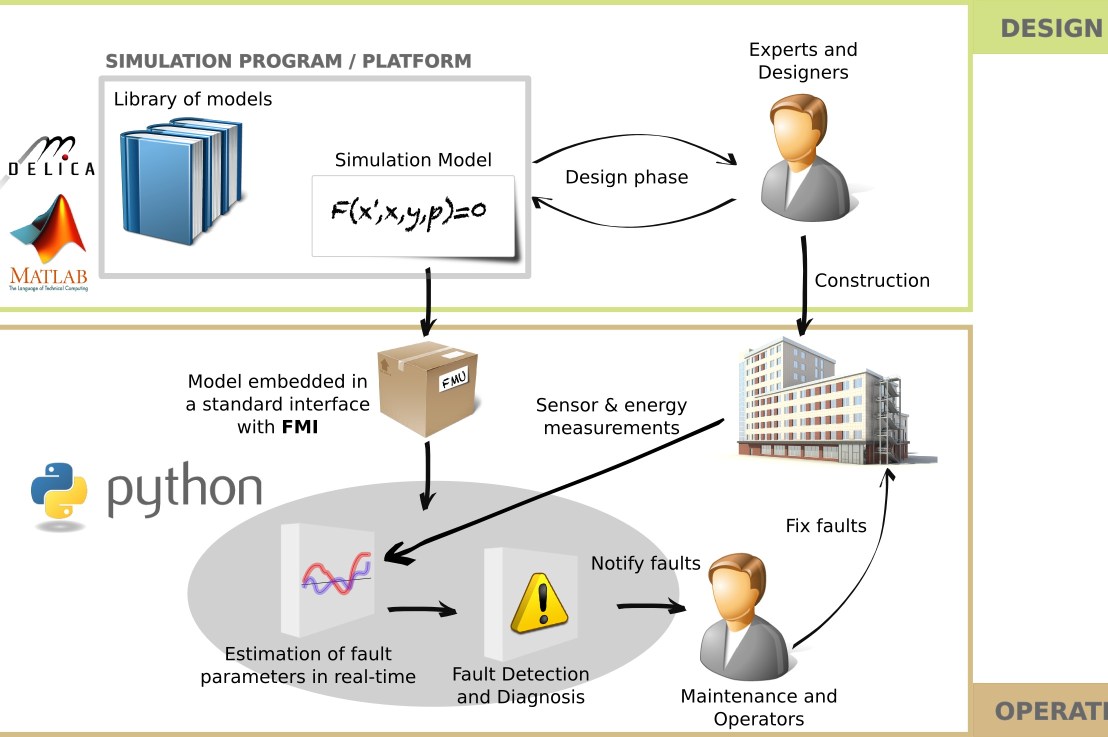
When running industrial facilities, components are very prone to failure, which can cause large amounts of money and energy to be wasted. So how can we make sure that these facilities are protected from such failures? Well, what if we were to implement a network of sensors that would collect data from a facility, which would then be parsed through algorithms. If any of this data finds any strange patterns, it can sort out the underlying cause and solve any issues. This technology is known as Fault Detection and Diagnosis and is one of the most fascinating facets of industrial operations management.
Absorption Refrigeration

Absorption Refrigeration

Absorption Refrigeration

11/25/17

“How do can we apply the laws of physics and chemistry to make a refrigerator?”


Refrigerators allow us to survive in the modern world, whether it be in keeping our buildings cool or our food fresh. However, how exactly do these systems work? Well, let’s look at one such approach.


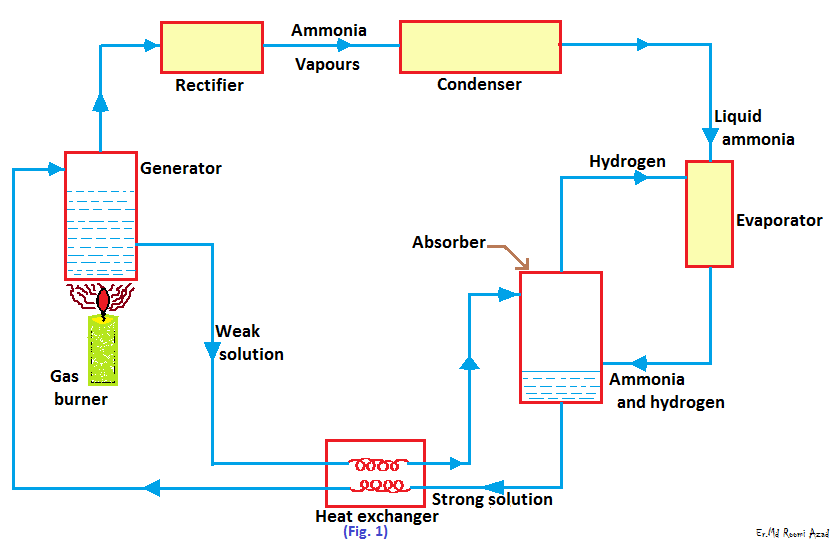
First, let’s start with a solution of hydrogen and ammonia in a boiler. Then, let’s apply heat to separate out these two substances, leading the ammonia gas to a higher pipe and the hydrogen to a lower pipe to be mixed later. Once this is complete, let’s send the ammonia gas through a heat exchanger to condense it into a liquid. Afterwards, let’s shove this new liquid with the hydrogen gas in a freezer (evaporator). The highly reactive chemical reaction will absorb a large amount of heat from the surroundings. The ammonia gas will then be evaporated with a second heat exchanger and sent back to the original boiler, starting the process all over again!

Absorption Refrigeration is commonly implemented in food storage in commercial vehicles and in buildings for waste heat recovery.

The Effect of Refrigeration on Food

The Effect of Refrigeration on Food

The Effect of Refrigeration on Food


11/23/17

“What effect does refrigeration have upon food products?”


Right here in my family’s home in Los Angeles, California, temperatures have broke 33 degrees Celsius (92 in Fahrenheit) this Thanksgiving. Because of this, I have been inspired to write about some of my favorite topics, refrigeration and food.


Before the ascent of electrical HVAC systems, Perishables such as dairy and meat products had to be consumed rapidly. However, with modern day refrigeration technology, we have been able to surmount this barrier and artificially extend the life of our potential meals. It works in a very simple manner. When food is left out in the open, bacteria form and cause it decompose. But if temperatures are low enough, then this bacterial activity will stop, and the food will be able to continue to be fresh unabated. This potential to preserve food without altering its physical or chemical has made it clear why we must be thankful for the effect of refrigeration on food!

Psychrometric Charts

Psychrometric Charts

Psychrometric Charts

11/20/17

“How can we create a chart of a temperature comfort range?”


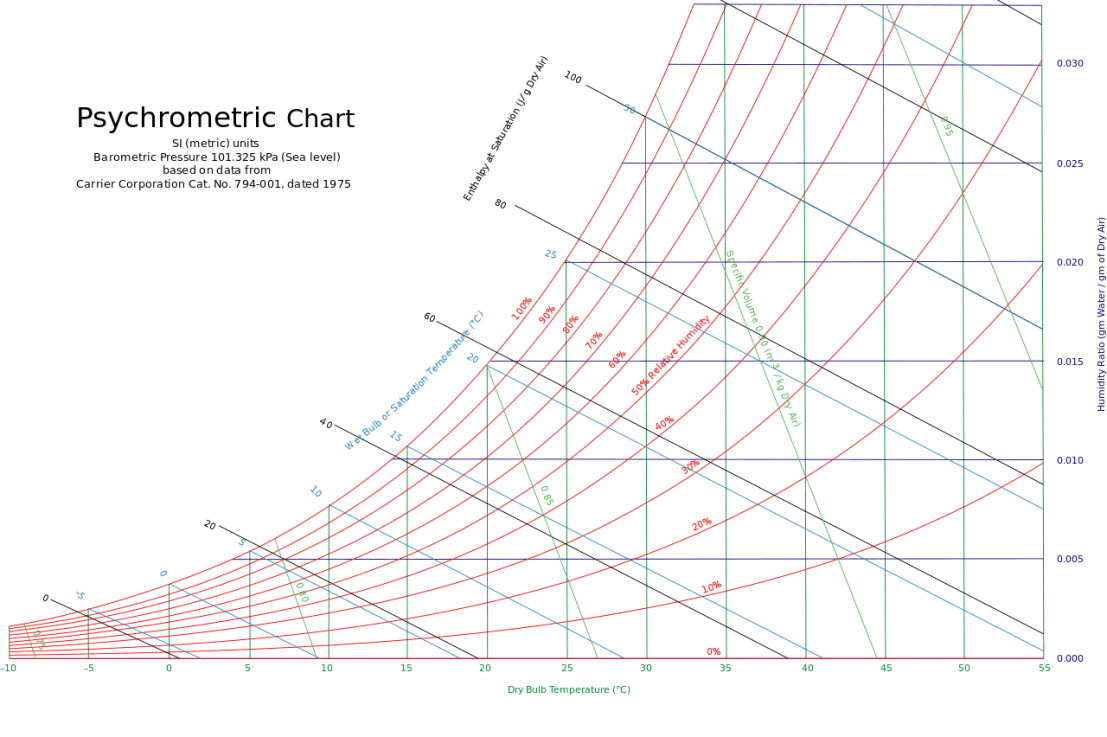
We all know that many different external factors can affect one’s temperature comfort zone. For example, 28 degrees centigrade can feel either pleasant or horrific depending on the relative humidity. So how can we relate all of these complex variables together in a coherent way? Well, many good Engineers, Architects, and Scientists took on this challenge, and decided to create a chart that takes in Dry-bulb (or absolute) temperature, Wet-bulb, Dew Point, Relative Humidity, Humidity Ratio, Specific Enthalpy, and Specific Volume of the local atmosphere to produce a visualization of a temperature comfort range. This is known as a psychometric chart and is one of the most important foundations of modern HVAC engineering.

The Dew Point

The Dew Point

The Dew Point

11/19/17

“How can we measure the point in which saturation occurs?”


When it gets humid outside, it’s very easy for moisture to appear on surfaces. However, why does that happen? Well, the answer lies in a most interesting property called the Dew Point. The dew point is the temperature at which the gas in a given area will condense into a liquid. If an object cooler than this point comes in contact with air, then it is possible for dew to form. HVAC system engineers must keep this value in mind when designing dehumidifier equipment.

The Heat Index

The Heat Index

The Heat Index

Isaac Gendler

11/18/17

“How can we measure how a temperature really feels?”


We all know how to read a normal thermometer. However, when it gets really humid, then oftentimes it will feel much hotter than it really is. So how can we use our scientific mindset to quantify this phenomenon? Well, what if we were to create a formula that combines both the absolute temperature and the relative humidity to produce a value? Well, this is the idea behind the heat index and is used by weather forecasters and HVAC systems analysts all over the world.

Air Handling Units

Air Handling Units

Air Handling Units

11/12/17

“How can we regulate the flow of air in a building’s ductwork?”


Air in a building ductwork needs to be regulated and circulated in order for our HVAC systems to work. However, this can not be done automatically and requires a machine to do so. So how can we use our engineering mindsets to solve this problem? Well, what if we were to simply construct a machine that can take in air, heat or cool it with a coil, and then return it as circulated air? Well, this is the fundamental idea behind an air handling unit and has become a staple of buildings worldwide. Air handling units often have integrated control systems to assist in dealing with complex environments

Industrial Applications of Humidifiers

Industrial Applications of Humidifiers

Industrial Applications of Humidifiers

11/11/17

“How can we design humidifiers for industrial needs?”


Humidifiers are widely used to make personal spaces much more habitable. However, can this technology be utilized for industrial applications as well? Well, it turns out that many processes actually need to be undertaken in less dry conditions because static air friction becomes more prevalent. To illustrate, the this buildup of dry air in data centers and manufacturing facilities could cause static electricity to discharge. Art museums also need to keep paintings at a certain humidity to protect works of art. As you can see, there are in fact many many industrial applications of humidifiers!

Humidifiers

Humidifiers

Humidifiers

11/10/17

“How can we increase the humidity of a building using machinery?”


When humans are immersed in overly dry environments for too long, they may develop health issues such as dry mucus. However, given that we are in the modern technological age, we can stop this issue if only we apply our engineering mindsets. The fruit of such an effort is a contraption known as a humidifier, which adds moisture to the atmosphere to create a more habitable environment.