Tag: Fluid mechanics

Floodgates

Floodgates

Floodgates

07/11/18

“How can we use infrastructure to control floods?”


With the advent of climate change, floods are becoming quite more common. But thanks to human ingenuity, this can be prevented through the use of floodgates. Fllodgates are a common form of flood control which can protect towns from nearby flooding by creating adjustable gates that limit water elevation.

Prandtl Number

Prandtl Number

Prandtl Number

04/12/18

“How can we quantify the ratio between momentum and thermal diffusivity?”


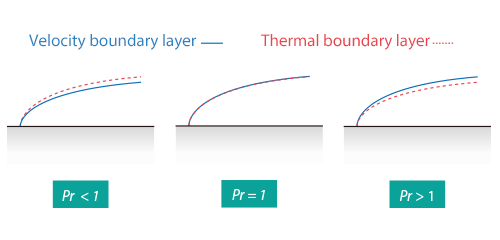
For fluids flowing over an object’s surface, momentum and heat will be transferred, oftentimes at different rates. How quickly one changes with respect to the other will completely affect its properties. As a result, engineers have devised something known as the Prandtl Number, which compares the diffusivity of momentum and heat as a ratio, symbolized as pr = c_p*Mu/k with C_p being the specific heat capacity of a gas at constant pressure, Mu being the dynamic viscosity and k the thermal conductivity.

The Reynolds Number

The Reynolds Number

The Reynolds Number

04/06/18

“How can we predict if a fluid flow will be laminar or turbulent?”


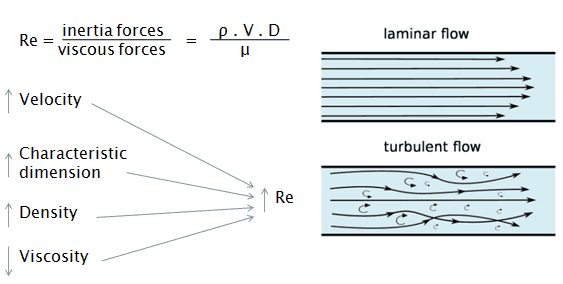
Fluids have a most remarkable form of movement with their flow. Some are laminar as a calm lake while others thrush around with the turbulence of a roaring river. But how can we predict if a fluid flow will be either turbulent or laminar? Well, let’s think about it using our engineering mindset. We know that two types of forces act on a moving fluid, inertial and viscous forces. The former are forces that tend to move an object, such as a pressure difference or momentum, while the latter are ones that tend to keep a fluid’s movement neutral, such as friction or momentum loss. It would be logical that if the former were stronger, then the fluid would be freer to move and therefore create turbulence while the latter would keep everything mellow and laminar. So what if we were to take the ratio of these forces and classify fluids based on it? Well, this is known as the Reynolds Number and is used to predict the flow type of a fluid. For simple fluids, the Reynolds Number can be expressed symbolically as Re = rho *v*L/mu, where Re is the Reynolds Number rho is the density of the fluid v is the velocity L is the characteristic linear dimension of the fluid and mu is the dynamic viscosity of the fluid.

Natural Convection

Natural Convection

Natural Convection

03/29/18

“How can we have convection occur without having to input any energy?”


Heat can be transferred in a fluid medium using convection. An easy way to induce this is to use a power source to move some mechanical equipment, whether it be a fan or a pump. However, can convection occur without any external input? Well, let’s use our engineering mindset to solve this problem. We know that if we heat up a fluid, then its molecules will move around faster. And if molecules move around faster in a gas, then the gas will become less dense. And if one region of a gas is less dense than another, part of that gas will move in to cover it. This way, we can create what scientists and engineers call Natural Convection. Natural Convection is the main mechanism behind everyday phenomena such as air circulation and radiators.

Motor Oil

Motor Oil

Motor Oil

01/31/18

“How can we prevent automotive parts from wearing out?”


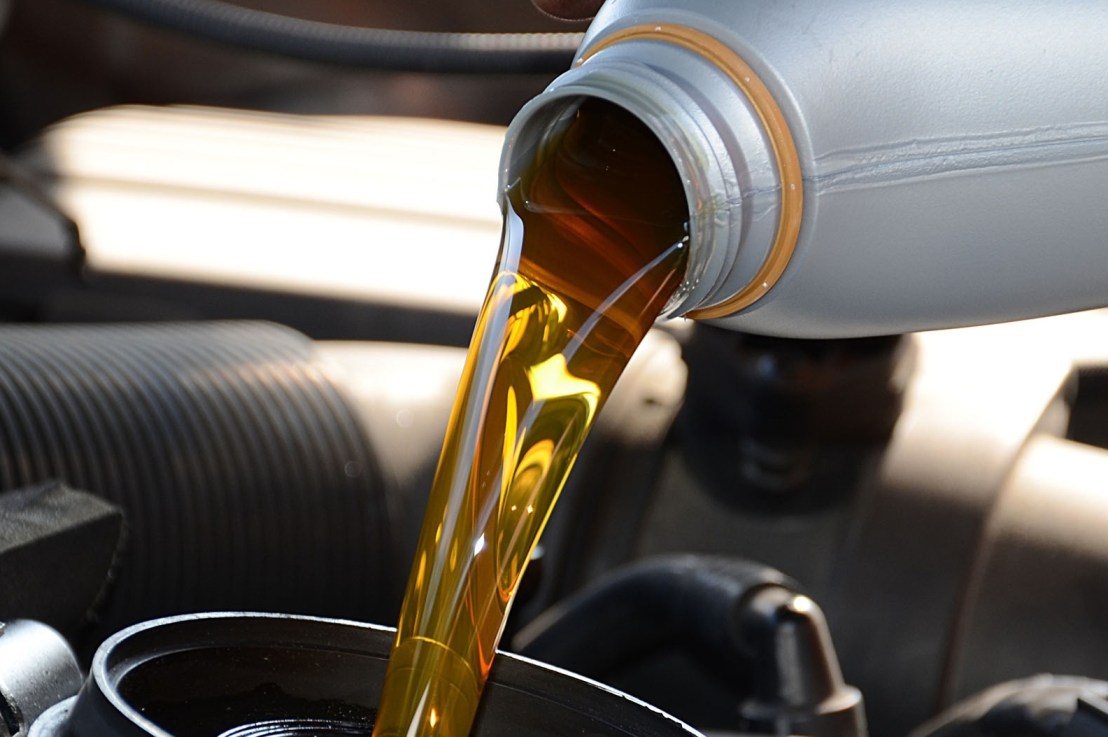
Automotive vehicles are some of the most powerful machines in the world, with a multitude of mechanisms moving at blinding rates. However, if objects move fast with friction, then wear will have to be induced. So how can we prevent these machines from wearing down? Well, let’s use our engineering mindset to find out. We know that if we apply a fluid interface between two objects, then the resulting lubrication will result in much less wear. Because of this, car engines use something called motor oil to increase a vehicle’s lifespan! Most motor oils are derived from crude oil, which can be of links between 18 and 34 carbon atoms per molecule, being completely unsustainable. Electric vehicles, not possessing internal combustion engines, do not require motor oil.

Evaporator Coils

Evaporator Coils

Evaporator Coils

01/17/17

“How can we remove heat from an area?”


HVAC systems are used to cool down rooms. However, how exactly do they do the cooling part? Well, if you were to move a cold fluid through a warm area, then heat would be transferred from the air to the working fluid. As a result, we can construct something called an evaporator coil, which moves the cooled refrigerant to be exposed to the surroundings.

Nozzles

Nozzles

Nozzles

09/09/17

“How can we control the flow of a fluid?”


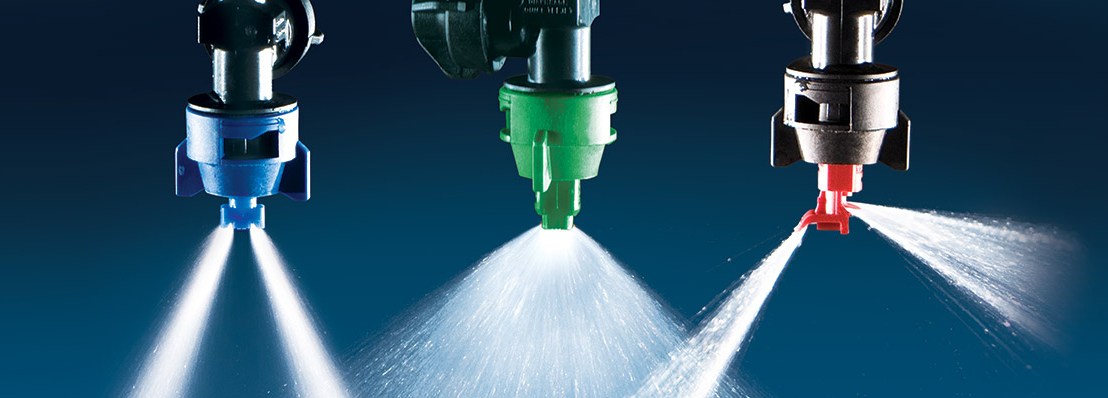
Fluid flows can be used for a wide variety of processes, whether it be in regulating an HVAC system, maintaining a nuclear power plant, or operating a jet engine. However, sometimes we may have to modify the flow’s characteristics to fit our needs. So how can we accomplish this using our engineering mindset? Well, what if we were to make a tube of varying cross-sectional area that would force the fluid into changing? This is the fundamental idea behind a nozzle and is used in a wide range of engineering systems.

Ventilation

Ventilation

Ventilation

12/29/17

“How can we keep a building’s air fresh?”


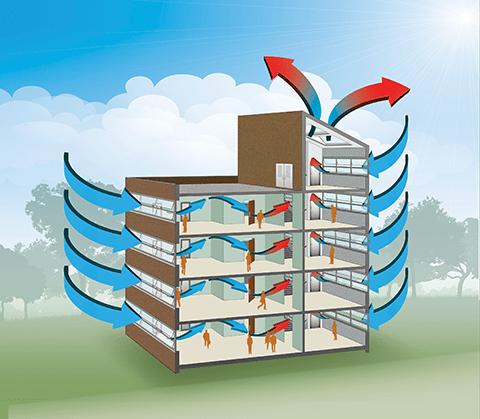
Buildings are great for enclosing an interior space. However, if there is no contact with the outside, then the air inside will become trapped and polluted. So how can we make sure that fresh air is continually supplied without overcooling the building? Well, we can use something known as ventilation, that allows some air to pass in and some to pass out, creating a continuous cycling of air. Ventilation is a fundamental part of the built environment and has become of the most important standards.