Tag: Energy

Thorium energy

Thorium energy

Thorium energy

04/15/17

“Wait, there’s another way to make nuclear energy?”
Traditional nuclear power plants use the decomposition of uranium 235 through fission to generate energy. However, This process is unstable and dangerous. But is there another way that we can generate nuclear energy? Well, let’s use our engineering mindset to find out. If look into fundamental chemistry, we will run into a most peculiar atom known as thorium. When Thorium is hit by an extra neutron, it will begin a decay process that ends with a transformation into uranium 233, which will produce energy when the object itself is hit by a neutron.  One of the primary benefits of thorium energy is that it does not produce Uranium 238, therefore being much less pollutive on a 10,000-year scale, as well as being more plentiful. Many countries (notably India and China) are looking in to develop their own Thorium energy systems, and it might prove to be the nuclear power of the future.
Pipeline transport

Pipeline transport

Pipeline transport

04/14/17

“How can we move fuel over long distances?”


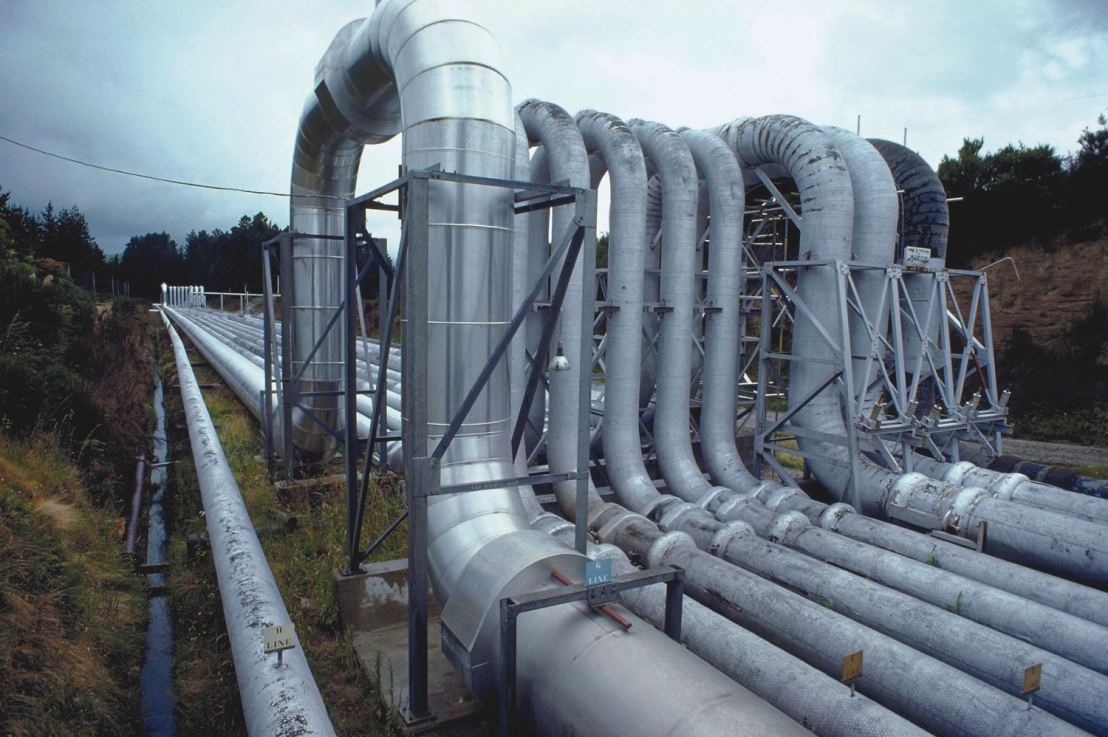
Human infrastructure has a logistics problem. The resources needed for the operation of our civilization (such as water and petroleum) are produced in locations far, far away from where they are consumed. So how can we devise a mechanism to transport these materials over long distances? Well, let’s use our engineering mindset to solve this problem. We know that these resources are often extracted in fluid form. And we know that one way to transport fluids is to use piping systems. So what if we were to use giant pipelines strewn throughout the landscape for the transportation of this material? Well, it turns out that pipeline transport of resources is more than a theoretical idea but a practical reality, and is used by almost every country in the world.

Nuclear fuel rods

Nuclear fuel rods

Nuclear fuel rods

04/11/17

“What holds nuclear fuel during fission?”


It is a well-known fact that nuclear reactors obtain their energy from fissionable materials. However, how exactly is this material fed to create nuclear energy? Well, let’s take use our engineering mindsets to find out. Upon inspection, we can observe that nuclear fuel takes the shape of cylindrical objects known as pellets, which are encased in solid nuclear fuel rods. These nuclear fuel rods are then grouped together in assemblies, and in turn form the bulk of nuclear power generation

Compact fluorescent lights

Compact fluorescent lights

Compact fluorescent lights

03/09/17

“How do the lights in our households and workplaces work?”
With the advent of energy efficiency standards, most light bulbs in our homes, schools, and workplaces are now based upon fluorescent lighting technology. However, how exactly do these compact fluorescent lights? Well, let’s use our engineering mindset to find out. Let’s start by taking apart a fluorescent light bulb. If we do so, we will notice that there are three components: A screw base, an electronic ballast, and a spiral lamp. The base is the “bottom” portion used to fit the lamp into a lamp holder. Next, in the interior, the electronic ballast consists of a complex circuit. The electronic ballast will take in AC electricity from the grid at one phase and convert it into AC electricity at a much higher phase. This “stepped up” AC electricity will allow for a frequently changing current, which will be useful in exciting the surrounding gas to produce light. CFLs are up to 4 times more efficient than traditional incandescent lights and last ten times as long, while also being far more efficient (in fact, a CFL bulb can reduced carbon emissions by over a half a ton over the course of its lifetime!).

Supergrids

Supergrids

Supergrids

04/07/17

“Could we make a grid that could cross continents?”
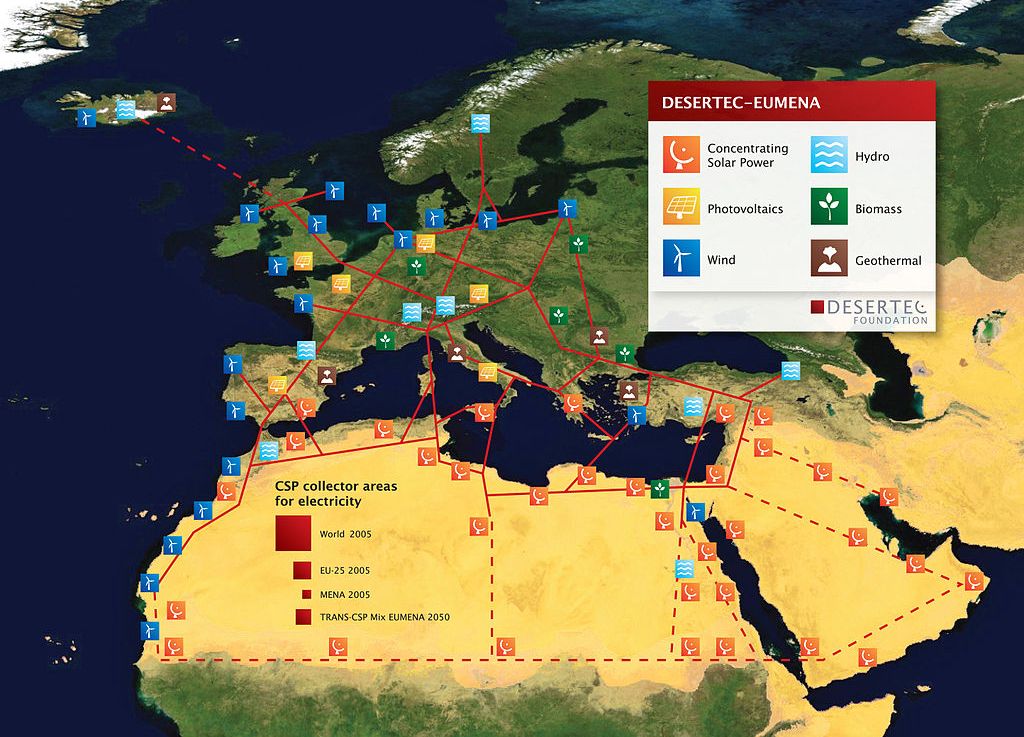
Imagine this. What if at some point in the future there could be an electrical grid system so advanced that it would be able to span entire continents, such that solar energy from sun-kissed areas such as Sub-Saharan Africa or Israel would be able to power dreary countries such as the Netherlands or Poland, or wind power from Brazil traversing its way through the amazons to light up the Peruvian capital of Lima before sundown. Well, believe or not, this technology is in development as we speak. Researchers from around the world are working on creating a technology known as a supergrid. Supergrids are HVDC-based grids that can surpass the past roadblocks of more primitive DC networks by using circuit breakers to cut malfunctioning power lines from contaminating the rest of the grid.  

Wide area synchronous grids

Wide area synchronous grids

Wide area synchronous grids

05/06/17

“How do electrical grids operate at large scale?”


Electrical grids are one of the life beds of modern infrastructure. However, since the power demands of humanity are too large for a single system to handle, the grid must be grouped into different synchronous “zones” to ensure smooth operation. Because of this, engineers have designed a framework that uses multiple distinct areas called wide area synchronous grids (WASGs) to operate at a synchronized frequency. WASGs in North America typically operate at 60Hz, while ones in Europe work at 50Hz. Interconnections between grids can be made by using HVDC lines. WASGs allow for energy generation pooling, which allows for lower generation costs.

Energy payback time

Energy payback time

Energy payback time

04/04/17

“How long does it take solar panels to recuperate the amount of energy taken to construct them?”
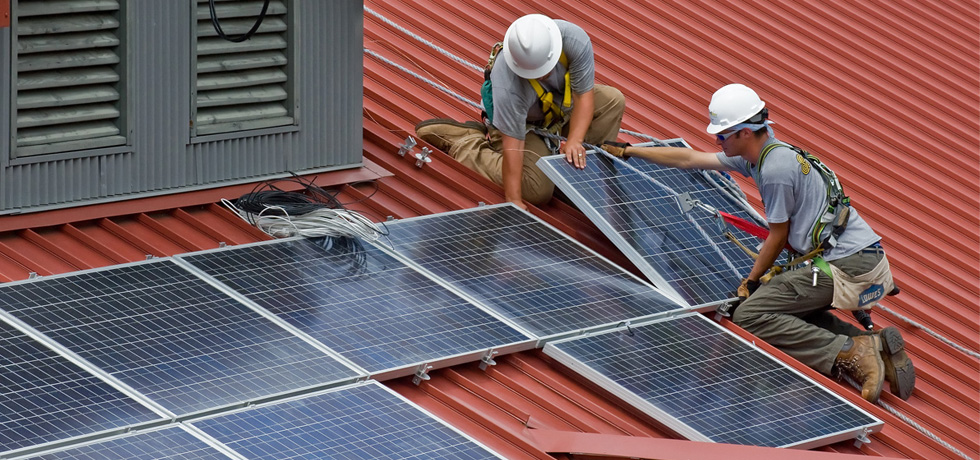
Solar panels produce energy in a safe and sustainable manner. However, it also takes energy to create these machines, and many individuals argue that it might take more energy than it is worth. So how can we estimate the time needed for a solar panel module to recuperate its production energy? Well, let’s solve this question by thinking like engineers. We can reason that energy payback time is fundamentally a problem with two variables, the amount of energy it took to create the specific type of module and the amount of energy the module produces over its lifetime. The former is contingent upon the processes involved during construction of the module, and the latter depends upon the geographic location of the module as well as its efficiency. Therefore if know these variables, we can estimate the energy payback time. The energy payback time for solar panels can range from 3.3 years for a monocrystalline panel in Canada and Northern Europe to nearly 8.5 months in California and Africa using thin-filmed photovoltaics! With this data, we can defeat the pseudo-fact that solar PV systems take an enormous amount of time for a return on investment.

Solar powered prosthetic skin

Solar powered prosthetic skin

Solar powered prosthetic skin

03/24/17

“Is it possible to use solar power to power artificial skin?”
Many individuals on this planet suffer from skin related wounds, whether it originates from combat, accidents, or sustenance abuse. But with the advance of prosthetic engineering, artificial skin capable of intercommunicating with the human brain is coming out of the realm of science fiction and into science fact. However, since these machines are contingent upon electrical signals, power is needed to be provided for operation. So how can we use our engineering mindsets to solve this problem? Well, luckily for us, Dr. Ravinder Dahiya of the University of Glasgow school of Engineering has developed a solution using one of my favorite technologies, solar energy. In a recent paper published in the journal Advanced Functional Materials, Dahiya and his team illuminate us on how a graphene-based artificial skin can be underlaid with thin-film solar photovoltaics to provide all necessary power! This is an astounding discovery and one that is sure to assist the lives of many individuals in a most benevolent way. Dahiya states that further work needs to be done on creating an energy storage system to capture all energy generated by his system, which could then be used to power external electrical systems.

Nuclear power generation

Nuclear power generation

Nuclear power generation

02/12/17

“How exactly is Nuclear power generated?”
We hear about nuclear power very frequently in our lives. However, how exactly does it work? Well, to start let’s look at the process. The fundamentals of nuclear power start with two elements, uranium-238 and uranium 235. U238 composes the majority of uranium in a nuclear power plant, but perhaps the most important of the two is u235. Uranium 235 is very unstable and will decompose rapidly through nuclear fission. When U235 decomposes, it’s neutrons will be thrust throughout space. When these neutrons collide with U238, the element will be shattered into a stream of different particles, which will hit other elements. This quickly sets up a chain reaction which produces a large amount of heat. This heat is then used to boil water to generate steam to move a turbine which generates electricity.