Tag: Electromagnetism

Electrodes

Electrodes

Electrodes

08/07/16

“How does electricity pass from one medium to another for engineering purposes?”


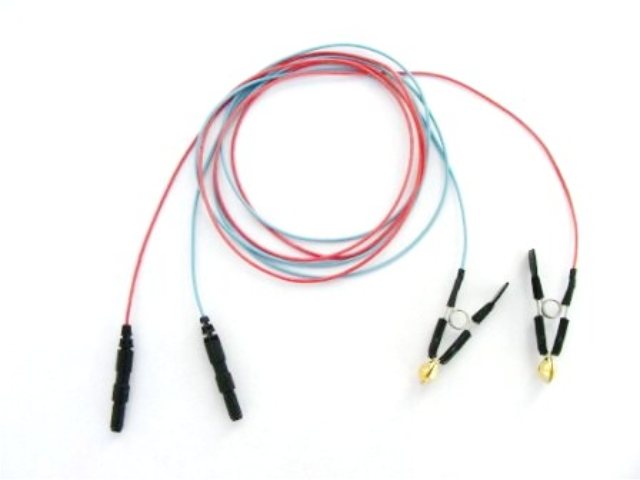
Have you ever wondered what allows for electricity to flow through a circuit? Well, let’s think about it. A circuit usually includes a battery. And this battery is electrochemically charged so that one side has a  positive charge and another is negatively charged. This creates a potential difference, which can be used in a circuit do do work. In order to do that, there must be some form of conductive material hooked up to the battery so that such work can be done. Now, this is where the electrode comes in. An electrode is a conductor that can transport electric current from one medium to another. The electrode in a circuit will be hooked up the negatively charged end called the cathode, and transport it these electrons to the positive end called the anode.


3-phase electrical motor

3-phase electrical motor

3-phase electrical motor

08/06/16


“How can further we optimize an AC motor?”
We have a problem. AC motors by themselves are very inefficient for turning large armatures due to the fact that the voltage variation does not provide enough power to turn it. However, as engineers, how could we solve such an issue? Well, how about instead of having just one phase of electricity, we have three distinct phases of electricity acting simultaneously! Now let’s think about how we can implement this. If the voltage variation of an AC motor goes through a 360 degree cycle, then we can split this cycle up into 3 120 degree parts, and have one cycle shifted 0 degrees, one shifted forward 120 degrees, and another shifted backwards 120 degrees so everything is mathematically precise! Engineers have termed this setup a 3-phase electrical motor. Not only does this setup drastically increase the power one could use, but it also makes it easier to rectify AC current in to DC

Undesired Arcing

Undesired Arcing

Undesired Arcing

08/05/16

“How can electrical arcing go haywire?”


Like any action undertaken with machinery, electrical arcing has the potential for serious problems and mishaps. Undesired electrical arcing is when an electrical arc is created when one does not want that to occur. For example, this can occur when a low resistance channel (such as dust) comes in between the places of voltage. This will cause an early discharge, which results in an electrical arc being formed, which ends with a complete disaster.

Magnetic field polarity

Magnetic field polarity

Magnetic field polarity

08/03/16

“Why do scientists describe magnets as having a north and south pole?”


Magnets are very interesting pieces of the physical universe. They seem to be able to attract and repel objects with a completely invisible field. However, why is it that one side of a magnetic field can attract objects and the other side repel, and how can we describe the direction of this physical field?

When studying magnetism, scientists and engineers have decided to describe the flow of magnetic field in terms of polarity. All magnets have  are fundamentally dipolar, which means that one side is like the “positive” charge on an electron, while another is like a “negative” charge. Similar to electrons, opposite polarities attract and like ones repel. However, instead of being called positive and negative, these sides of a magnet are called the north and south poles respectively, almost like how the earth has a north and south pole (speaking of which, the earth’s magnetic poles are actually opposite of the geographic poles, but that is a topic for another time). For specifying the direction, Physicists have constructed the system so that the magnetic field will point from the north pole to the south.

Eddy current braking

Eddy current braking

Eddy current braking

08/02/16

“How can we apply the theory of eddy currents to transportation?”

What separates scientists and engineers is very simple, scientists discover new phenomena about the natural universe, while engineers take this knowledge and apply it to accomplish something useful. For example, scientists might discover that a specific current forms when conductors had a changing magnetic flux is applied to it, and name it something like eddy current. Now, how could an engineer take a phenomena like this and make it do something productive for humanity?

Well, let’s think about it like an engineer. We know that this current occurs because of an external magnetic field. Furthermore, we know that when current interacts with an external magnetic field, a perpendicular force is formed on the medium of the current. So let’s go further and think about we can do with this force. Well, a force can oppose motion, so how about we take this physical phenomena and apply it to an area that involves motion, namely transportation.

Let’s suppose that we have wheels made out of a conductive material, and that these wheels are moving at a certain RPM. If we take a magnet, and put the wheels in between both poles, then the constantly moving wheels will experience a constantly changing magnetic flux since parts of the conductor will always be moving into and out of the field. This will in turn generate an eddy current, which will produce a force that opposes the motion of the wheel, which in turn will cause it to slow down and brake. Engineers have termed this mechanism eddy current braking. Eddy current are so popular that they are used in many different cases, whether it be recreational gym equipment or high speed electric trains!

Hallback array

Hallback array

Hallback array

08/01/16

“How can we create a one-sided magnet?

We have a problem. Suppose that we want to create a magnet, but with one very simple yet very difficult constraint, we want the magnetic field to be only present on one side.
Now that we have decided on the requirements, let’s use our engineering abilities to bring this idea into reality. Our main problem is that magnets fields are usually symmetric on both sides because the polarity of the entire material points in the same direction. Now, how can we get around this physical phenomena to acheive our goals? Well, luckily for us, there is another facet of magnets that could be quite cordial to our goal if applied correctly. If two magnetic fields interact with eachother and go in oppossite direction, then there would be a cancellation of force. Now, what if instead of having one continuous material with each part having the same magnetic direction, we were to fasten discrete blocks together, with each the polarity of each block being 90 degrees perpendicular to the block before it? With this method, the magnetic fields on one side of the blocks would cancel out while the fields on the opposite side would super-combine, giving us a nearly one sided magnet if the this pattern repeats. Scientist and Engineers have termed this type of arrangement a hallbach array. Believe it or not, you probably see hallbach arrays everytime time in the morning, as hallbach arrays are what what makes refridgerator magnets work!

AC motors

AC motors

AC motors

07/15/16

“How can we apply AC electricity to motor technology?”

Motors are undoubtedly one of the most useful inventions by humanity. However, how can we integrate this concept with AC electricity? Well, let’s build such a machine in our mind first. This machine will have two primary parts, a stationary stator and a rotary rotor.  The stator consists of a series of highly permeable steel laminations cast inside a circular frame. Winding will pass through this stator, and when AC current is passed through this winding, an electromagnetic field will be formed. This current will go in three phases, so each starts at a different third of the AC cycle, and because of these three different phases, a constantly rotating magnetic field will be formed. A conducting cage will be housed inside the stator to act as a rotar. Since conductors experience a force when exposed to a constantly changing magnetic field, the rotor will begin to rotate, causing mechanical power to be generated. The Speed of the rotor is called the rotor speed, and the speed of the magnetic field is called the synchronous speed. Due to the laws of physics, the rotor will never be able to catch up to the synchronous speed.


Linear motors

Linear motors

Linear motors

07/14/16

“What would happen if you made a machine by unfolding a rotary motor?”

Let’s suppose that we want to move something in a linear direction in a highly efficient manner.  What if we took a rotary motor, and unfolded the shell so it would move in a linear direction? Believe it or not, not only does this work in theory, but it has been accomplished before. Engineers have termed this mechanism a linear motor.

To get the big picture, the linear motor works as follows; A square forcer will include an iron core and a thermal protection device. This forcer will rest on a stator will encase magnets, electric wires, a base, and a shield. A Linear guideway will be placed in between the forcer and the stator to allow for movement of the former. The forcer will be housed in forcer plates, and finally a position encoder will be attached to provide feedback on the position of the linear motor. The forcer moves because the controller will provide a constantly changing current at different times to the windings, which in turn will interact with the conductive rotor, causing a magnetic force on the forcer, which will move the rotor at very high speeds.

Linear motors are very pragmatic for many uses. Linear motors have no wearing parts, which makes them faster to build, have longer life cycles, have more efficient temperature control, have higher velocities, and much less polluting to maintain. Linear motors are often applied for industrial, servomechanism, and transportation purposes. Countries such as Germany, Japan, China, the , and the USA are currently using or considering linear motors for transportation purposes.


Eddy Currents

Eddy Currents

Eddy Currents

07/13/16

“What happens when a conductor moves through a magnetic field?”
Let’s consider a situation. Say we have a conducting material, such as copper or iron. And let’s also say that we are going to pass this material through a magnetic field. Since conductors contain electrons, and when electrons move at a speed relative to a magnetic field, a force will be generated. And since conductors allow electrons to move within the internal structure of the material, these electrons will swirl around in a way so that they generate a magnetic field that opposes the original magnetic field. Because such movement of electrons are circular in nature, scientists and engineers have termed this phenomena eddy currents.