Tag: Electromagnetism

Magnetic repulsion bearings

Magnetic repulsion bearings

Magnetic repulsion bearings

04/16/17

“Can we use magnetism to improve bearings?”


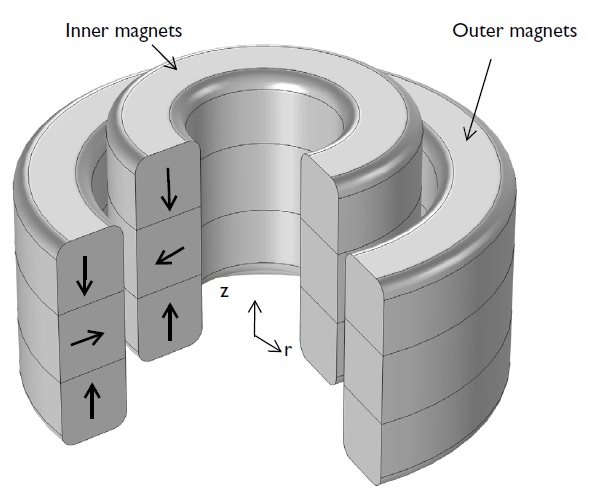
Normal bearings use mechanical forces to lock onto a rotor. However, this method can be made highly inefficient due to heat and frictional losses resulting from contact. However, can we use our engineering mindset to improve this system? Well, to start, let’s look at the root of the problem, the mechanical contact. If we remove this feature, then our system can work with much fewer impingements. One way to create a non-contact grip is to use a magnetic force. So what if we made bearings that make use of magnetic levitation technology to keep in contact? Well, this is the exact idea behind magnetic repulsion bearings, which use a repulsive force to achieve passive levitation. Not only does the repulsion effect keep the bearing afloat, but it also introduces a self-centering mechanism, so if one part becomes to close it will be repelled away.

Charge controllers

Charge controllers

Charge controllers

01/12/17

“How can we ensure that a battery does not get depleted or overcharged while we are using it?”


Much of our current technological operating infrastructure rests upon battery technologies. These simple devices allow us to store energy in a portable format for later use, such as in electric vehicles and micro-grid systems. However, because they are so vital for many systems, if they become depleted or overcharged, then all operation could be thrown into catastrophe. So how can we modify such systems to ensure that the state of charge for batteries are always at a stable level? Well, let’s use our engineering mindset to solve this issue. For this sort of problem, it looks like some sort of monitoring would be needed. So what if we made a device that could sense if a battery was becoming overcharged or over discharged it would shut down current? This is the operating principle behind a technology known as charge controllers, which have become an essential part for numerous renewable energy systems.

Microgrids

Microgrids

Microgrids

12/29/16

“Is it possible to have your own autonomous grid?”
Electrical grids usually have a leviathan-like size to them. This immense magnitude often comes with numerous drawbacks, such as lack of autonomy for local stations in case of a power outage. So what if were to develop our own grid that would connect and disconnect at will to the larger grid? This is the fundamental idea behind a technology that engineers term a microgrid. Microgrids are self-sustaining structures that can be separated from the larger grid through the use of a switch. Because of their autonomous nature, microgrids can be used to create stable islanding areas with renewable energies. These islanded microgrids are often used for high-security areas, such as the Alameda County Santa Rita Jail in Dublin, California.

Smart grid

Smart grid

Smart grid

12/28/16

“How can we advance the grid into the 21st century?”


The grid as we known it is heavily outdated. When the grid was first conceived of a century ago, the users lived in heavily localized areas, and often only had a few electrical needs, often all electrical appliances could be counted on one hand. However, as just as how electrical technology has matured in an exponential fashion, so has the complexity of the systems, resulting in a strained communication with the grid. We now have dozens if not hundreds of vastly more complicated items being used, each carrying different power requirements, with more being added at a superfluous rate. This is causing grave impingements on our grid, which could lead to pure devastation. So how can we apply our engineering mindset to take our aging electrical infrastructure into the 21st century? Well, why not just implement a two way grid communication system, also known as a smart grid? The fundamental idea is that all electrical signals from this new grid will be monitored and regulated by computer technology. To illustrate, a smart grid will be able to analytically distribute the voltage of electricity to units that require more of it, while supplying less to less intensive units. A smart grid will also be able to integrate more efficiently the sinusoidal nature of renewable energy sources like wind and solar through this monitoring technology. Smart grids are a foresightful investment, and will truly be the technology of the future.

The electrical grid

The electrical grid

The electrical grid

12/27/16

“How exactly do we obtain our electricity from power plants?”


It is very well known that humanity generates large amounts of electricity using power plants, and then consumes it for their appliances, whether it be residential or industrial. But how does this raw power get transferred? Well, it turns out that this system is in fact the largest machine our civilization has ever built, the electrical grid. The electrical grid is the summation of all of the power transmissions systems which take in energy from a generation source and transport it to our appliances. The electrical grid primarily uses high voltage transmission lines and step-up transformers to accomplish this task.

Ohm-meter

Ohm-meter

Ohm-meter

11/27/16

“How can we measure the resistance in an electronic component?”


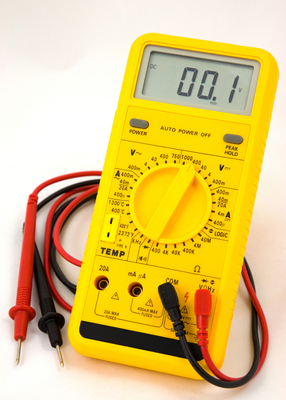
Electronic structures such as resistors play a vital part in the workings of electrical devices through the use of resistance. However, how can we measure such a phenomena empirically? Well, let’s use our engineering mindset to figure it out. Firstly, we should be aware that it is possible to experimentally measure both the voltage and current between two points, and that the resistors of a circuit is equal to the voltage divided by the resistance (R = V/I). Therefore, it would be most rational to combine these two facts, and synthesize a most useful device known as the ohm-meter.

The biot-savart law

The biot-savart law

The biot-savart law

11/25/16

“How can we symbolically describe the magnetic field generated by an electric current?”


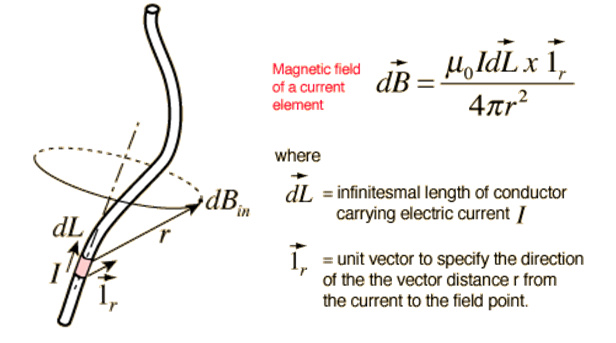
As stated before, an electric current will generate a magnetic field. However, how can we put this into symbolic form for quantitative purposes? Well, thanks to the hard labor of prior scientists, we have a mathematical relationship known as the Biot-Savart law. The biot savart law defines the relationship between a magnetic field and an electric current as dB = (Mu_0*I *dL*l_r)/(4*pi*r^2) , with Mu_0 being the permittivity of free space, I being the current, and dL being the displacement vector (the distance between the current and some location in the field).  

Why do rechargeable batteries wear out?

Why do rechargeable batteries wear out?

Why do rechargeable batteries wear out?

11/23/16

“So why do they?”

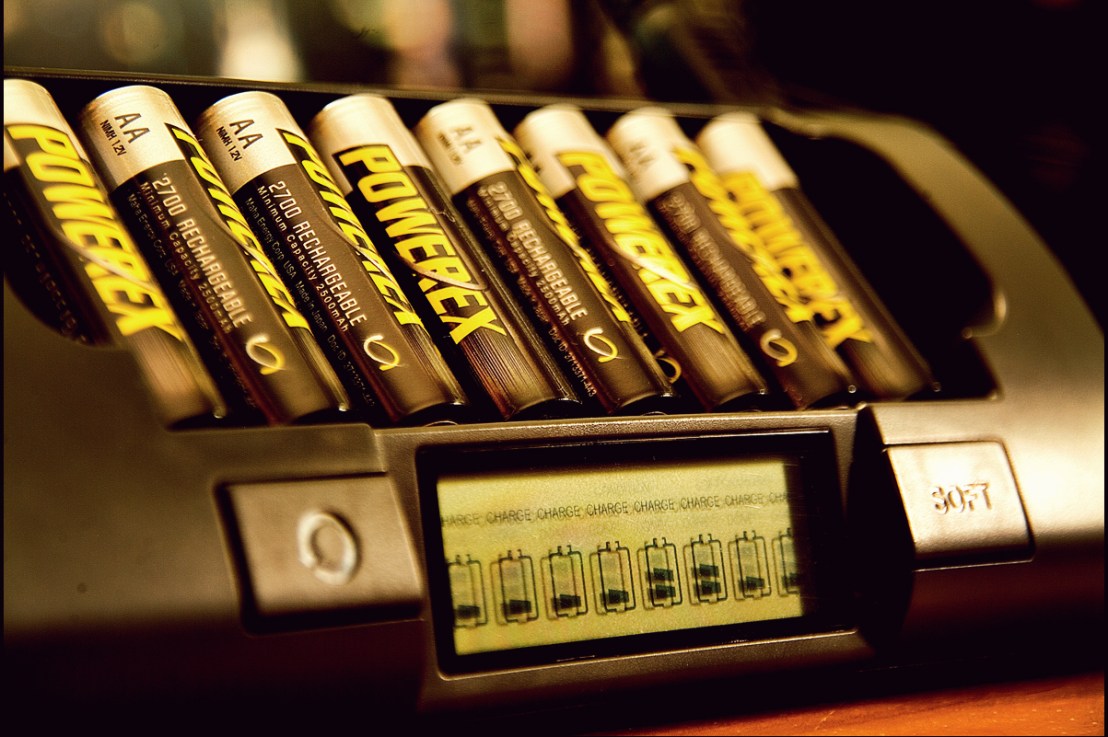
Rechargeable batteries can be a very worthwhile investment. For just a small amount of money, one can save not only save the environment but also much pain irritation from having to unceasingly find new batteries . However, something one very vexatious impinging factor on their worthwhileness is the fact that rechargeable batteries tend to wear out. Specifically, the more one recharges a battery, the less charge the battery will be able to hold. But why does this happen? Well, it all comes down to a the way that it works. Rechargeable batteries charge by using a transfer of ions through an anode and a cathode to convert active energy into potential energy  . However, this process will wear down the anodes and cathodes over time, leading to a degradation of internal materials which in turn leads to increased inefficiency. Therefore, the more time one charges a battery, the less productive it will be.

Voltage

Voltage

Voltage

10/16/16

“What is voltage?”


Often times, when you read about electronics, you hear about some abstract measurement called voltage, but what exactly is this concept? Well, Voltage is defined as the difference in electrical potential between two points in space. Basically,  one can think of voltage like the electrical equivalent of pressure difference between two points in space, so the more voltage there is between two points, the more “push” there is associated with it. For example, just like a high pressure piping system is necessary to drive a turbine, a higher voltage system might be necessary to power more powerful electronic equipment. The unit for voltage is measured in volts, which is defined as one potential energy per meter, meaning that this would be the work done moving one unit charge. Voltage is occasionally called the “EMF” (especially in respect to batteries).