“Is there a control method that tries to sets a function at its extreme value?”
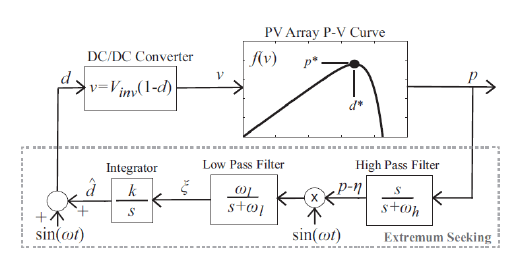
Control Theory is a deep subject. There seems to be a control method for every situation. And one of those situations might happen to be one where people are trying to keep a function at its extremum (the maximum or minimum absolute value). This Extremum Seeking Control allows for this to happen, and also gives it the privilege of heightened sensitivity reduction and disturbance rejection.
“How can we measure how long it takes for an energy generator to come online?”
Things in the physical world tend to have inertia. Electricity generating sources are no different. As a result, they will have a ramp rate in kW/minute that measures how long they take to come online.
Autonomous vehicles, archeological scanning, soil imaging, and automated agriculture all rely on knowing real-time distance to work. However, how exactly can we accomplish this? Well, let’s use our engineering mindset to find out. We know that if we send a beam of light from a laser somewhere, then it can be reflected back. And since the speed of light is constant in a uniform medium, if we measure the time it took to return, we can obtain a measurement for distance. This system is known as LIDAR Scanning, which stands for Light Detection and Ranging. LIDAR has caused a revolution in multiple fields of science and is moving every day closer and closer to mainstream adoption.
Resistors are commonly known to oppose electricity. However, how can other components such as capacitors and transducers oppose it as well? Well, it turns out that each of these components contribute to something called the Electrical Reactance of the system. Due to the time-varying nature of the components, reactance is typically used when dealing with AC signals.
Industrial processes are at the heart of the industrial internet of things. However, in order to ensure that the process is going in accordance with the procedure, there must be some form of guidance. For that reason, engineers have developed something known as Process Control, which allows a systems process to stay within all setpoints.
Wires are like the blood vessels for solar energy. And as such, any damage to them can be catastrophic to the system. As a result, they need to have some form of protection. This often comes in the form of solar conduits, or a material layer that shields the wires from all external elements.
How Locally Owned Distributed Energy Resources Can Help Disadvantaged Communities
06/10/18
“How would disadvantaged communities be helped if they owned their own solar?”
Although Solar is often thought to be a plaything for the wealthy, disadvantaged communities would benefit the most from locally owned renewable and distributed energy. Since these communities often have to live near the greatest amount of air pollution and pay the highest electrical bills as a result of inefficient appliances. But by owning their own solar energy, they could cut their reliance on dirty energy technology and make some money through feed-in tariffs, resulting in much more healthy and prosperous communities.
To secure energy independence and security, solar cells need to be manufactured at an incredible rate. Part of this includes an initiative to print solar cells known as inkjet solar cells. This will allow for an exponential increase in the number of usable solar, and can result in a massive energy transition.
We have a problem. The electrical grid is AC, while an EV battery runs off of a converter on board of the EV. The inbuilt transformer on a vehicle’s battery allows for quick conversion, but at the cost of quick speeds. The solution is to use DC Fast Charging, which allows for direct conversion, enabling much faster charge speeds.


 Isaac's Science Blog