Tag: Civil Engineering

Derivative Control

Derivative Control

Derivative Control

08/16/17

“How can control the rate of change of our control system?”


Proportional control systems are great for correcting the error of simple applications. However, one major drawback is that this method does not control the rate of change of the control system. For example, let’s say that we have a self-driving car that needs to accelerate to the speed limit of a roadway. Proportional Control might accelerate so fast that it actually overshoots the speed limit and causes an accident! To solve this, we can introduce a factor called a derivative control which modulates the rate of change of the system. If we were to introduce it to the self-driving car, then its rate of change would be held in a sustainable manner and decrease to zero as it becomes closer to the setpoint.
 

Passive solar building design

Passive solar building design

Passive solar building design

08/03/17

“How can we make buildings use solar energy without using machines?”


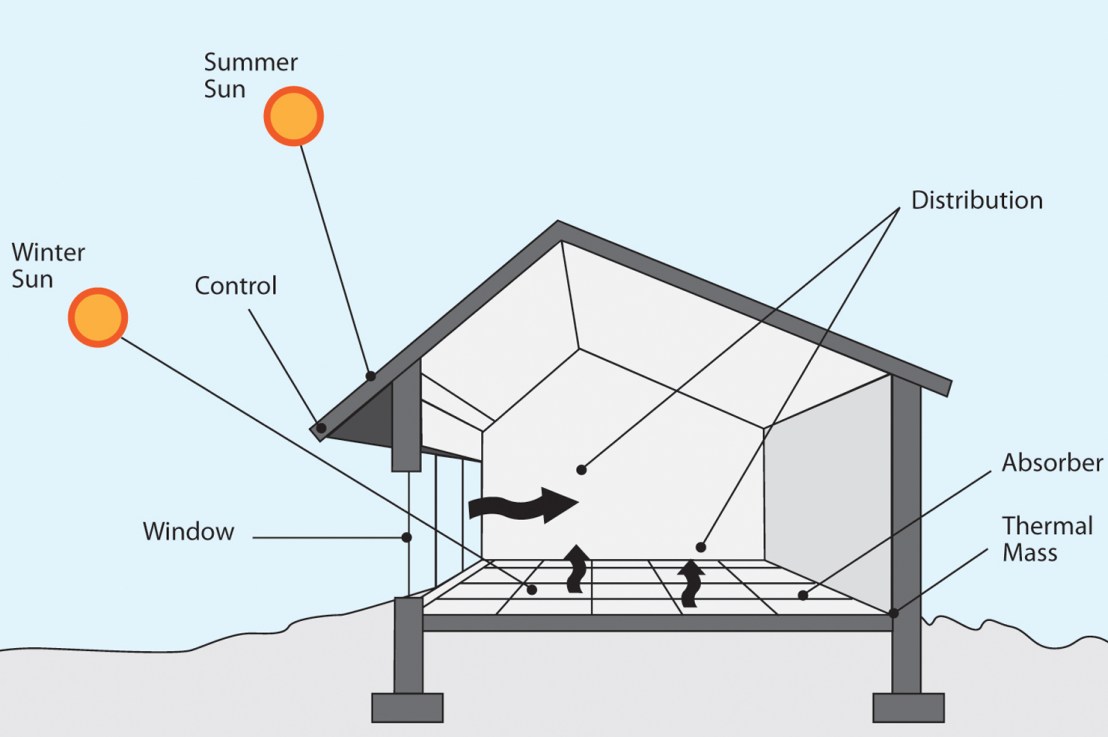
One of the most commonly debated topics within the field of renewable energy is how to integrate solar power into everyday buildings. And most of the time this talk is on how we can put more solar power on buildings. However, what if we were to rethink this model? Instead of forcing more machines to be put into a building, let’s just reconfigure the building itself to use the sun more efficiently! For example, to use larger windows such that rooms receives more sunlight, or use green roofing to create more natural insulation.

District heating

District heating

District heating

07/29/17

“How can we carry waste heat to an end user?”
We have a problem. Residential communities often require heat for their everyday needs. But for each building to have their own heating unit would be very difficult, costly, and inefficient. So how could we use our engineering mindset to solve this problem? Well, what if we were to have a central energy generation location that would heat up fluids which would be transferred throughout a network using insulated pipes? Well, this is the idea behind district heating and is used to warm homes everywhere.

Space heating

Space heating

Space heating

07/10/17

“How can we keep spaces in buildings warm?”


Buildings are the most common form of shelter for humans. They can provide simple comfort, warmth, and protection from the exterior world. However, they are subject to variations which make them less habitable, such as unwanted changes in temperature. So how could we use our engineering mindset to solve this problem? Well, we know that most of the heat in buildings is caused by the gaseous atmosphere inside it. So what if we were to pump a gas with a higher temperature into the living space? Well, this is the fundamental idea behind space he ing, and is used everyday by people all over the world

Surveying trilateration

Surveying trilateration

Surveying trilateration

07/09/17

“What is the modern method for surveying?”


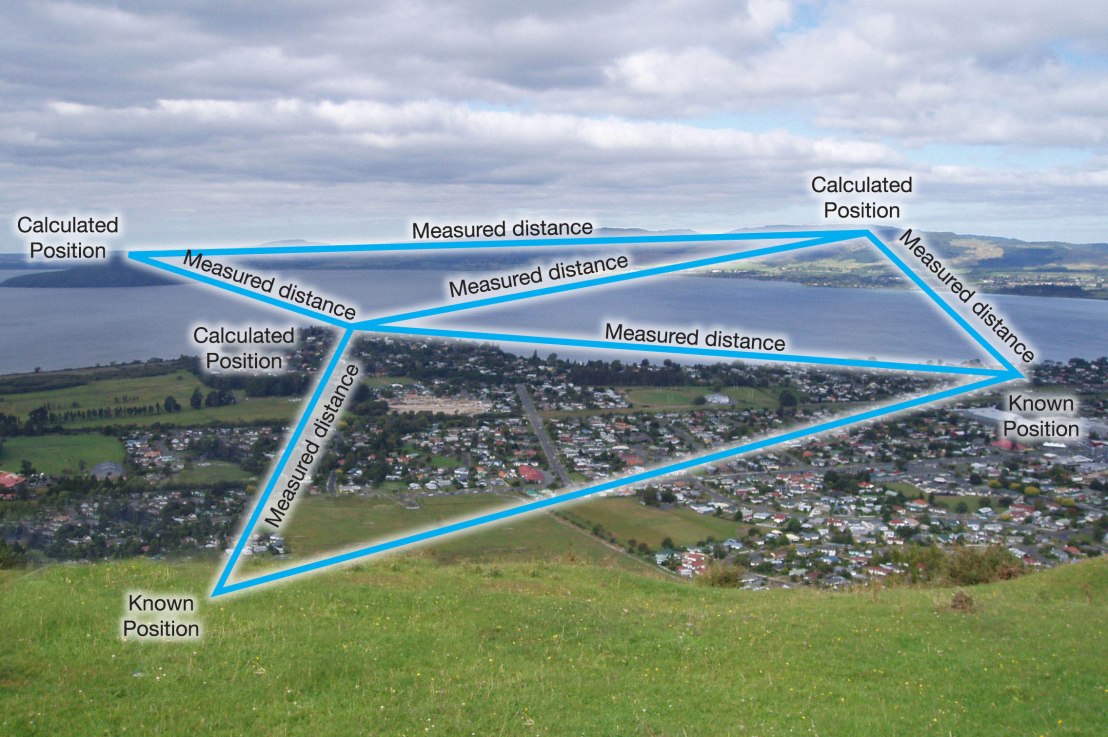
Surveying through triangulation can be a painful and arduous task whose accuracy is limited by larger distances. So how can we make a rethink of surveying methods to take into account modern technology? Well, let’s use our engineering mindsets to think about it. We know that we can control the emission of light and microwaves and that these can reflect off surfaces all while moving at the speed of light. So what if we were to use this timed response to infer the distance traveled between two points? Well, this method for surveying is known as trilateration and has become widely used in civil engineering

Theodolites

Theodolites

Theodolites

07/05/17

“What instrument do we use to perform surveying?”


Surveying is a very intricate science. Since we are measuring areas to be used for structural bedrock, we have to be accurate to the millimeter. However, what machines do we use to accomplish this? Well, let’s use our engineering mindset to find out. Before we need to measure the lengths, we also need to measure angles. And often times, we can use a distant object for a reference. So what if we were to get a telescope, put it on a tripod to stabilize it, and then add circumference measures so we can focus at some point and measure the angles? Well, this is the basic idea behind a theodolite and is the vital tool for surveying

Surveying triangulation

Surveying triangulation

Surveying triangulation

07/03/17

“How can we measure real world triangles accurately?”


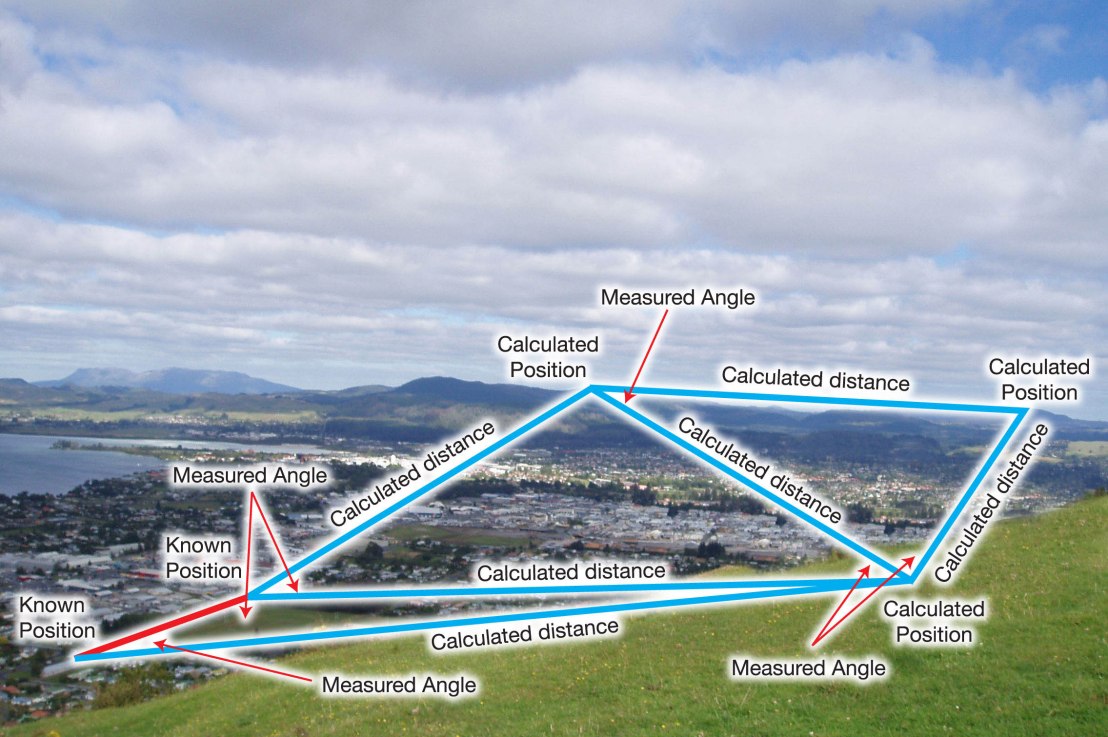
In surveying, it is often useful to measure triangular areas. However, how exactly is this accomplished? Well, let’s use our engineering mindset to find out. We know from high school trigonometry that if we can find the length and angle of one side of a triangle then we can find out the rest with ease. So how what if we were to apply this idea in reality successive lengths of rods whose length were accurately known? Well, this is the fundamental idea behind surveying triangulation and was the main surveying technique before the 1950s

Engineering surveying

Engineering surveying

Engineering surveying

07/03/17

“How do Engineers determine an accurate topology of an area?”


Civil engineering projects often involve large projects. And these large projects will often take up a large area. And in many parts of the world, this area might consist of uneven terrain. So how can we accurately find out the topology of an area? Well, let’s use our engineering mindset to find out. We know that with mechanical devices, we can easily gather information about irregularities in terrain. And by using computer technology, we can analyze this information to obtain a better view of the area. So what if we were to apply this concept to reality, and create an interconnected network of equipment to survey the land? Well, this is the fundamental idea behind engineering surveying, and it’s one of the most fundamental aspects of Civil Engineering.

Pumped hydrogen storage

Pumped hydrogen storage

Pumped hydrogen storage

06/24/17

“How can we use a gravitational potential to store energy?”


If you have ever taken an introductory physics class, then you know that anything with a mass at some distance from the Earth has an energy potential associated with it given by the equation P.E = mgh, with m being the mass g being gravity and h being the height. So logically speaking, if we were to vastly increase the mass then we would also vastly increase the potential energy. So if we have a large enough mass, we can store enough energy for an electric grid!


This is the exact idea behind a technology known as pumped hydrogen storage. Pumped hydrogen storage takes two water reservoirs at a height gradient, and discharges energy to the grid by moving the water through a turbine and stores more energy by using a grid powered pump increase the level of water on the top layer