Tag: Civil Engineering

Water Heat Recycling

Water Heat Recycling

Water Heat Recycling

10/04/17

“How can we recycle some of the warm water from our showers?”


There is something very wrong with our water use. We spend a great deal of energy making hot water for our showers, and once it’s used it gets completely wasted! So how can we use our engineering mindset to solve this problem? Well, we know that this hot water has a certain amount of energy associated with it. And we also know that we can extract some of this energy to perform useful processes. So what if we were to take the wasted water and run it through a heat exchanger to warm some other water? This could save us a large amount of time and energy dedicated since if we wanted to warm up the other water to be used in household applications, we would need less energy. This is the fundamental idea behind Water Heat Recycling and is used in buildings all over the world.

How microgrids can help get Puerto Rico back on its feet

How microgrids can help get Puerto Rico back on its feet

How microgrids can help get Puerto Rico back on its feet

10/03/17

“How can the people of Puerto Rico use microgrid technology to help get their infrastructure up and running?”


For those of you who are out of the loop, a recent hurricane has totaled the energy infrastructure of Puerto Rico. As much as 95% of the island is out of power, affecting around 3.5 million individuals! But how can the people of Puerto Rico use their engineering mindset to fix this problem? Well, if they have been keeping up on recent trends, then they might have heard of a little technology called microgrids. They can be set up much quicker than for a centralized grid to be repaired and are even cheaper to run. The German company Sonnen GmbH is already supplying the people of Puerto Rico with these much-needed systems.

Autonomous Buildings

Autonomous Buildings

Autonomous Buildings

10/02/17

“Can we create buildings that provide all of its own needs?”


Buildings are traditionally created with the assumption that all resources such as energy and water will be provided by an external source. But what if our area does not have such a privilege? Well, what if we to use our engineering mindset to make buildings that provide their own necessities, such as using onsite generation for electricity, recycling water systems, and even hydroponics for food? Well, this is the fundamental idea behind autonomous buildings and is an idea to be taken into great consideration for future architects and engineers.


Ducts

Ducts

Ducts

09/28/17

“How can we direct the flow of air?”


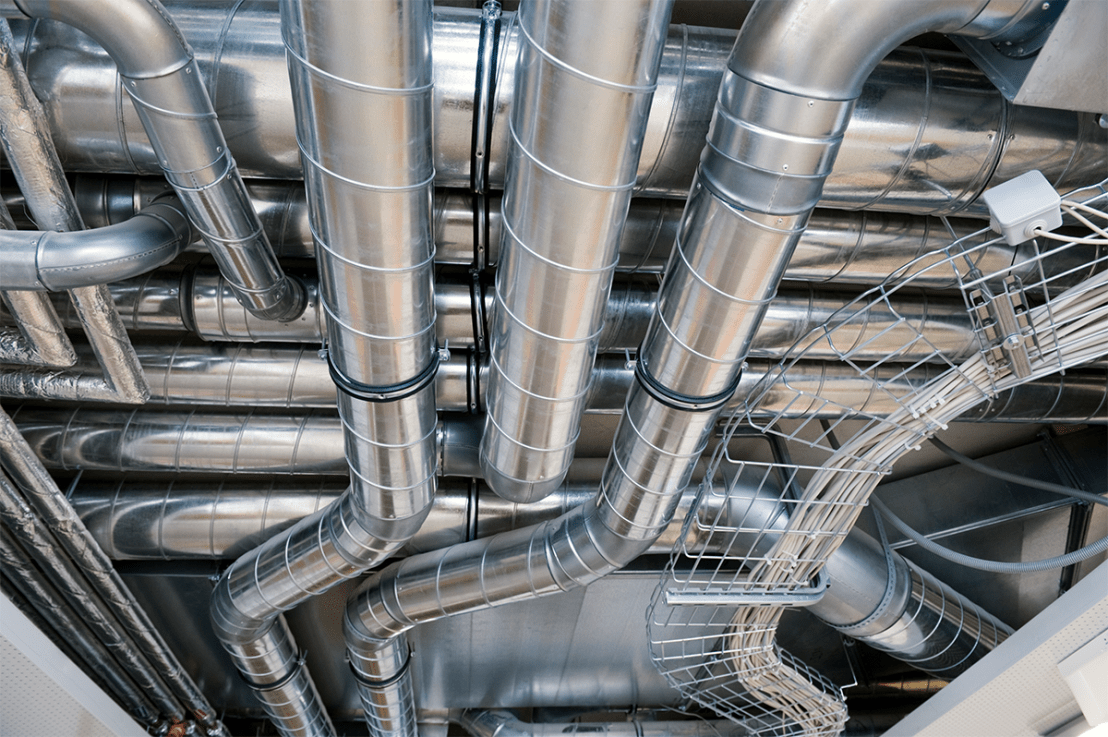
HVAC systems often rely on the flow of air for operation. However, since air is a gas, it can be very difficult to control. So how can we use our engineering mindsets to contain it? Well, let’s think back to some basic principles. We know that that gas is a fluid. And we already know that one method for transporting another type of fluid (liquids) is to use pipes. So what if we were to make a conduit that does this same exact mechanism except for gases? Well, it turns out that this system is actually one of the most widely used HVAC structures on the planet, and has been termed a duct by engineers.


Hydronic Heating

Hydronic Heating

Hydronic Heating

08/25/17

“How can we make an energy efficient and evenly spaced heating system?”


Most traditional space heating systems push heated gas through air ducts to warm the surrounding area. However, this system is energy inefficient and creates an unevenly heated area. So how can we use our engineering mindset to solve this problem? Well, what if instead of shoving a fluid over the ground, we actually run it underground, through the tiling of the building? And instead of using a gas, we use a boiler to cycle out heated water and cycle in cooled water? This system would allow for evenly distributed heating through the tiles, as well as use less energy to heat the fluid. This system is known as hydronic heating and is rapidly gaining popularity throughout the world.

Resonance Disaster

Resonance Disaster

Resonance Disaster

08/24/17

“What happens when a system’s oscillations actually destroy it?”
Mechanical systems have a tendency to oscillate until stability when their bodies are deformed. However, sometimes the oscillations are so powerful that they actually end up destroying the system itself! This phenomenon is known as a resonance disaster, and a most unfortunate example is the Tacoma Narrows Bridge when high-speed winds actually caused a bridge in the American State of Washington to shake into rupture.

Resonance

Resonance

Resonance

08/22/17

“What is the maximum amplitude of an oscillating system?”


In the physical world, systems can vibrate at different frequencies with different outputs. But when the system achieves maximum vibration at a certain frequency, it is called a resonance. Resonance has large impacts on the design of systems, from constructing electrical circuits to achieve certain characteristics to analyzing vibrational characteristics of bridges

Dead Reckoning

Dead Reckoning

Dead Reckoning

08/17/17

“How can we make a location history using past velocities?”


Making a location history can be very difficult. Having to make active GPS measurements for a cycle of intervals is very taxing on resources. However, is there a way that we could circumvent this and make a new less resource intense system? Well, let’s start off by thinking back to basic physics. We know that velocity multiplied by time equals a change in distance. So what if were to start off with an initial GPS location and then build an array of all of the measured velocities after that? Well, this is the fundamental ideas behind a technique known as Dead Reckoning and is commonly implemented in control systems and machines that are equipped to go into no-GPS locations.

Integral Control

Integral Control

Integral Control

08/17/17

“How can control systems be based on the summation of error levels over time?”


Control systems respond to an error between feedback and setpoints by making changes to the next output. However, sometimes the error does not change fast enough or it changes too quickly. So how could we devise a mechanism to solve this issue? Well, let’s start with a simple idea. We know that if an error value were to persist over time it would show easily on a graph. So what if we were to just take the area of the error under this graph and modify our outputs accordingly? This is the fundamental idea behind integral control and is one of the prime factors in the ever so often used PID control system.