Category: Policy

Energy Storage Mandates

Energy Storage Mandates

Energy Storage Mandates

04/25/19

“How can governments use policy to increase the amount of storage on the grid?”

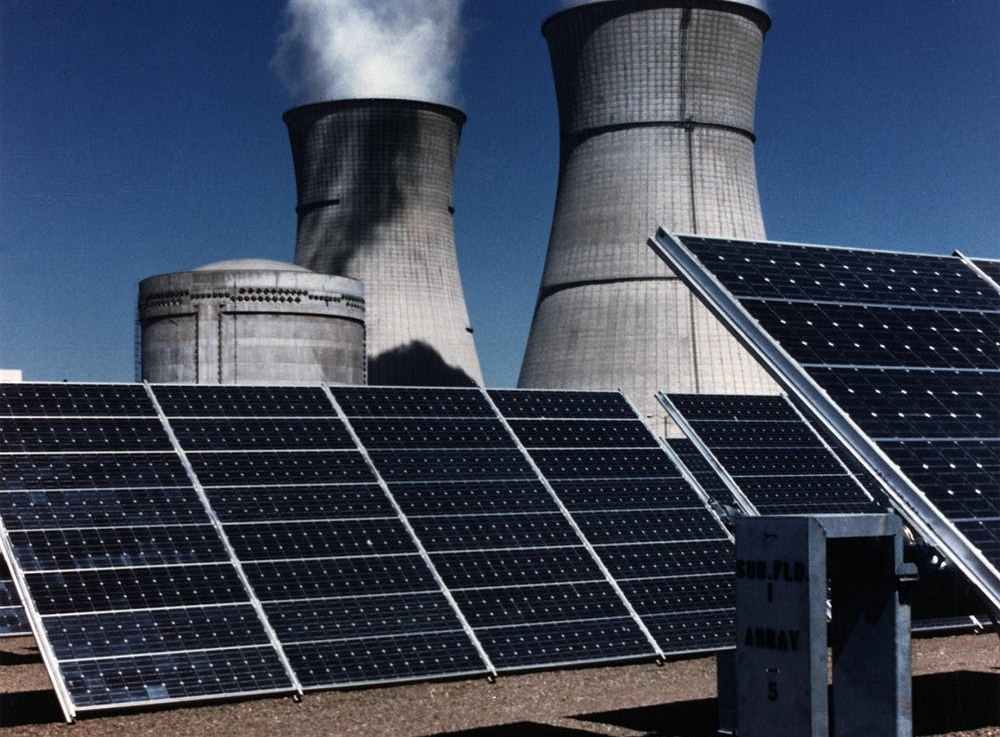
`Energy storage is one of the hottest things in the energy world right now. But despite its seemingly invincible potential, it still needs government action to come online. One clever way to do this is to make a policy stipulating that utilities need to adopt a certain amount of energy storage through an Energy Storage Mandate. This is commonly implemented in California and other governments to meet their carbon neutrality goals.

Image credit inhabitat.com

Why Offshore Wind in the U.S Might Soon Face Logistic Bottlenecks

Why Offshore Wind in the U.S Might Soon Face Logistic Bottlenecks

Why Offshore Wind in the U.S Might Soon Face Logistic Bottlenecks

04/21/19

“Why is offshore wind in the U.S having logistic problems?”

Offshore wind in the United States is expanding at a rapid pace, particularly in the Northeast. However, since offshore wind turbines tend to extremely large in nature, it takes a large amount of transportation infrastructure such as cranes and heavy trucks for transportation logistics. Due to the limited supply of these components, these projects face the possibility of being stalled. This is Why Offshore Wind in the U.S is Facing Logistic Bottlenecks.

Returns to Scale

Returns to Scale

Returns to Scale

04/20/19

“How does cost scale with physical production?”

Cost tends to scale with increased production of a particular element. However, the amount of cost of each item might get larger or smaller! The rate of change of each element to increased production is known as the Returns to Scale. This information is vital for the renewable energy industry, as the optimal deployment size will depend on the best return to scale.

Image credit
https://sites.google.com/site/economicsbasics

Power Factor Tariff

Power Factor Tariff

Power Factor Tariff

04/19/19

“Why do some facilities seem to obtain less power than they receive and how are they penalized in a tariff?”

Every facility connected to the grid can receive energy. But the amount that it receives versus what was apparently sent is known as the Power Factor Tariff. The lower the power factor tariff, the more generators and transformers, and other power infrastructure is needed to keep the system running. Since this increases the amount of upkeep needed, utilities implement a Power Factor Tariff to penalize users who draw too much from the grid.

Maximum Demand Tariffs

Maximum Demand Tariffs

Maximum Demand Tariffs

04/18/19

“How can we design a two-part tariff specifically catered to the maximum demand of a system?”

Two-part tariffs are great for controlling system-level energy use. But sometimes we would like to focus it on controlling the maximum demand for energy use. We can use something called a Maximum Demand Tariff which not only charges in proportion to energy used but levels an extra tariff based on the max power they drew for the given time period.

Two-Part Tariffs

Two-Part Tariffs

Two-Part Tariffs

04/17/19

“How can we have an energy tariff that charges both at a fixed and proportional rate?”

Energy tariffs come in all shapes and sizes. One of the most interesting ones is those that not only charge at a proportional rate but also at a fixed rate. This Two-Part Tariff can be used in the case of optimization for grid network loads.

Block Rate Tariffs

Block Rate Tariffs

Block Rate Tariffs

04/16/19

“How can we make an electricity tariff that becomes progressively cheaper as you use more energy?”

Charging less for increased energy consumption makes sense in many cases such as incentivizing renewable energy production. One way to accomplish this is to use a tariff structure in which energy consumption amounts are divided into discrete blocks and each succeeding block of energy used is cheaper. These Block Rate Tariffs can be implemented by utilities to accomplish their infrastructure and market goals.

Flat Rate Tariffs

Flat Rate Tariffs

Flat Rate Tariffs

04/15/19

“How does a flat rate work for electricity usage?”

Utilities produce revenue through electricity tariffs. Although not the simplest, another simple type of tariff is the Flat Rate Tariff. Despite the name, these tariffs still charge in proportion to electricity usage. Rather, they are called flat rate since they do not discriminate based on time of use. What differentiates flat rate tariffs from simple tariffs is that they can distinguish between different types of consumers, such as residential or commercial. The advantages of flat rate tariffs is their simple implementation, while their primary drawback is their inability to incentive different times of use, a necessity to mitigate the duck curve.

Simple Electricity Tariffs

Simple Electricity Tariffs

Simple Electricity Tariffs

04/14/19

“What is the simplest type of energy tariff?”

In order for energy companies to survive, they need to find a way to charge money for the energy they produced. This is usually done through an Electricity Tariff. The most simple type of electricity tariffs is known as Simple Electricity Tariffs. These tariffs simple charge money in direct proportion to energy consumed. The advantages of this is that it simple, easy to understand and implement, and directly responds to how much electricity is used per-capita. However, the drawbacks is that these tariffs cannot be tailored to specific group’s needs, which can lead to higher cost, provides no incentive to consume more electricity, and if no electricity is purchased during the month then the utility can die.