Category: Physics

Thorium energy

Thorium energy

Thorium energy

04/15/17

“Wait, there’s another way to make nuclear energy?”
Traditional nuclear power plants use the decomposition of uranium 235 through fission to generate energy. However, This process is unstable and dangerous. But is there another way that we can generate nuclear energy? Well, let’s use our engineering mindset to find out. If look into fundamental chemistry, we will run into a most peculiar atom known as thorium. When Thorium is hit by an extra neutron, it will begin a decay process that ends with a transformation into uranium 233, which will produce energy when the object itself is hit by a neutron.  One of the primary benefits of thorium energy is that it does not produce Uranium 238, therefore being much less pollutive on a 10,000-year scale, as well as being more plentiful. Many countries (notably India and China) are looking in to develop their own Thorium energy systems, and it might prove to be the nuclear power of the future.

Thermal resistance

Thermal resistance

Thermal resistance

04/12/17

“How can we measure how the flow of heat will be impeded in a material?”
All objects have a temperature. And this temperature can change whether by convection, conduction, or radiation. However, because of an object’s material makeup, this flow of heat may not be uniform. So how can we measure how much an object will resist a change in temperature? Well, let’s use our scientific mindset to think about it. We know that temperature consists of a measure of the random kinetic motion of particles and that a change in this value is caused by energy entering or exiting the system. Rationally speaking, it would follow that materials with different forms of internal properties have more or less impediments in the way of this heat flow. After years of research, scientists have quantified this property as thermal resistance and is one of the bedrocks of thermodynamic physics.

Virtual images

Virtual images

Virtual images

04/05/17

“What happens when light rays from a reflective or refractive material do not converge?”
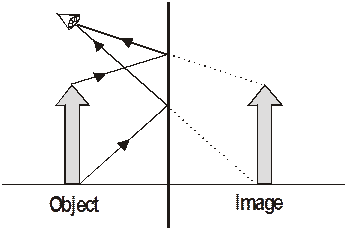
When light bounces from some materials, sometimes it does not completely converge. An example can be light incident on planar mirrors or negative lenses. However, an image still forms, contradicting the theory of real images. How can this be? Well, let’s use our scientific mindset to find out. We know when non-parallel light rays do not converge in real space, they are at an angle with each other. However, if we are to think “outside of the box” and move into the virtual world, we can observe that such rays originate from a common point. And since our brains are not advanced enough to distinguish between optical illusions and reality, we will see what scientists call a virtual image at that point. Since virtual images do not exist in reality, they can not be projected onto a screen like real images.

How to make a hologram

How to make a hologram

How to make a hologram

03/30/17

“How can we use physics to make a hologram?”


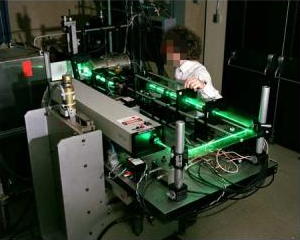
Most photographs are composed in two dimensions. However, wouldn’t it be really cool if we could have three-dimensional photographs? Well, instead of just imagining it, let’s apply our engineering mindset to build it. To begin, let’s start off with  a few tools, a laser, some lenses, a beam splitter, mirrors, and holographic film. Next, let’s point the laser to the beam splitter to divide the beam into two separate parts. Next, let’s direct both of these beams through diverging beams so they begin to “spread out”. Let’s also make sure that one of these beams (Called the “object” beam) envelops an object of our desired choice. The light impinging on this object will then be reflected, and let’s make sure that this light is directed onto a piece of holographic film. Let’s then use mirrors to guide the second beam of light (Called the “reference” beam) onto the mirror as well. The holographic film will capture the phase difference between the two beams, as well as the levels of darkness and light resulting from the reflection of the object. After all of this work, we would have just created our very own hologram! This process must be so precise that even vibration on the order of a ninth of the wavelength of the laser would destroy the image!

Real images

Real images

Real images

03/26/17

“How can we create an artificial image of an object using light?”
As human beings, we are very visual creatures. We like to watch movies on big screens, take photographs of memorable events, and look at the stars of our universe using telescopes. Interesting enough, all of these technologies use one vital physical phenomena for their operation, real images. When light from an object passes through a thin concave lens, it will be focused onto a single point. At that single point, an image of the object will be formed. If placed on a planar surface, then this image will be visible for everyone to see! Real images are usually inverted, and their magnification depends on the distance from the object to the focal length of the lens

Bearing stress

Bearing stress

Bearing stress

03/18/17

“What happens when stress acts upon an area perpendicular to the axis of an object?”
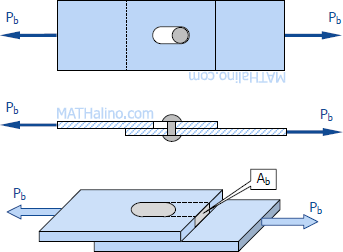
The most well-known types of engineering stress are normal stress, (when a stress acts upon an area parallel to the axis of an object) and shearing stress (when a stress acts perpendicular to said axis). But is there a third type of stress? Well, to know more, let’s scientifically analyze such a phenomena. Well, when two bodies are in contacts and move in opposite directions, they will exert a force upon one another. Furthermore, this force will be distributed over their area of contact, creating a stress. This form of stress is known as a bearing stress and can be symbolically described using the equation (sigma)_ bearing = force/area

Latent heat

Latent heat

Latent heat

03/17/17


“How do we quantify the energy released or absorbed during a constant temperature process?”
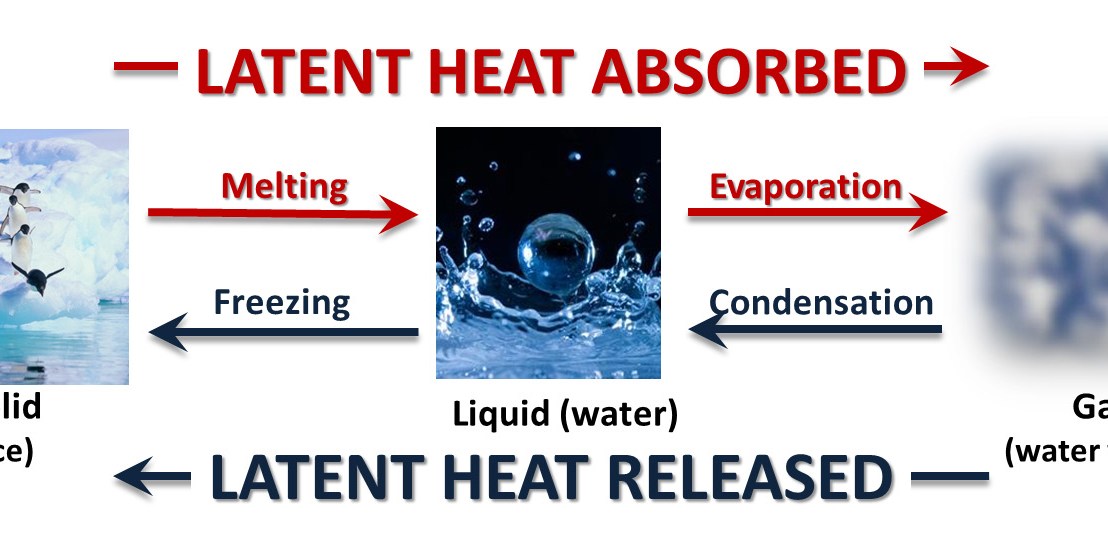
When we deal with energy and heat problems, we typically think of the system of having a change in temperature. However, when it comes to phase transitions it is possible to have a change in energy of a system without a corresponding change in temperature. So how have scientists and engineers decided to describe this phenomenon? Well, after much research into the subject, this process has been termed latent heat and is proportional to the energy required to change the phase of a substance divided by its mass, which can be symbolically described by the equation L=q/M.

Critical angle

Critical angle

Critical angle

03/07/17

“Can we use refraction to make reflection?”
Refraction is a common physical phenomenon, and we know that if light from a denser medium passes into a lighter medium then it will bend further away from the normal angle. However, is it possible that this angle can bend so much that it will actually go back into the incident medium? Well, let’s use our scientific mindset to investigate this question. We know that light passing between two mediums behaves as dictated by snell’s law, or n1sin(1)=n2*sin(2). If we were to arrange this equation to find for 2, we would arrive at 2=sin(n1*sin(1)/n2)-1. Now if we analyze this equation, we can realize that if were to have the ray of light incident at an angle 1such that the output would be 90 degrees, the light would not pass to the other side! Physicists have termed this angle the critical angle and is used heavily in fiber optics, where light is trapped in and passes through a long tube of wire.

Interferometers

Interferometers

Interferometers

03/06/17

“How can we produce a controlled chromatic aberration for study?”


Chromatic aberration is one of the most perplexing phenomena in the study of optics. However, creating controllable versions for laboratory study are extremely difficult to accomplish. So how can we make a machine that will be able to make adjustable chromatic aberrations at our will? Well, let’s use our engineering mindset to solve this scientific problem. Well, we know that if we were to pass monochromatic light into transparent glass at an angle then some will be reflected and some will be refracted. This creates two beams of light of identical wavelength for us to study. Now, let’s take this a step further. We need to pass these beams of light back to each other so that they interfere, which can be accomplished by placing mirrors in the path of beams. So what if were to take this system and bring it into a reality? This machine is known as an interferometer, and is used in physics labs all over the world to study the intricacies of chromatic aberration.