Category: Physics

Step Response

Step Response

Step Response

08/21/17

“What is the reaction to an abrupt change in conditions for a system?”


Complex systems are easily controlled by external forces, such as the flip of a switch. And when these forces do cause change, they can be quite quick and drastic, changing all of the conditions of the system. And since the reaction to such changes can be very quick and drastic as well, engineers and scientists have decided to term these changes as the step responses to the system. An example of a step response includes a mechanical body’s friction to moving forces.
Polytropic process

Polytropic process

Polytropic process

08/16/17

“What process in Thermodynamics holds the pressure and volume to a constant?”


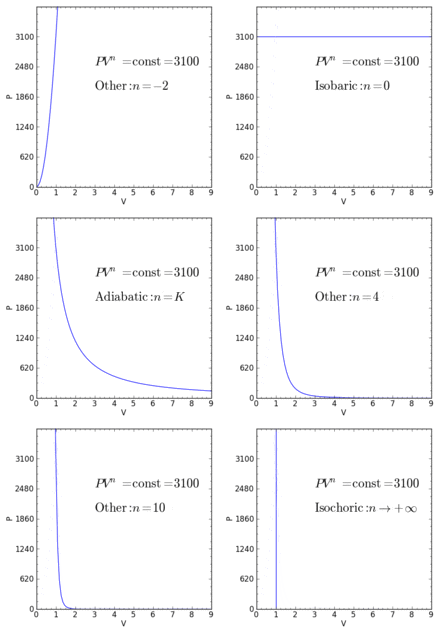
Thermodynamics is known for its intense reliance on processes. Some of the most important types are classified as Polytropic processes. In polytropic processes, the pressure and volume are held to the constant given by the relation pv^n=c, where p is pressure, v is volume, n is the polytropic index, and c is a constant. A process is polytropic if it obeys the ideal gas law and if the heat to energy transfer as work at each infinitesimal step of the process is kept constant


Duty Cycles

Duty Cycles

Duty Cycles

08/15/17

“What described the on and off period for a digital signal?”


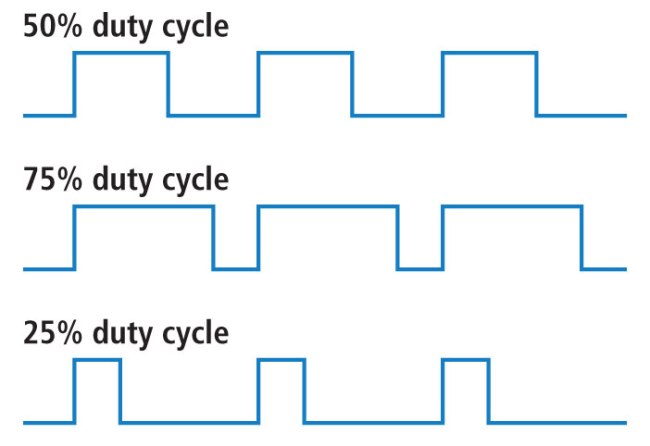
Digital signals have only two modes: on and off. And sometimes they cycle through each at a constant period. So how can we describe this phenomenon? Well, after much research, engineers have come up with the concept of a duty cycle. A duty cycle determines for what time periods the signal is on duty and can be quantified by the percentage on vs off (for example, a signal that is active for 3/4ths of the time has a duty cycle of 75%)

Cutoff frequency

Cutoff frequency

Cutoff frequency

08/14/17

“What is the frequency that causes machines to stop working efficiently?”
Many modern electrical machines depend on a frequency for some input. However, sometimes we don’t want it to be accessible to all inputs. To achieve this, we implement something called a cutoff frequency into the system. A cutoff frequency is the frequency point in which a machine’s output will stop working efficiently.

A visualization of reversible vs nonreversible processes

A visualization of reversible vs nonreversible processes

A visualization of reversible vs nonreversible processes

08/08/17

“What exactly is the difference between reversible and non-reversible systems?”


Reversible and non-reversible systems are two of the most fundamental and confusing concepts in thermodynamics. But this visualization should help clarify them. Let’s take a ping pong game. If we are playing without score, then after a round is over, everything goes back to normal with no change in the system, making it reversible. However, if we are keeping score, then after every round the number of points change forever, making this process non-reversible

Processes

Processes

Processes

08/07/17

“What do we call it when a system’s state changes?”


Thermodynamic systems have a variety of properties, ranging from temperature to pressure to volume, which all make up its state. However, these properties are subject to change if the system is not in equilibrium. So what do we call this change in properties? Well, after much investigation, thermodynamicist have come up with the term process to describe this change. Processes can be of many types, such as changes in volume or pressure.

Homogeneous and heterogeneous systems

Homogeneous and heterogeneous systems

Homogeneous and heterogeneous systems

07/21/17

“How do we classify thermodynamic systems?”


Engineering thermodynamics looks at heat, energy, and matter from a macroscopic, or non-atomic perspective. Because of this, objects and materials such as air appear to be uniform in composition. As a result, systems such as these are classified as homogeneous systems. Homogeneous systems stand in direct contract with heterogeneous systems such as a human body (which is composed of many different macroscopic layers). When working out thermodynamics problems, it is extremely important to know if your system is homogeneous or heterogeneous.

Using infrared sensing to see through objects

Using infrared sensing to see through objects

Using infrared sensing to see through objects

07/06/17

“Can we see through objects using infrared sensors?”


Wouldn’t it be cool if we could see through objects without X-rays? It would be really useful for applications such as scientific research and security, and we would not have to deal with harmful radiation. Luckily, Scientists and Engineers have discovered that some objects such as shopping bags that are opaque in the visible spectrum are actually transparent in the infrared spectrum!

Electromagnetic propulsion

Electromagnetic propulsion

Electromagnetic propulsion

07/02/17

“How can we make propulsion without fuel?”


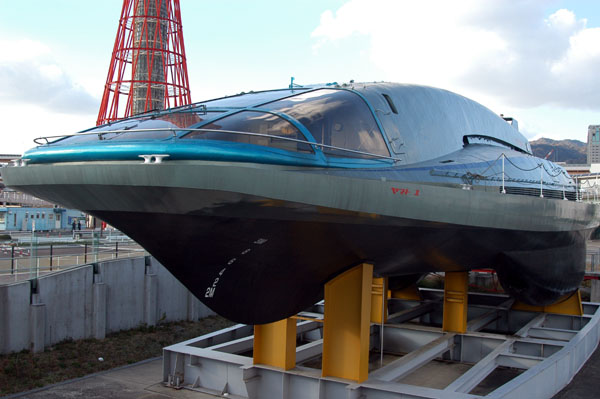
As it stands, the vast majority of propulsion machines are based upon fuel combustion technologies. However, this approach is costly, wasteful, and dangerous. So how could we make a new propulsion approach that requires no fuel? Well, let’s use our scientific mindset to find out. We know that when an electric current passed through a conductive material immersed in a magnetic field, it will experience a Lorentz force. So what if we were to use this force to cause objects to move? This is the fundamental idea behind electromagnetic propulsion, and can be used to power machines ranging from linear motors to the astronomical electromagnetic propulsion drives!