Category: Engineering

Fan Coil Units

Fan Coil Units

Fan Coil Unit

09/26/17

“What is an affordable alternative to VAV systems?”


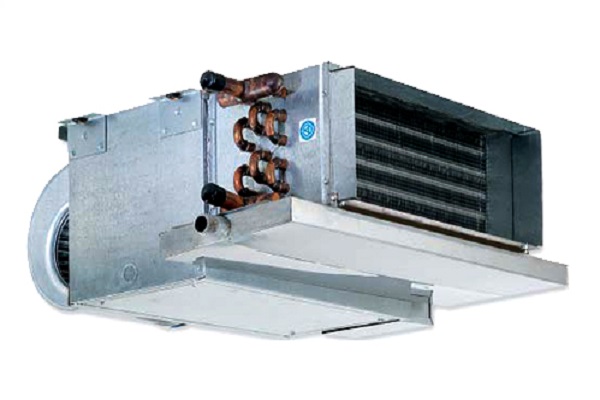
Variable Air Volume (or VAV) systems are great for controlling the weather in an interior space. However, these machines can be quite expensive, so how can we use our engineering mindsets to solve this problem? Well, let’s start with some basic components, a fan to move around air and a heat exchanger (also known as a coil) to control the temperature. With this combination, we can create an HVAC system called a Fan Coil Unit. Fan Coil Units are typically used in smaller buildings where ductwork is not as necessary and are popular in Italy and Eastern Europe.

Centrifugal Fan

Centrifugal Fan

Centrifugal Fan

09/25/17

“How can we use a fan to control gases?”


Most HVAC systems by moving around gases. However, materials at this phase can be quite difficult to control, so how can we use our engineering mindset to create such a mechanism? Well, we know that blades on a turbine react when a fluid passes through it, and through symmetry we can assume that a fluid will react to motor movement. So what if we were to construct something similar (like a motor) that would take in the gas, impart kinetic energy through its centripetal acceleration, and then change its direction by 90 degrees? Well, this is the fundamental idea behind a centrifugal fan and is one of the most fundamental components of modern HVAC systems.

HVAC Grilles

HVAC Grilles

HVAC Grilles

09/24/17

“How can we control the flow of air without spending too much money?”


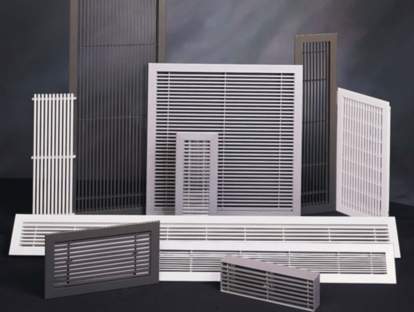
Directing airflow how many HVAC systems such as fans and air conditioners work. However, how can we do this in a safe and affordable manner? Well, let’s use our engineering mindset to solve this problem. Let’s start with basic physics. We know that if air passes through a cross-section of multiple vents, then the air molecules will be forced into a particular direction (while large objects would be blocked). So what if we were to attach such vents in front of an HVAC system? This setup is known as an HVAC grille and can be seen in the face of nearly every heating and cooling system.

The Compressibility Factor

The Compressibility Factor

The Compressibility Factor

09/23/17

“How can we quantify how much a gas deviates from its ideal form?”


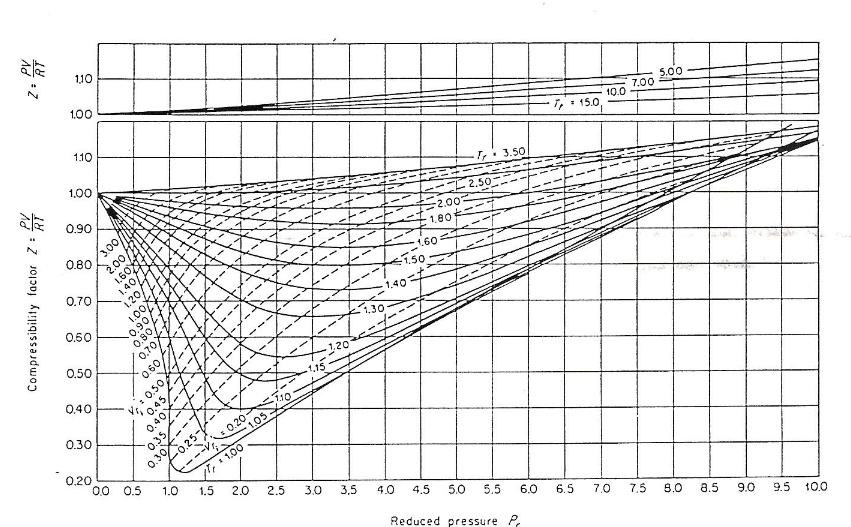
In introductory chemistry and physics classes, all gases are assumed to be completely ideal. However, in the real world gases usually are not so easy to work with. So how can we quantify a gas’ deviation from its ideal form? Well, let’s start from the basics. We know that all of the gas’s properties can be completely related to one another through the ideal gas equation p*v_specific=r*T. It would logically follow that if we were to divide the product of the pressure and the product of the specific volume by the universal gas constant times the temperature, we should end up with a ratio of 1/1.So what if we were to find out a gas’s specific volume, temperature, and volume of a gas in its non-ideal form, take their ration, and use that as a constant in a modified ideal gas equation? This is known as the compressibility factor and is commonly represented as z in the non-ideal gas equation p*v_specific=z*r*t.

Damper Controls

Damper Controls

Damper Controls

09/22/17

“How can we control an HVAC damper?”


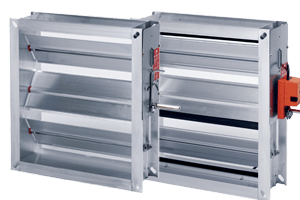
HVAC dampers are instrumental for controlling heating and cooling for buildings. However, since they are located in isolated air ducts, we will need to use some form of remote control to operate them. This is where damper controls come in. Damper controls allow for the angle of the ducts of a damper to be adjusted at will, inducing optimal living conditions.

Mechanism (engineering)

Mechanism (engineering)

Mechanism (engineering)

09/21/17

“How can we use force and rotation to deal with complex situations?”


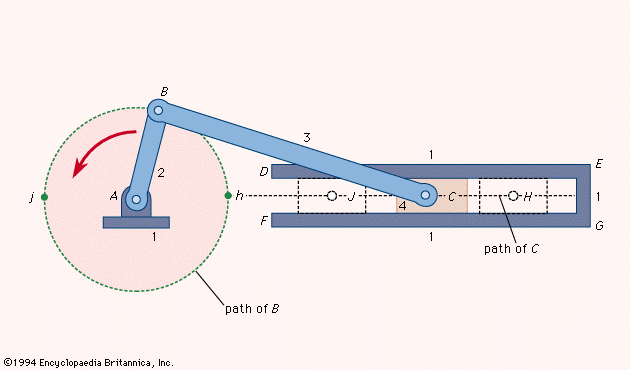
One of the principal ideas in engineering is transferring force and rotation to perform useful activities. However, simple machines are often not enough to deal with the complex and varied nature of high-level problems. So how can we use our engineering mindsets to solve this? Well, what if we were to make our machines to be assembled of a complex assemblage of parts such as gears, belts, linkages, and chain drives? This framework is known as a mechanism and is the basis for many modern day machines such as drivetrains, internal combustion engines, and aircraft landing gears.

Underfloor Air Distribution Systems

Underfloor Air Distribution Systems

Underfloor Air Distribution Systems

09/19/2017

“How can we optimize HVAC systems by completely reinventing them?”


Most HVAC systems operate by using ceiling-based air vents. However, the air funneled can suffer from low quality, induce low comfort, and most importantly give a high energy bill! So how can we use our engineering mindset to fix these problems? Well, what if we were to completely reinvent the paradigm, and instead funnel air directly from the ground? It turns out that this is the exact idea behind a technology known as Underfloor Air Distribution Systems. These systems work by filtering air through the open space between the structural concrete slabs on the floor of a building using plenums for direct cooling. Underfloor Air Distribution Systems are commonly implemented in data centers for their high efficiency and low cost.

Pulse-width Modulation

Pulse-width Modulation

Pulse-width Modulation

09/18/17

“How can we use a digital signal to control power appliances?”

Using sinusoidal analog signals for control applications has drawbacks. Specifically, the constantly changing signal can cause the resistors on a circuit to heat up and induce damage. However, how can we use our engineering mindset to fix this problem? Well, what if we were to replace this analog system with a discrete one operating at a duty cycle? That way we can imitate the perpetually switching signal while avoiding the issues that come along with it. This type of signaling is known as pulse-width modulation and is one of the fundamental ideas of modern control theory


Smart Zoning for HVAC Systems

Smart Zoning for HVAC Systems

Smart Zoning for HVAC Systems

09/15/17

“Can we solve the problem of temperature discrepancy in buildings?”


When we think of buildings, many of us assume that the temperature inside will be completely uniform in nature. However, more often there is significant temperature variation from room to room. Making this worse, most HVAC systems only base their setpoints on one of these rooms, causing improper heating and discomfort in the rest of the building. So how can we solve this problem using our engineering mindset? Well, what if we were to use multiple smart thermostats to divide the building into multiple zones, each with their own setpoints? This is the fundamental idea behind smart zoning for HVAC systems, a nascent but intriguing technology which has the promise to vastly improve the ergonomic, economic, and ecological capacity of everyday heating and cooling.