Category: Engineering

Shunt Resistance

Shunt Resistance

Shunt Resistance

02/03/18

“How can we measure the current in a circuit?”


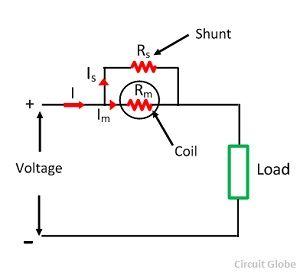
Ammeters can measure the current going through a particular circuit. However, how exactly do they work? Well, let’s use our engineering mindset to find out. We know that if we were to place a resistive element in a circuit, then there would be a voltage drop. And if we were to known both the resistance and the voltage we could get the current. So what if we were to place an extremely tiny resistance in the circuit, measure the voltage drop, and find the current? Well, this is known as the shunt resistance, and is how ammeters read current!

Electrical Burden

Electrical Burden

Electrical Burden

02/02/18

“How does measuring current change a circuit?”


Measuring the current in a circuit is very useful. It allows us to know many important properties about the system that we are studying. However, like everything in engineering every tool comes with its own drawbacks. When measuring current, we will induce a very small voltage drop across the circuit. Although it is usually minuscule, it is still a physical impact. Therefore when we do circuit analysis while measuring the current, we must take into impact the electrical burden of the system.

Photovoltaic Power Stations

Photovoltaic Power Stations

Photovoltaic Power Stations

02/01/18

“How can we make an industrial level of solar power generation?”


Solar photovoltaics are rapidly displacing traditional sources of power such as coal and nuclear energy. However, how exactly can we ensure that we can still obtain the same level of energy output as these technologies? Well, let’s use our engineering mindset to think of this. Well, we know that if we were to build a large number of solar panels, then our energy production would vastly increase. So what if were to simply create entire park-sized areas dedicated to solar panels? Well, this is the main idea behind Photovoltaic Power Stations, which are becoming some of the hottest items on the solar market!

Motor Oil

Motor Oil

Motor Oil

01/31/18

“How can we prevent automotive parts from wearing out?”


Automotive vehicles are some of the most powerful machines in the world, with a multitude of mechanisms moving at blinding rates. However, if objects move fast with friction, then wear will have to be induced. So how can we prevent these machines from wearing down? Well, let’s use our engineering mindset to find out. We know that if we apply a fluid interface between two objects, then the resulting lubrication will result in much less wear. Because of this, car engines use something called motor oil to increase a vehicle’s lifespan! Most motor oils are derived from crude oil, which can be of links between 18 and 34 carbon atoms per molecule, being completely unsustainable. Electric vehicles, not possessing internal combustion engines, do not require motor oil.

Carbon Film Resistors

Carbon Film Resistors

Carbon Film Resistors

01/30/18

“What are the most common types of resistors?”


Resistors come in many shapes and forms. However, what is the most common type of resistors? Well, if you look hard enough, then you will find that Carbon Film Resistors make up the majority of resistors in use today. Carbon film resistors are cheap, plentiful, and have a wide operating range. However, they also are very prone to temperature fluctuations, which could prove disastrous in critical applications.

Defective Device Bypass

Defective Device Bypass

Defective Device Bypass

01/28/18

“How can a circuit continue to operate even in the presence of a defect?”


Circuit defects happen all the time. And commonly, one of the things that occur is a short-circuiting between two elements, which can cause a whole circuit to break down. So how can we use our engineering mindset to protect against such a situation? Well, what if we were to create an alternate path of low resistance, such that the current would be able to go around it without inducing too much of a voltage drop? This is known as the Defective Device Bypass and can be found in appliances everywhere from festive lights to solar panels.

Wireless Charging

Wireless Charging

Wireless Charging

01/27/18

“How can we charge a device without a cord?”


When we think about charging electrical devices, we typically think of using a huge power supplying power cord. However, is it possible to charge without having any physical connection? Well, let’s use our engineering mindset to figure it out. We know that if we were to take two inductive coils, put them close together, and send an electric coil to one, then a current will be induced in the other. So what if we were to have a station with one inductive coil, and a device with another, every time the electromagnetic activity of the station can induce a current in the other? Well, this is known as wireless charging and is a very rapidly developing technology, with voluminous implications for both electric vehicles and cell phones.

Distributed Energy Resources

Distributed Energy Resources

Distributed Energy Resources

01/25/18

“How can we have true localized energy generation?”


In the past, most energy was generated through large, expensive and environmentally intensive engineering projects such as nuclear power plants and steam boiler systems. But with the advent of renewable energy, such infrastructure can now be rendered obsolete. Since Renewable energy sources can work with a few separated units and does not cause drastic environmental harm, they can be positioned close to homes and offices. As such we can realize something known as Distributed Energy Resources, which will explode in the coming years!

Fuel Economy in Aircraft

Fuel Economy in Aircraft

Fuel Economy in Aircraft

01/24/18

“Can fuel economy be applied to aircraft?”


Fuel economy is one of the key standards when evaluating automobiles. However, can this system also be applied to aircraft? Well, it turns out that not only is it entirely possible but also vital in the industry! Fuel economy for aircraft depends on aerodynamics, wing design, engine efficiency, weight, and propulsive efficiency.