Category: Engineering

Residential and Commercial Installed Solar PV Prices Still Falling in the U.S

Residential and Commercial Installed Solar PV Prices Still Falling in the U.S

Residential and Commercial Installed Solar PV Prices Still Falling in the U.S

09/19/18

“Solar prices are still falling in the U.S!”


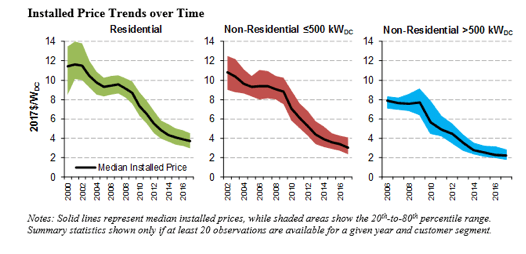
Small news update. According to a study by Lawrence Berkeley National Lab, the price of a median-sized installed solar PV has declined around 5% from the first half of 2017 to the second half. This and other information shows that Residential and Commercial Installed Solar PV Prices Still Falling in the U.S.


Photo credit renewableenergyworld.com

Why Renewable Energy would be a Great Investment for Indonesia

Why Renewable Energy would be a Great Investment for Indonesia

Why Renewable Energy would be a Great Investment for Indonesia

09/18/18

“Why should Indonesia invest more in renewable energy?”


Indonesia is a nation whose size is only matched by its diversity. An archipelago comprising of 17,000 islands with over 242 million people speaking over 300 different languages, it truly is a behemoth to behold. Currently, Indonesia generates around 84% of its energy from fossil fuel resources. But increasing its portfolio of renewable energy could be greatly beneficial to it.


  1. Ideal Climate for Renewable Energy


Being a chain of islands near the equator in the Southern Pacific Ocean, Indonesia has a great opportunity to tap into solar and offshore wind energy.


  1. Distribution

Since Indonesia is composed of a series of islands which are subject to typhoons, having a more distributed energy mix would be very helpful. Islands can generate their own electricity, microgrids can kick on during storms (something that would also be helpful to places with similar geography like Puerto Rico)


  1. Lower Pollution

Air pollution causes a myriad of public health problems which dampen the national economy. By switching to renewable energy this issue can be averted.


And these are just some of the reasons why Indonesia should switch to Renewable Energy!
 

How Adding Fins can Achieve Better Thermal Management

How Adding Fins can Achieve Better Thermal Management

How Adding Fins can Achieve Better Thermal Management

09/17/18

“How can adding fins help thermal management?”


In engineering, objects can overheat from a variety of operations. As a result, they will need some form of thermal dissipation. But how can we do this? Well, let’s use our engineering mindsets to find out. We know that if we add more surface area to an object, then it will be more exposed to the surrounding atmosphere. And if it is more exposed, then more heat transfer will take place. So what if we were to make our system more conductive by adding fins? This is the fundamental idea of How Adding Fins can Achieve Better Thermal Management.

How Hurricane Florence will Test Solar Resilience

How Hurricane Florence will Test Solar Resilience

How Hurricane Florence will Test Solar Resilience

09/16/18

“How will Hurricane Florence serve as a test-case for solar resilience?”


Hurricane Florence is about to descend into the U.S State of North Carolina, which has the second highest amount of solar energy capacity in the nation. During this time we will be able to see firsthand how solar PV systems will respond to a hurricane and their level of resilience.


Photo credit Renewable Energy World

Dust on Solar Panels

Dust on Solar Panels

Dust on Solar Panels

09/13/18

“What happens when dust collects on solar panels?”


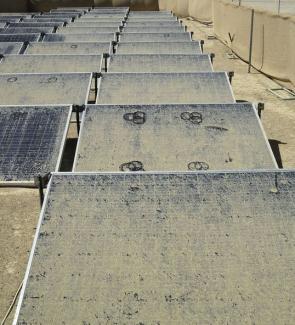
Solar panels are the fastest growing source of energy in the world. But like every piece of technology, they have their issues. When the dust settles on solar PV, it blocks the PV cells from the sun and reduces the efficiency. Therefore, Dust on Solar Panels can pose serious problems.


Image credit http://wamda-prod.s3-eu-west-1.amazonaws.com

The Trans Bay Cable and Why it is Important

The Trans Bay Cable and Why it is Important

The Trans Bay Cable and Why it is Important

09/12/18

“What is the Trans Bay Cable and why is it so important for the city of San Francisco?”


Grid transmission projects are everywhere where there is a need for electricity. But some are more important than others. Before 2010, the city San Francisco and its southern peninsula were subject to wild grid fluctuations and had to rely on dirty power plants in the center of the city due to its relative geographic isolation from the rest of the state. But soon enough a need for a connection was realized, and The Trans Bay Cable was produced as a result. The Trans Bay Cable is an HVDC current underwater cable that connects San Francisco, California and Pittsburg, California in the East Bay. The cable can provide up to 400 megawatts of power at a DC voltage of ±200 kV( around 40% of San Francisco’s peak power requirements). Once this was completed, San Francisco was able to shut down its central power plants, improving the air quality and carbon emission portfolio of the city. It just goes to show how a little bit of grid planning can make such a huge difference!


Image credit Transbay.com

California Bill SB 100 and its Ramifications

California Bill SB 100 and its Ramifications

California Bill SB 100 and its Ramifications

“California is really going 100% carbon neutral!”


Remember how we said that California might pass a law to go carbon-free by 2045? Well, it looks like it just did that. California Governor Jerry Brown signed bill SB 100 on Monday, effectively shifting the weight of the state to achieve a 60% renewable portfolio by 2030 and 100% by 2045! The state will also look at pathways to decarbonize other carbon-intensive sectors such as transportation. Although commendable, much work will be needed to make these goals a reality. Paramount is finding a way to solve the duck curve and reducing the state’s dependence on natural gas (which currently supplies a third of the state’s power). All in all, I am very excited yet cautious at these results and look forward to all of the future work to achieve this. If California can get this right, then other states and countries might follow suit with similar programs.

Containment Structures for Phase-Changing Materials

Containment Structures for Phase-Changing Materials

Containment Structures for Phase Changing Materials

09/10/18

“How can we make contain phase-changing materials in building integrated solar PV?”


While building integrated PV holds so much promise for distributed energy generation, inefficiency from overheating can be a terrible bottleneck. This is commonly solved by integrating the structure with some phase-changing materials. But how can we actually mount it onto the system? Well, what if we were to build a containment structure with adiabatic materials at the top and bottom to ensure temperature stability? This is an example of Containment Structures for Phase Changing Materials. An air gap is usually provided at the back to ensure proper cooling. The extra thermal energy from the PCM can also be used to heat vital building components such as water.


Photo credit ClimateTechWiki

Diesel-Electric Transmission

Diesel-Electric Transmission

Diesel-Electric Transmission

09/09/18

“How do trains and ships convert diesel fuel into electricity?”


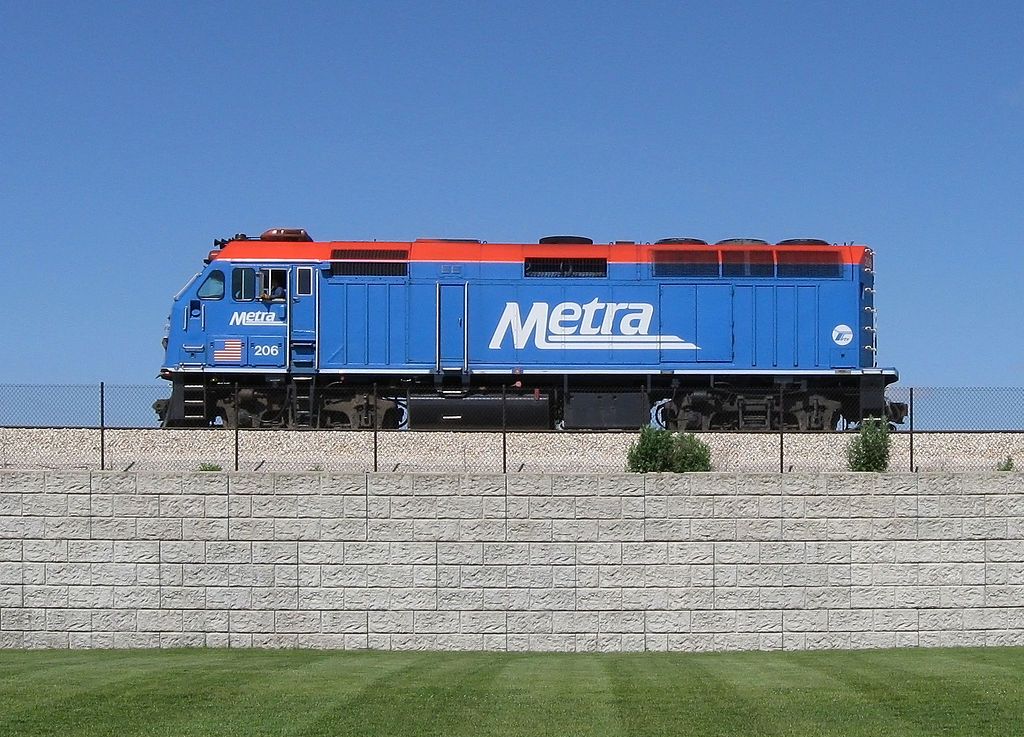
Trains and ships are able to move great loads across greater distances through their own internal processes. But how exactly do they accomplish this? Well, it’s quite simple actually. They just hook up a diesel engine to an electric generator to spurn massive amounts of electrical power. This is known as Diesel-electric transmission and can be found everywhere on the planet. If the generator produces enough electricity, then the extra can be stored in a rechargeable battery, making a quasi-hybrid system!


Image credit Wikipedia