Category: Earth/Climate science

The Paris Agreement

The Paris Agreement

The Paris Agreement

06/03/17

“What is the Paris Agreement?”


Ever since some particular orange haired man decided to pull out of the Paris Agreement, people have been wondering what exactly it is and what a pull out what mean. Well, as I always say, let’s use our scientific mindsets to find out.

Ever since the beginning of the industrial revolution, the climate of the Earth has been rising at an exponential rate, so much so that we have come to the point that immediate global policy must be taken. Back in April 2016, nations from all over the world convened in the city  of Paris to sign a treaty that stipulates the following:

  1. Keep the future global average temperature below 2 degrees Celsius above pre-industrial levels
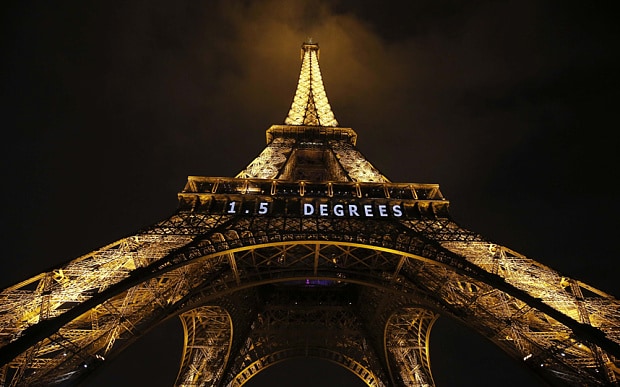
  2. Aim to limit this temperature below 1.5 degrees Celsius to avoid environmental catastrophes
  3. Curb global emissions as much as possible
  4. For all nations to come together every 5 years to set more ambitious targets as required by science
  5. Report to each other and the public on how well they are doing to implement their targets,
  6. Track progress towards the long-term goal through a robust transparency and accountability system.
  7. For developed countries support and assist developing countries in implementing such policies and curbing emissions

By withdrawing from this agreement as one of the heaviest global polluters, the United States will become a dead weight that will slow the rest of the world to achieving all of these goals. If you are reading this and are an American citizen, please, call your senator to urge the president to rescind their previous statement regarding withdrawal.

Evapotranspiration

Evapotranspiration

Evapotranspiration

05/30/17

“How do we account for plants and ground bodies in the atmospheric water cycle?”


For every terrestrial object in the universe with a moisture filled atmosphere, there must be an exchange of water between the ground and the air. So how can we account for the water given back by ground-based objects? Well, let’s use our scientific mindsets to find out. We know that water present in soil and aquatic bodies can evaporate into a gaseous. And we also know that water from plants can transpire through its stomas. Since these two phenomena are highly similar, how about we combine these two processes in our model to form evapotranspiration? Well, it turns out that professional researchers do exactly this to simplify the water cycle model, and is one of the reasons why life can be sustained on the planet.

The cause of ocean currents

The cause of ocean currents

The cause of ocean currents

05/21/17

“What exactly causes ocean currents?”


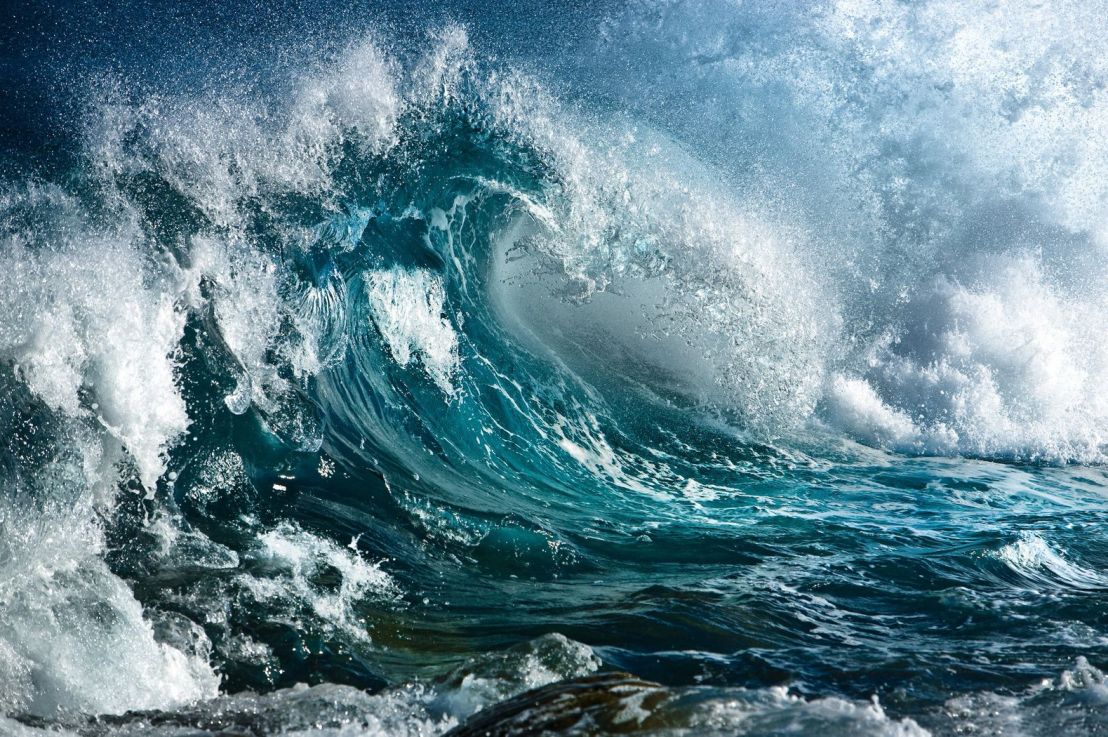
When someone says the word ocean, what do you picture in your mind? Most people probably think of deep blue waves crashing against a beach with more grains of sand than stars in the universe. However, a scientist will think just a tad bit differently. Instead of being limited by immediate sensory perception, they will try to understand the underlying reason of what causes the ocean currents. If this scientist gives in to this curiosity, then they will find out that such disturbances in fact have two possible causes, one form the winds and the coriolis effect and another from internal temperature differences.

Volcanic eruptions’ effect on climate change

Volcanic eruptions’ effect on climate change

Volcanic eruptions’ effect on climate change

05/12/17

“How do volcanic eruptions affect climate change?”


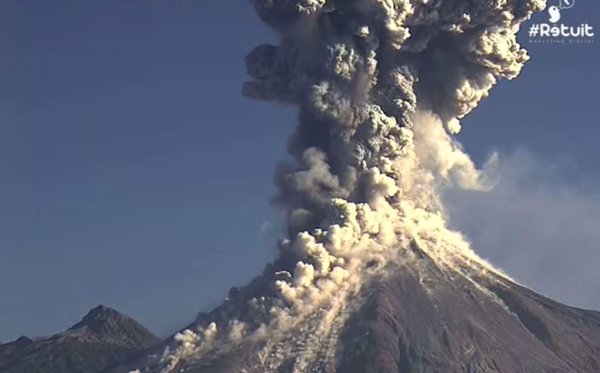
Volcanoes are famous for their mighty and breathtaking eruptions. However, many astute individuals are curious about how such phenomena can affect global temperatures. Well, let’s use our scientific mindset to find out. When volcanoes erupt, a multitude of particles is launched from the Earth’s interior and into the atmosphere. Some of these particles are composed of elements such as sulfur dioxide that block the sun’s rays and induce local cooling, while others are made of heat-trapping greenhouse gasses such as carbon dioxide. However, the effects of the latter are quite minuscule in comparison with the former, and if the particles are able to escape into the stratosphere, then a slight drop in temperatures over a large vicinity of the planet will be observed.

Landfill gas

Landfill gas

Landfill gas

05/07/17

“How does our trash pollute the atmosphere?”


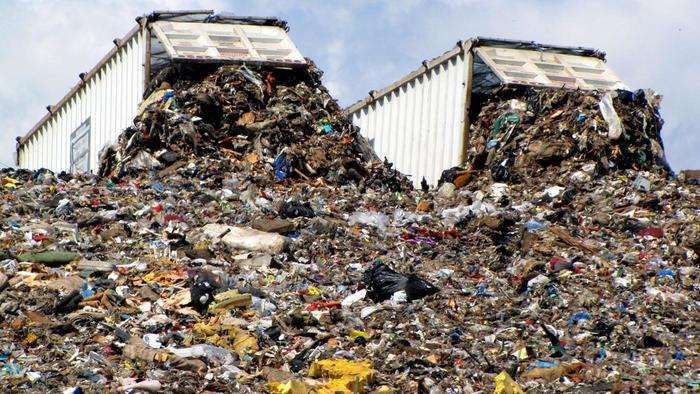
Humanity has a problem. When municipal solid waste (trash thrown out by the public) gets thrown out in landfills, it will slowly decompose. After nearly a year of being in a landfill, methane producing bacteria will begin to emerge and releases a gas known as landfill gas, which is composed of half methane and half CO2. Landfill gas is so potent that it can actually trap heat at a rate of 28-36 times that of CO2 over a 100 years period!

Landfills

Landfills

Landfills

05/06/17

“Where does trash go?”
Every second of every hour of every day humanity disposes of large volumes of trash. However, have you ever wondered where this trash goes? Well, let’s use our engineering mindsets to figure out. One very lazy way is just to dump everything under a big pile of land and cover it up to not worry about it! These systems are known as landfills and are used all over the world, from the plains of North America to the forests of Europe.

Exhaust gas

Exhaust gas

Exhaust gas

04/22/17

“Why do diesel engines vehicles cause pollution?”


Every day, you probably hear about how the levels of greenhouse gas concentration in the atmosphere are growing exponentially, and how much of that derives from the use of petroleum vehicles. However, why do such machines cause so much harm? Well, let’s use our scientific mindset to figure this out. Upon analysis, one would be able to obtain that the exhaust gas emitted by vehicles are composed of carbon dioxide, carbon monoxide, sulfur dioxide, nitrogen oxides, and hydrocarbons. These pollutants are potent greenhouse gasses, and can not only impinge upon the health of the atmosphere but the health of human society through the instigation of smog and other health hazards.

Desalination plants

Desalination plants

Desalination plants

04/21/17

“How can we make saltwater drinkable for humans?”


Humanity is running into a problem. With each year our water supplies are getting lower and lower. Soon enough, we may not be able to provide ourselves with one of the most basic components of life.


But does it have to be this way?
If we apply our engineering mindsets, then we can devise a method for water purification to sustain our livelihoods. To begin, let’s start out with some simple chemistry. 96% of the water on this planet is stored in oceans as salinated water. And because of its salty nature, by default, it is unsafe for human consumption. However, we must take one more fact into consideration, that the evaporation point of liquid water is lower than that of salt. So what if we used some simple logic and create a device that would heat salt water up until the point of evaporation, move it over into another container, and then condense it into drinkable water? Well, this is the fundamental idea behind a system which engineers have termed desalination plants, and are used to treat saltwater around the world. One downside of traditional desalination plants is the vast amount of energy required to heat up the water, taking around 5 kWh for a cubic meter of just fresh water!

Aeroponics

Aeroponics

Aeroponics

04/20/17

“How does NASA grow plants suspended in the air?”


With the advent of hydroponics, the roots of plants have been liberated from the soil, allowing for far more sustainable agricultural systems to develop. One of these methods actually involves suspending the roots of the plant in the air and then filling the environment with a nutrient mist. Scientists have termed this process aeroponics, and allows for a higher density yield and allow for the roots to more efficiently absorb oxygen. However, one drawback is that this system must be constantly sprayed with a 35% hydrogen peroxide to prevent the spread of impinging fungi and bacteria. NASA uses aeroponic systems to grow food for astronauts on year long missions.