Category: Chemistry

Phase Changing Materials for Solar Panels

Phase Changing Materials for Solar Panels

Phase Changing Materials for Solar Panels

09/08/18

“How can we use phase-changing materials to cool down solar panels?”


Solar PV is the fastest growing energy system in the world. But that doesn’t mean that it’s without its problems. When they become too hot, they become very inefficient and reject a lot of heat into nearby structures. One way to counter this is to attach a layer of Phase Changing Materials at the back of the panel. The phase-changing material is a material at its critical value so it can absorb a voluminous amount of latent heat without changing its temperature. Not only does it act as a passive heatsink but it can store this thermal energy to be used in other applications such as heating water. Phase changing materials are usually attached in a capsule behind the PV panel and have an air gap behind them to ensure cooling. This is a great example of Phase Changing Materials for Solar Panels.

How to Produce Hydrogen Gas using Ethanol

How to Produce Hydrogen Gas using Ethanol

How to Produce Hydrogen Gas using Ethanol

08/27/18

“How can we produce Hydrogen Gas using Ethanol?”


Natural Gas Reformation is currently the most popular way to produce hydrogen gas. However, a large amount of greenhouse gases are released in the process, contributing to climate change. So is there a more sustainable way to produce hydrogen gas? Well, it turns out that Ethanol is an amazing substitute for natural gas! Therefore, we can Produce Hydrogen Gas using Ethanol.

Hydrogen Production through Electrolysis

Hydrogen Production through Electrolysis

Hydrogen Production through Electrolysis

08/26/18

“How can we produce hydrogen using electricity?”


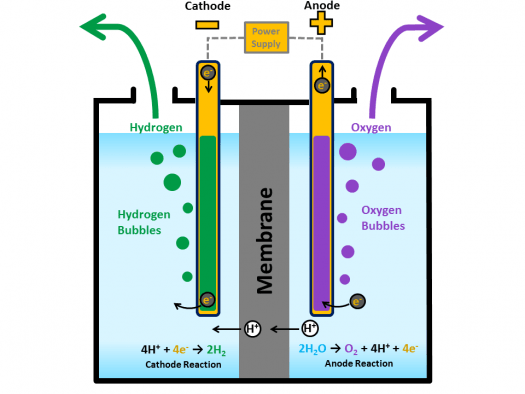
Hydrogen is an amazing material. However, extracting it can be quite difficult. One way to do it is to take an anode and a cathode separated by an electrolyte and a membrane. The water will react at the anode to produce oxygen and positively charged hydrogen ions. The electrons will flow through the circuit and the hydrogen ions will move across the membrane to the cathode side. They will then meet and recombine to form hydrogen molecules. This way, we can Produce Hydrogen using Electrolysis. Since the only thing that needs to be added to the system is electricity, if our grid is powered by renewables then we can have a carbon neutral method of hydrogen production!


Image credit Department of Energy

Natural Gas Reforming

Natural Gas Reforming

Natural Gas Reforming

08/25/18

“How can we obtain Hydrogen from Natural Gas?”


Hydrogen is just as difficult to extract as it is useful. But luckily, there is one method which is able to produce it in a cost effective manner. Most of this is done in a process where high-temperature steam (700°C–1,000°C) is combined with a methane source such as Natural Gas under high pressures (around 2-35 bar) to produce hydrogen, carbon monoxide, and a relatively small amount of carbon dioxide. This process is known as Natural Gas Reforming and is used to create 95% of the natural gas supplies in the U.S.


Image Credit: ceram.material.tohoku.ac.

How can we obtain Hydrogen Fuel

How can we obtain Hydrogen Fuel

How can we obtain Hydrogen Fuel?

08/24/18

“How can we obtain Hydrogen Fuel?”


Hydrogen Fuel (H2) is an invaluable resource. Whether it be for powering hydrogen fuel cell batteries or making agricultural fertilizer. However, because of its special bonding properties, pure hydrogen is incredibly difficult to extract. So how can we use our engineering mindset to solve this problem? Well, there are a number of different ways. Natural gas can be reacted with high-temperature steam to for water to create H2 and Co, a very high power electric current can split water into dihydrogen and oxygen, Renewable liquid fuels, such as ethanol, can be reacted with high-temperature steam to obtain H2, and biological fermentation can occur. In the end there are many ways to make our desired fuel in a safe and economical manner.

Transformer Oil

Transformer Oil

Transformer Oil

08/07/18

“Is oil used to insulate transformers?”


Transformers are an inseparable part of Critical Grid Infrastructure. And part of their day-to-day functioning requires insulation material. However, such material will have to be able to withstand high temperatures and sudden electric discharges. This is commonly solved using Transformer Oil, a substance employed all around the world.

Quasistatic Processes

Quasistatic Processes

Quasistatic Processes

07/14/18

“Can a thermodynamic process be so slow that it’s almost static?”


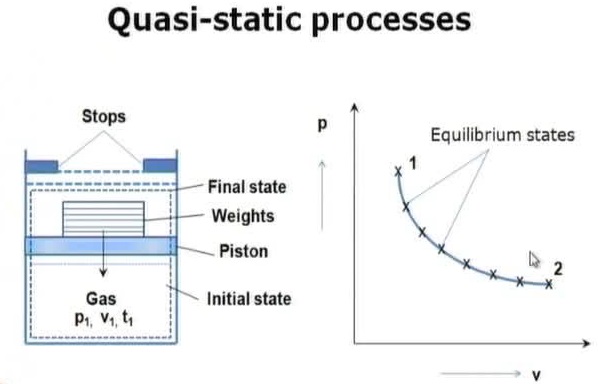
Thermodynamic processes can happen over any period of time. Sometimes they happen so slowly that they almost seem to be static. These Quasistatic Processes are often used in analysis of Iso-Processes due to their stable nature.

The Physics of a Fireworks Explosion

The Physics of a Fireworks Explosion

The Physics of a Fireworks Explosion

07/04/18

“What causes fireworks to explode?”


On 4th of July, Americans are used to seeing fireworks light up the night sky. However, have you ever wondered how exactly do they work? Well, let us use our scientific mindsets to find out. If we investigate, then we will find out that fireworks contain gunpowder in a container surrounded by a Launch Container. When a Lift Charge ignites and propels the container into the sky, there will be a time delay until it reaches its apex, at which it will explode and release a myriad of different colors!


Have a great 4th of July everyone with lots of V/I to the current regime!