Author: Isaac Gendler

Malleability

Malleability

      Malleability           05/05/16


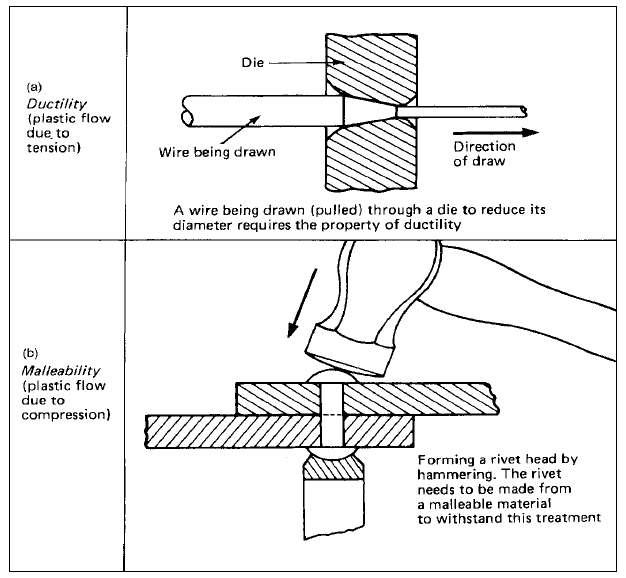
Malleability is the ability of a substance to deform under pressure. As such, Malleability is defined as being a physical property of materials. Most malleable materials are the ones numbered one through twelve on the periodic table of elements. Substances that are malleable are often able to be hammered into thin sheets.

Ductility

Ductility

Ductility                   05/04/16


Have you ever wondered why objects seem to stretch when a tension force is applied to them? Then you have just thought of the process of ductility. Ductility is the ability of an object to stretch when under stress. A highly ductile object may be stretched into a wire. Ductility is kindred to Malleability, or the ability of an object to be deformed under pressure.

Laplace transformations

Laplace transformations

Laplace transformation           05/03/16


One of the most powerful techniques used to solve first order differential equations related to physical phenomena is known as the Laplace transformation. A laplace transformation takes a function f(x) and simplifies it into an equation (s)by using the transformation technique  F(s)={f(x)}=0e-s*x*f(x). This will simplify the function in to a less complex one of variable s.

White blood cells

White blood cells

White blood cells           05/02/16


Have you ever wondered why your body is able to fight of malevolent invasive organisms? You can thank white blood cells for this. White blood cells are like the soldiers of your body, fighting to defeat the invading organisms.. White blood cells account for 1 percent of the blood cell count of your body. There are five types of white blood cells. Monocytes have a longer lifespan the average WBC and help break down bacteria. Lymphocytes create antibodies to help to defeat invaders. Neutrophils desecrate and digest invading bacteria and fungi. Basophils are the “alarm sounders” of your body, warning other cells to respond to the enemy invasion. Eosinophils attack and kill parasites, cancer cells, and ameliorate the effects of allergies.

Fractal Geometry

Fractal Geometry

Fractal Geometry                       

        05/01/16


Have you ever that it many natural objects, there seems to be some form of a repeating pattern? Like how the branches of a tree look similar to the route of a tree? If you are able to discern this, then you probably have a mathematical mind, because you have just stumbled on the field of fractal geometry. Fractal geometry deals with ever repeating sets of geometric patterns, where the patterns branches of from the end and becomes smaller and so on. Basically, the pattern will repeat at every scale. Fractal geometry can be found everywhere, from art to fossils to 3-D animation techniques to coastlines to clouds and even in complex physical and biological systems!

Image:

A classic example of a fractal set, A sierpinski triangle. Notice how the triforce pattern ever repeats on the triangular regions.

Dark matter

Dark matter

Dark matter                            04/30/16


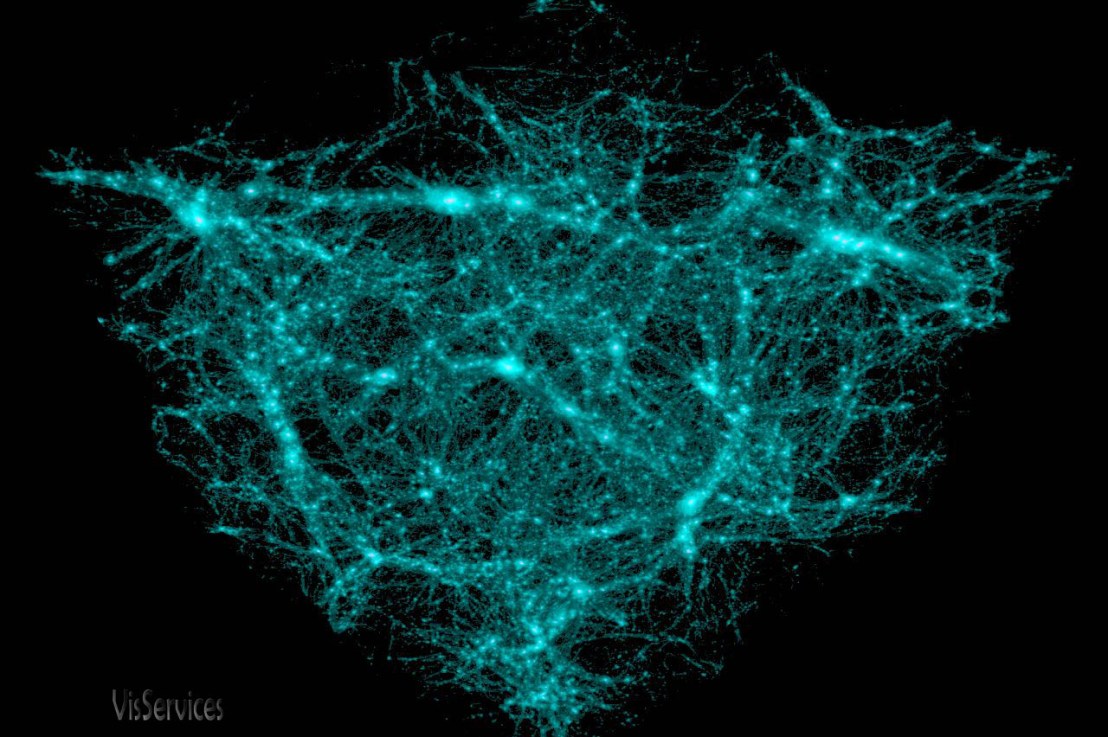
Theoretical physics has recently run into a startling contradiction. When analyzing mutually spinning galaxies, we find that the force needed to hold them together is far less than what their visible mass is composed of! What if it’s possible that there might be some possible extra mass that is not reactive to light? This possibility of mass is known as Dark matter. Dark matter is thought to comprimes as much as much as 85.0% of the universe, and what is most interesting is that it does not react with the electromagnetic spectrum.

The age of the universe

The age of the universe

             The age of the universe            04/30/16


Have you ever pondered how old is the universe that we inhabit? Believe it or not, some of the greatest minds of the human species have devoted their entire lives to that very question. There are two methods for finding the age. The first method involves some very intuitive reasoning. We know a few basic facts about the universe; first of all, galaxies are moving away from eachother at a similar velocity (adjusted for the acceleration of the universe, and second of all, we know (or at least we think we know, remember science is all about hypothesis) that at the beginning of the universe all matter was concentrated in a single point. Therefore, by measuring the speeds and the distance of galaxies, we can solve for the time elapsed in the universe. It’s like trying to solve for the time of a race if you know that everyone had a constant velocity and had a beginning spot! The second, more technical method involves analyzing globular clusters around the milky way and doing some really cool astrophysics stuff with them. By averaging both measurements, we get a value of 13.772 billion years! (with an uncertainty of around 59 million years, that’s science for you!)

Hall effect and applications

Hall effect and applications

Hall effect and applications                   04/29/30


Have you ever wondered what would happen if a magnetic field interacted with a conductive plate? If so, then you have just independently postulated the hall effect. Suppose we have a current going through a conductive plate. As one know, there is a net movement of electrons within the material. Also known is that a magnetic field will cause a deflection of charge, it’s direction depending on it’s charge. So wouldn’t it be logical that if a magnetic field were to come in contact with the plate which contains a net movement of charge, That the charges would become polarized to each side of the plate? And as a second order effect, the new disposition of charges would cause a voltage to be created?


One very important application of the hall effect to the field of Mechanical Engineering is known at the Wheel speed sensor. If we put such a device parallel to a rotating wheel, then the rotation of the  gears of the wheel would induce a magnetic field. If one is able to measure the changing magnetic field, then it would only be logical that we would be able to obtain a measurement for the RPM

Quantum tunneling

Quantum tunneling

   Quantum tunneling        04/29/16


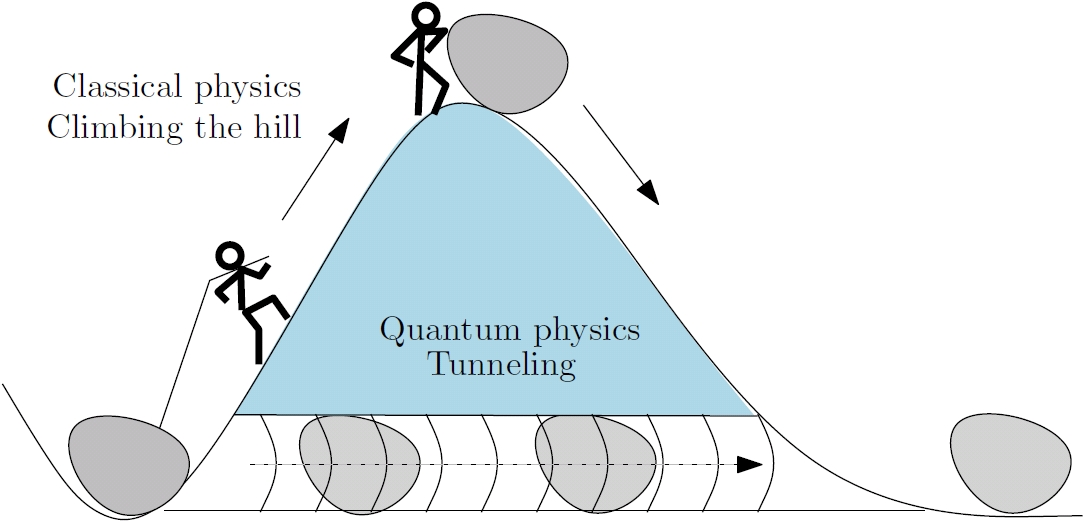
One of the most interesting effects in the universe is known as Quantum tunneling. In Quantum mechanics, it is possible for a particle to pass through a barrier without having enough internal classical energy! To illustrate, let’s use a ball being rolled up a hill an analogy. Under classical mechanics, a ball (particle) can only roll up a hill if it has enough energy to surmount it (break the barrier. In quantum conditions however, there is a certain percentage that the ball can absorb energy from it’s surroundings to finish the job! What is extremely extremely fascinating is that water has been shown to exhibit this effect! Imagine the possible consequences, such as water being able to pour through a substance without needing to cross classical barriers.