Author: Isaac Gendler

AC motors

AC motors

AC motors

07/15/16

“How can we apply AC electricity to motor technology?”

Motors are undoubtedly one of the most useful inventions by humanity. However, how can we integrate this concept with AC electricity? Well, let’s build such a machine in our mind first. This machine will have two primary parts, a stationary stator and a rotary rotor.  The stator consists of a series of highly permeable steel laminations cast inside a circular frame. Winding will pass through this stator, and when AC current is passed through this winding, an electromagnetic field will be formed. This current will go in three phases, so each starts at a different third of the AC cycle, and because of these three different phases, a constantly rotating magnetic field will be formed. A conducting cage will be housed inside the stator to act as a rotar. Since conductors experience a force when exposed to a constantly changing magnetic field, the rotor will begin to rotate, causing mechanical power to be generated. The Speed of the rotor is called the rotor speed, and the speed of the magnetic field is called the synchronous speed. Due to the laws of physics, the rotor will never be able to catch up to the synchronous speed.


Linear motors

Linear motors

Linear motors

07/14/16

“What would happen if you made a machine by unfolding a rotary motor?”

Let’s suppose that we want to move something in a linear direction in a highly efficient manner.  What if we took a rotary motor, and unfolded the shell so it would move in a linear direction? Believe it or not, not only does this work in theory, but it has been accomplished before. Engineers have termed this mechanism a linear motor.

To get the big picture, the linear motor works as follows; A square forcer will include an iron core and a thermal protection device. This forcer will rest on a stator will encase magnets, electric wires, a base, and a shield. A Linear guideway will be placed in between the forcer and the stator to allow for movement of the former. The forcer will be housed in forcer plates, and finally a position encoder will be attached to provide feedback on the position of the linear motor. The forcer moves because the controller will provide a constantly changing current at different times to the windings, which in turn will interact with the conductive rotor, causing a magnetic force on the forcer, which will move the rotor at very high speeds.

Linear motors are very pragmatic for many uses. Linear motors have no wearing parts, which makes them faster to build, have longer life cycles, have more efficient temperature control, have higher velocities, and much less polluting to maintain. Linear motors are often applied for industrial, servomechanism, and transportation purposes. Countries such as Germany, Japan, China, the , and the USA are currently using or considering linear motors for transportation purposes.


Eddy Currents

Eddy Currents

Eddy Currents

07/13/16

“What happens when a conductor moves through a magnetic field?”
Let’s consider a situation. Say we have a conducting material, such as copper or iron. And let’s also say that we are going to pass this material through a magnetic field. Since conductors contain electrons, and when electrons move at a speed relative to a magnetic field, a force will be generated. And since conductors allow electrons to move within the internal structure of the material, these electrons will swirl around in a way so that they generate a magnetic field that opposes the original magnetic field. Because such movement of electrons are circular in nature, scientists and engineers have termed this phenomena eddy currents.

Air compressors

Air compressors

Air compressors

07/12/16

“Is it possible to store potential energy into pressurized air?”

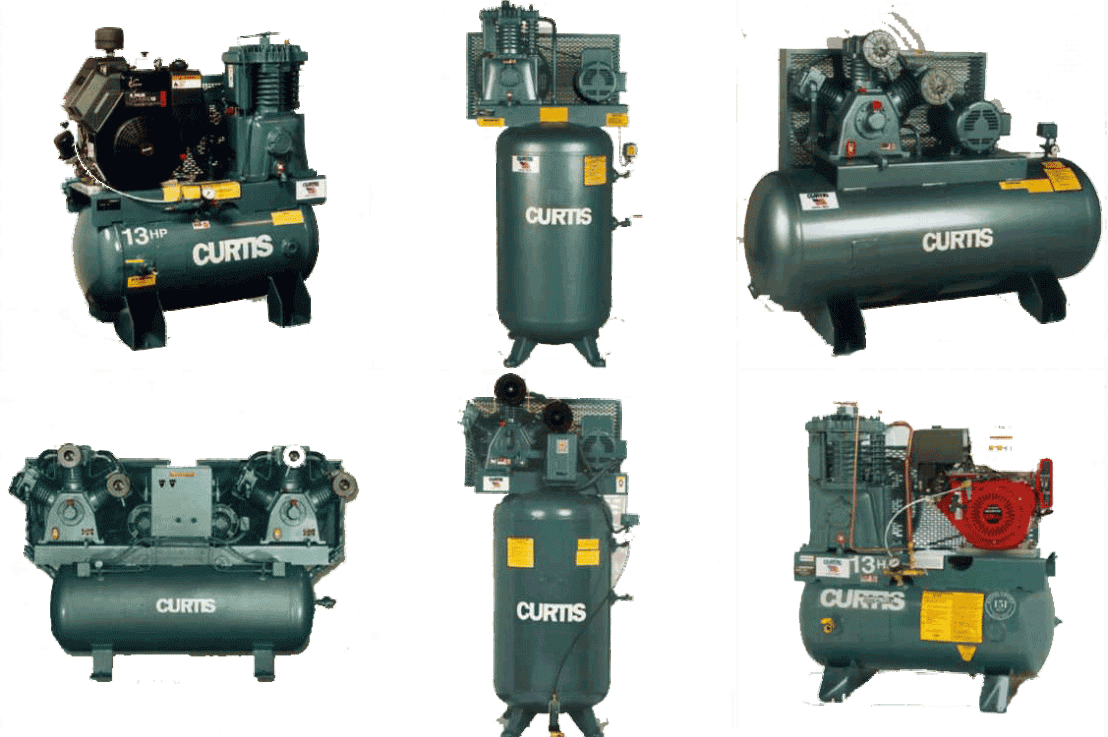
Human society requires energy to be stored in various of forms. Wouldn’t it be useful if we could store all of that potential energy in pressurized air? Well, thanks to civilization’s ingenuity, air compressors have been invented to do that. Air compressors come in two types: positive displacement (which forces air into a chamber which decreases in volume to compress the air) and dynamic displacement (Which uses rotating machinery to impart kinetic energy on to the air). There are many forms of the positive displacement, such as a piston type (Which uses a kinetic energy from a piston t store compressed air), rotary screw compressors (which uses positive displacement that matches two helical screws and guides air into a chamber), and vane compressors (Which uses a slotted rotor with a variable blade placement to guide air into a chamber and compress the volume). Air compressors are often used to work with jack hammers and rotary screws.

Welding

Welding

Welding

07/11/16

“How can we make a high strength connection between two mechanical parts using heat?”

When trying to mate two parts, engineers often run into an issue. Sometimes, conventional methods such as brazing and soldering are not enough, and a more powerfull process is required. However, thanks to the ingenuity of humanity, a new process has been made to solve this road-block. What if we took the two conjoining surfaces, melted them a bit, and then attached the two heated areas together? Not only is this process very effective, but it also very convenient. Scientists and Engineers have termed this process welding. There a many types of welding

One possible methods of welding uses an electrode (a welding rod) to carry electric current to weld the metal. The wire for the electrode is covered in flux for protection, and an electric arc is created along the electrode the melt the metal, generating temperatures of nearly 3600 degrees Celsius!. In addition to the high intensity heat, the subject metal is shielded to be protected from reactive elements in the atmosphere. This process has been termed Shield Metal Arc Welding. This method is often used in steel erection, heavy equipment repair, construction, and pipeline welding. The advantages of using SMAW is that it’s portable, low cost, has no need for a shielding gas and can work on unclean materials, while the disadvantages are that it requires a high level of skill to use, generates a large amount of waste and does not work on thin metals.

Another welding method can be achieved by using a non-consumable tungsten electrode to heat the base metal and create a molten puddle, all while being protected by a shielding gas. This process has been termed Gas Tungsten Arc Welding, since both gas and tungsten are used in this process. The common applications for this method is aerospace welding, piping systems, and motorcycles. The advantages of this method include the fact that it produces clean, high quality welds, it can weld very thin materials (in contrast to SMAW welding), It can fuse a large number of alloys, it creates splatter free weld, and has highly aesthetic weld beads. The drawbacks of using  GTAW is that it requires high operator skill, it is very costly, has lower deposition rate, needs an external gas, and materials must be completely clean.

Next up, is an interesting combination of the above mentioned methods. This method uses a continuously fed electric current to melt a joint (like the SMAW), while being protected by a shielding gas (like the GTAW). This process is known as Gas Metal Arc Welding. GMAW is often applied to small to large manufacturing, auto-body uses, and fabrication. The strengths of using this process include being very efficient (therefore producing little waste), needs lower heat inputs, a minimal weld cleanup, and being comparatively easy to learn. The drawbacks of using this method include a requirement for a shielding gas, having limiting positions, high equipment cost, can not wield thick materials, and material must be free of dirt and the like

The final process is very similar to GMAW, but with one fundamental difference: it uses a tubular filled wire filled with flux instead of a solid wire. Engineers have termed this process Flux-Cored Arc Welding. This method comes in two variants, self-shielding which only uses the flux to protect the arc with no gas and dual-shielding that uses both the flux and the gas. FCAW can often be found being used with thick materials, steel erection, and heavy equipment construction or repair. The strengths of this process include a higher electrode efficiency, lower heat inputs, minimal weld cleanup, reduced welding flames, and no need for external shielding gas. However, the drawbacks of this system must be discussed, as it creates slag, is not recommended for thin materials, generates a lot of smoke, and has a high price tag for the equipment

All in all, welding is a fascinating and diverse process that has implementations in many disparate possibilities.

Atomic clocks

Atomic clocks

Atomic clocks

07/10/16

“Is it possible to have clocks accurate to a billionth of a second?”

We use clocks to keep time everyday. Whether it be for scheduling flights or processing the internet, civilization depends on clock technology to keep everything in balance. Clocks work by measuring the oscillations of a pattern, such as measuring how long a pendulum takes to swing back and forth or the earth to move around the sun. However, such machines are not always perfect. Since clocks (of all types) are physical objects, they are subject to the physical laws of the universe. Consequentially, these contraptions are prone to perturbation, which in effect makes them liable to becoming out of sync with other clocks. These inconsistencies add up over time (pun defiantly intended), and if they go on for too long, then drastic consequences can happen. For example, high speed finance trading could go asunder, which would have devastating effects on the global economy.

So how can we make a clock so accurate that we would never have to worry about civilization collapsing?

Well, luckily for people anxious about such an event, scientists and engineers have constructed marvelous devices known as atomic clocks. Atomic clocks work by measuring the internal oscillation of a cesium atom. Cesium atoms vibrate over 9 billion times in one second, and atomic clocks base their own measurements off such vibrations. Atomic clocks that are so accurate that commercial units are accurate to one second in 3 million years! Because of this genius design, scientists and engineers now base the unit of the second is based upon how  atomic clocks can measure the osculation of a cesium atom.

Joule heating

Joule heating

Joule heating

07/09/16

What effects does dissipated current have on a wire?

Let’s think about something. When particles move through a conductor, we know that they do not move in a straight line, but instead in a semi-random and chaotic pattern of colliding off the walls of the material. During the collision process, some of the kinetic energy of the electrons is converted into thermal energy inside the conductor. After a while, this process (Which scientists and engineers have termed joule heating) will have a macroscopic effect on the temperature of the material. We can quantify Joule heating by using the formula H = k* I^2 *R * T, where H is the heat, K is a constant I is the current, and R is the resistance of the material. One very pragmatic application of joule heating is in a technology that we all know of, the incandescent light bulb. The increased temperature of the filament in the light bulb causes it to glow, which gives off light to the surrounding area.

Thermresistors

Thermresistors

Thermresistors

07/08/16

“Are there materials whose resistance depends on the surrounding temperature?”

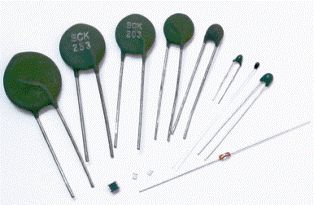
Wouldn’t be useful if we had a material whose resisted changed proportionally to temperature? For example, we could harness it for so many applications, such as in ventilation, we could increase the speed of a fan if the surrounding area becomes too hot, or maybe we could have a thermal conductivity measurement system. Well, thanks to the power of the human mind, there are in fact thermally sensitive resistors which are simply called thermresistors. Thermresistors come into two types, P-type and N-type. The resistance P-type thermresistor increase with temperature (P standing for positive), while the resistance of N-type (negative) thermresistors decrease with temperature. When using thermresistors, one has to be careful of the influence of thermal runaway effects that result from Joule heating. All in all, thermresistors are fascinating devices that are a testament the the raw power of human ingenuity.

Partial pressure

Partial pressure

Partial pressure

07/07/16

“How can we quantify the different pressures contributed by different gases in a container?”

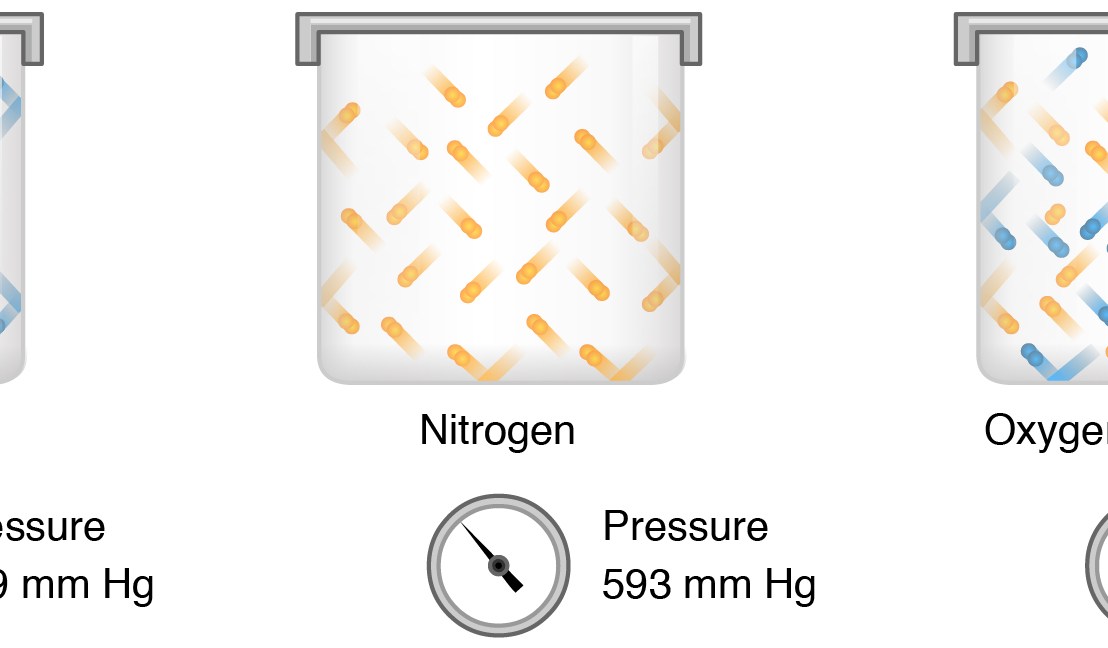
Let’s think about something. We know that a mixture is a combination of different gases held within a given volume. We also know that different gases are made up of different molecules. And we also know that different molecules come in different sizes and forms, giving them different quantitative properties. And one of these different quantitative properties happens to be pressure. So therefore, gases of different chemical makeup will have different pressures. So how can we mathematically determine the pressure that each gas contributes to the mixture? Well, this is actually one of the easiest things to solve for in chemistry. All one has to is find the total percentage contribution to the mixture that one of the gases contribute, then multiply that concentration by the total pressure, and one can get the amount of pressure that the individual gas contributes. Scientists and Engineers have termed this the partial pressure of the gas.