My Time as a Volunteer for the Global Climate Action Summit
09/15/18
“What was it like to be a volunteer at the Global Climate Action Summit?”
Things in Washington D.C have changed drastically over the past few years. With the ascent of the new administration, promises that the United States has made to the world have been broken. Chief amongst these has been the withdrawal of the Paris Climate Agreement, a worldwide accord to limit greenhouse gas emissions to prevent global temperatures from rising 2 degrees Celsius above pre-industrial levels.
Thankfully, this action does not reflect the mindset of the entire United States. This is why several groups and individuals have decided to organize the Global Climate Action Summit, a multi-day gathering of trailblazing leaders from a variety of sectors to discuss their ideas and support for climate change mitigation. The event took place in the majestic city of San Francisco, from September 12th to the 14th, and I was lucky enough to be chosen as a volunteer delegate greeter for the last day.
I started my morning traveling over 77 km (48 miles) from my apartment in San Jose to San Francisco using three different modes of public transportation (light rail → bus → BART (subway)) to keep my journey a low-carbon one.


Once I arrived in San Francisco, I quickly made my way over to the Moscone Center where the volunteer check-in was being held.


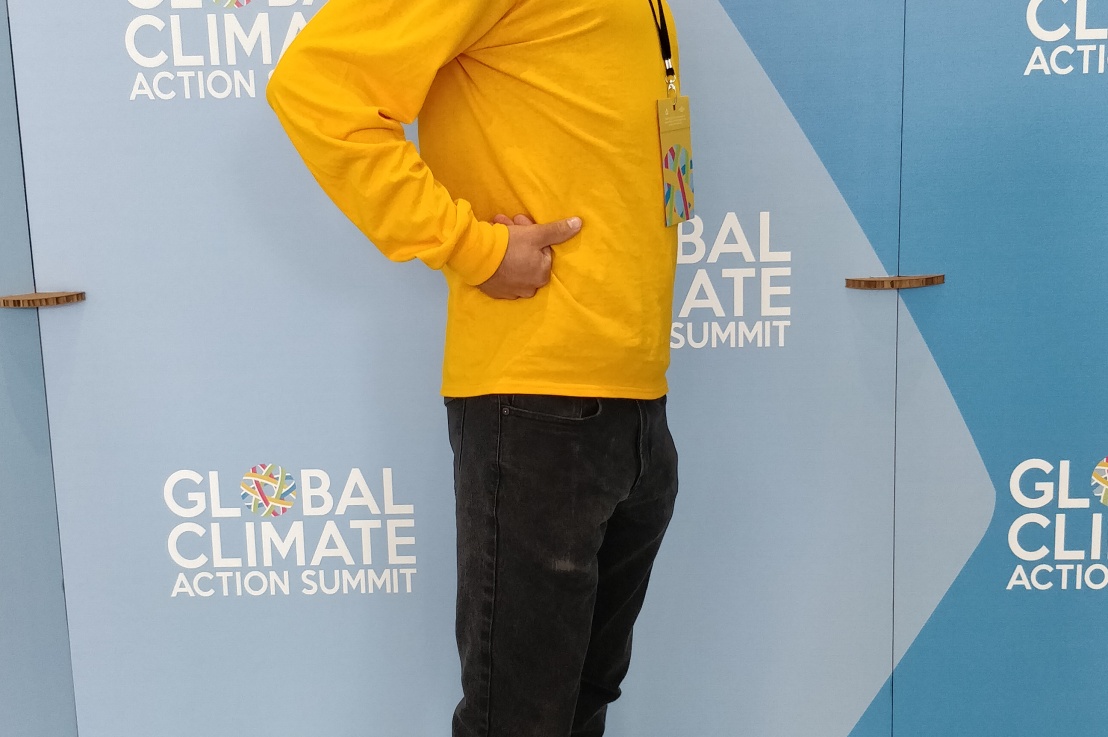
I was quickly registered with the system (and got a neet yellow shirt!) and met some of my coworkers for the day.


We then made our way to a local cafe to get some lunch. I brought my own homemade Rice and Beans, but that didn’t stop me from using my free ticket to get a Dragon Fruit Parfe!


Once we finished lunch, we scurried back to the registration table where we were then escorted to the rooms where we were assigned to work. I was given a space focused on Climate Change Adaptation (one of my favorite topics in the world!).

With the help of my fellow delegate greeters, we were able to control the swarm of international leaders coming into the conference room.


Once everyone was settled in, we were able to join the audience in the seminars. we were able listen to a diverse array of speakers talk about a whole platter of topics related to Climate Change, whether it was a Montanna Wildland Firefighter and Student discussing about how fires are becoming more and more exacerbated, Community leaders explaining how to restore dignity among Indigenous people, (with special emphasis to Girls and Women) against the effects of Climate Change, the President of the American Geophysical Union elaborating on how Scientists need to connect to Policy-Makers, and many more.


Once the event was done, everyone slowly made their way out of the main building and into the main floor, where some networking and awesome picture taking was done.

I had an unforgettable experience at the Global Climate Action Summit. The set-up, the speakers, and the volunteers were all many standard deviations above the norm. To meet so many people from so many different countries, work fields, and walks of life focusing on one of the greatest existential threats to humanity was simultaneously humbling yet motivating. I learned so much about what can be done and what I should do. Definitely worth every second spent.
Speaking of not forgetting, I think I should take the time to thank everyone who made this time in my life all possible. Thank you Reshma Singh for making me aware of this opportunity, Nikka Tahan for being such a great organizer, everyone who managed, volunteered, spoke, and attended the summit for making it so cool, and most of all every janitor, security guard, and piece of support who did such a fantastic job at the venue!
Hope to see all of you later, and happy 1,000 posts on the Science Blog!!!
Image credit c40cities.com