Month: October 2019

How Energy Efficiency Appliances Can Be Less Accessible to Lower Income Communities

How Energy Efficiency Appliances Can Be Less Accessible to Lower Income Communities

How Energy Efficiency Appliances Can Be Less Accessible to Lower Income Communities

10/08/19

“Why is it that the most advanced energy-efficient appliances are not always available in lower-income communities?”

Who doesn’t love the latest energy efficient appliances. Not only do they help save the planet, but they also look quite attractive. However, because of their higher upfront cost and complicated supply-chain logistics favoring wealthier areas, these new devices are often not available in lower-income areas at the same frequency. This discrepancy causes such communities to be stuck with higher energy bills and have greater difficulty recovering from a blackout. All of this as a result of How Energy Efficiency Appliances Can Be Less Accessible to Lower Income Communities.
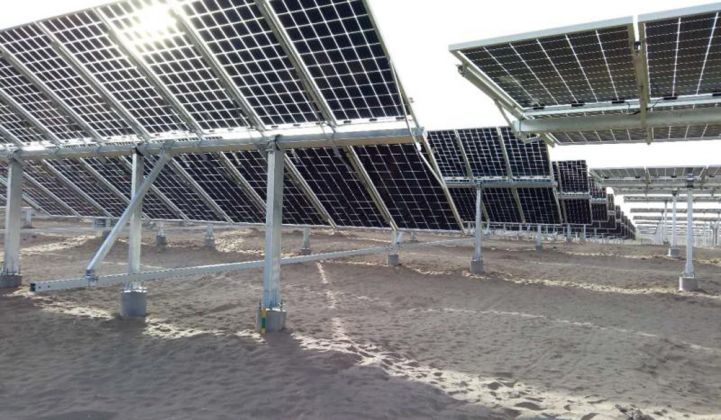
Bifacial Solar Modules

Bifacial Solar Modules

Bifacial Solar Modules

10/07/19

“How can a solar panel receive energy from both sides of its panel?”

Solar modules are usually well-known for looking out into the sun with only one side capable of absorbing energy. However, the ground often reflects usable sunlight back. To capture this, a second solar module can be installed on the opposite side, dramatically increasing energy yield. These Bifacial Solar Modules are starting to become market ready technologies and may soon become a common sight.

Image credit assets.greentechmedia.com

Progressive vs Regressive Carbon Tax

Progressive vs Regressive Carbon Tax

Progressive vs Regressive Carbon Tax

10/06/19

“How can we make a carbon tax more equitable?”

Carbon taxes are a hot topic in the energy community. Although it is touted as one of the most efficient and bipartisan ways to combat climate change, an improper implementation can result in massive inequalities. If it ends up taxing lower income individual individuals more such as a gas tax, then it would be considered a regressive tax. If it taxes wealthy individuals more, such as a tax on boat oil. Then it would be considered a progressive tax. When implementing such solutions, governments must consider if it is a Progressive vs Regressive Carbon Tax.

The Economic Impact of an Energy Crisis

The Economic Impact of an Energy Crisis

The Economic Impact of an Energy Crisis

10/05/19

“What is the economic impact of an energy crisis?”

Energy is the lifeblood of an economy, whether it be the petroleum that moves vehicles or the energy that powers our homes. So when there is an energy crisis, commercial activity falters, resulting in an economic crisis. This is The Economic Impact of an Energy Crisis.

Asset Resilience Prioritization

Asset Resilience Prioritization

Asset Resilience Prioritization

10/02/19

“How should we prioritize assets for resilience?”

Many institutions and communities all over the world have to deal with limited resources. And this applies to the world of resilience. Sometimes we will not be able to have enough backup power in the case of a large-scale power outage. As a result, different assets will have to be given different levels of priority of power. This Asset Resilience Prioritization is one of the most important parts of resilience planning and is necessary for every planner.

Minimum Efficiency Reporting Value

Minimum Efficiency Reporting Value

Minimum Efficiency Reporting Value

10/01/19

“How can we quantify how effective an air filter is?”

Air filters come in all sorts of varieties. However, sometimes we may need to work on a project or be exposed to conditions that require a desired level of protection. For this reason, the American Society of Heating, Refrigerating and Air-Conditioning Engineers have developed the Minimum Efficiency Reporting Value, commonly referred to as the MERV scale, which quantifies the level of minimum particle size that can be filtered. The scale starts at 1 (for particle sizes greater than 10.0 μm) to 20 (for particle sizes less than 0.3 μm).