Month: August 2018

Winding Failures

Winding Failures

Winding Failures

08/04/18

“How can the winding in a transformer fail?”


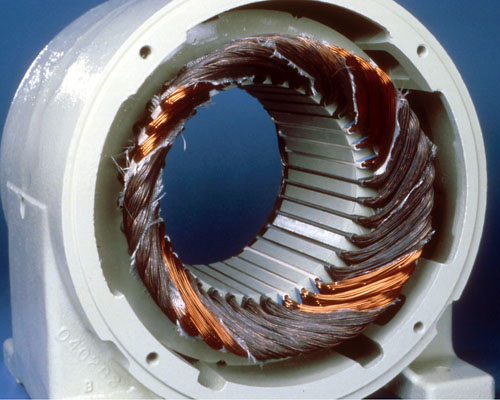
Transformers are some of the most essential pieces of critical infrastructure. However, like every other machine, they can break down from time to time. One instance of this is known as Winding Failures. These occur when the voltage on the transformer windings are too close to the ground and fail.

Transformer Faults

Transformer Faults

Transformer Faults

08/03/2018

“What happens when transformers go wrong?”


Transformers are one of the most important pieces of infrastructure. They are like the pins keeping the yarn that is the grid connected. However, sometimes they have problems such as windings going bad or a broken core, which could have consequences for the grid. Transformer Faults can result in loss of power, voltage overheating, distribution problems, and a myriad of potential problems.

Quasi-static Time Series

Quasi-static Time Series

Quasi-static Time Series

08/02/18

“How can we work with time-dependent and discrete data?”


Distributed Energy Resources can have many different discrete processes that are time dependent such as solar panels producing usable current and batteries absorbing energy. And sometimes these time-dependent processes might actually have multiple different time periods. Since normal analysis is too difficult to integrate with this, we can use something called Quasi-static Time Series to quantify our data.

Resilience Outcomes

Resilience Outcomes

Resilience Outcomes

08/01/18

“How can we evaluate resilience performance?”


Resilience Performance is great for seeing how well a system can cope with sudden disasters. However, sometimes we will also need to analyze how effective its response is. This is where we can apply the metric of Resilience Outcomes. Common examples of Resilience Outcomes include reduced damage from disasters and resumed economic activity growth.