Month: October 2017

PV monitoring

PV monitoring

PV monitoring

10/22/17

“How can we monitor the efficiency of our solar power systems?”
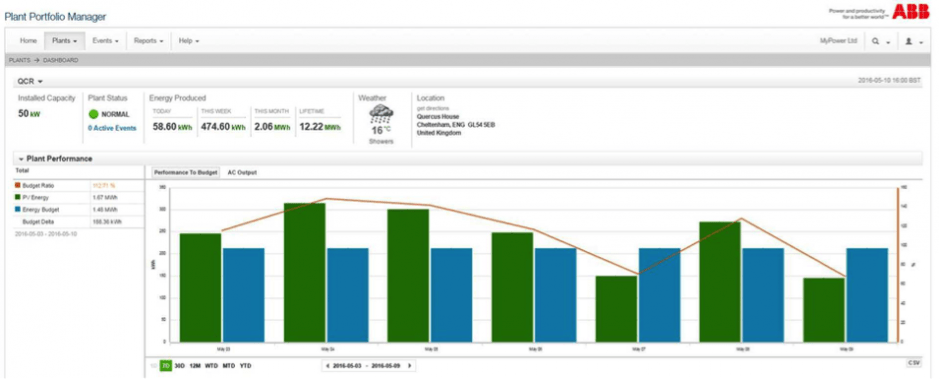
Solar panels are pieces of very active technology. And as such, they are prone to fluctuations in reliability and efficiency. So how could we monitor such changes? Well, what if we were to use software that detected such effects? This is the fundamental idea behind PV monitoring and is used in industries all over the world.

Environmental Consequences of Mass Production

Environmental Consequences of Mass Production

Environmental Consequences of Mass Production

10/21/17

“What is the impact of mass production on the environment?”


Mass Production has been very successful in generating immense amounts of wealth and material objects. However, does this come with a cost? Since many objects need to be produced within a given amount of time this process expends energy and materials at an expedited rate in addition to operating the factories. Furthermore, Mass Production encourages consumerism, which in turns leads to higher levels of goods being produced. We can try to avoid these problems by investing in companies who use more sustainable manufacturing operations such as factories that utilize lean manufacturing or renewable energy.

Mass Production

Mass Production

Mass Production

10/20/17

“How can we make a large amount of items in a small amount of time?”


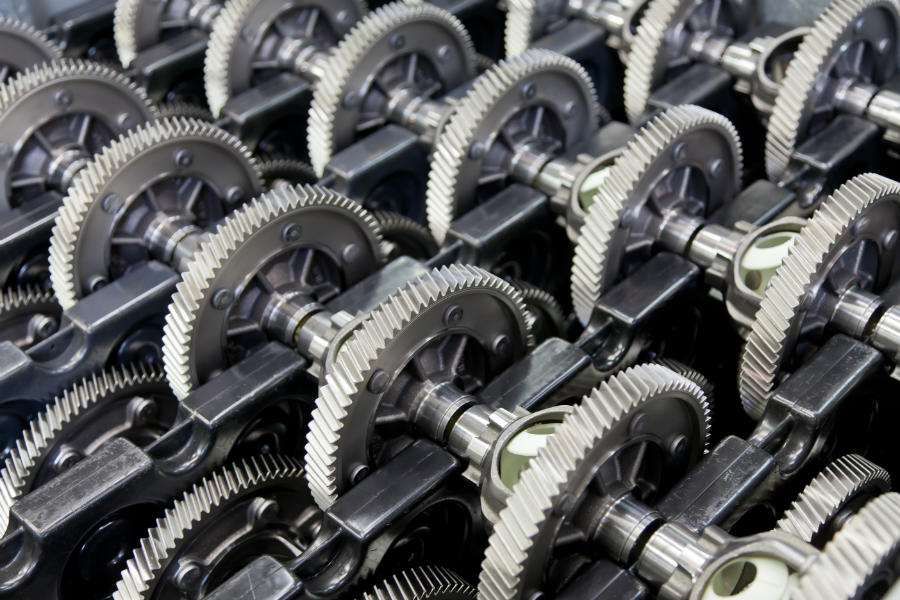
In the modern globalized world, we are able to receive items at a very quick rate. However, traditional, hand-done, manufacturing methods are very time consuming and can only make a few products at a time, definitely not enough to satisfy our insatiable demand. So how can we completely “reinvent the wheel” of manufacturing so to say? Well, what if instead of making every object uniquely, we divide it into multiple standardized parts and simply make those parts at an expedited rate? This is known as Mass Production (a practice very well used on this blog) and has become by far the most dominant method of manufacturing in the world.

Energy Management Information Systems

Energy Management Information Systems

Energy Management Information Systems

10/19/17

“What is the future of building energy information gathering?”


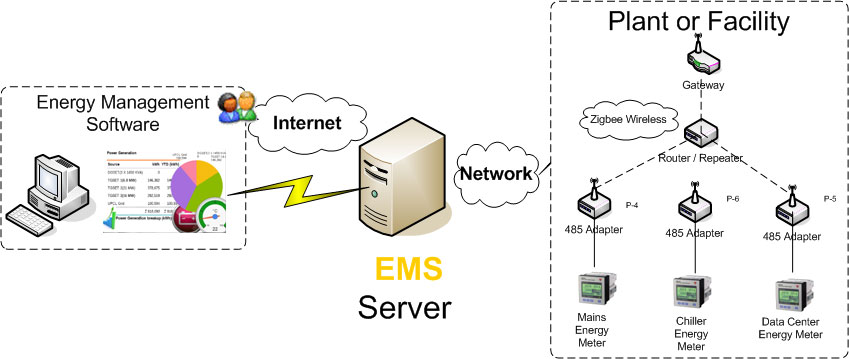
If we can know the energy consumed by a building, then we could learn and do a lot. We can observe any energy-related anomalies, or at what times are our peak usage. To streamline this, we can implement something called an Energy Management Information System, or EMIS. EMIS’ can store and analyze building energy data through a collection of hardware sensors, data in computer banks, and data from the web. From here, we can then take action, and truly optimize our operations!

On Peltier Elements

On Peltier Elements

On Peltier Elements

10/19/17

“How can we completely rethink cooling systems?”


              Engineers often run into a very peculiar problem. Machines and devices can create large amounts of heat during operation as a result of their high energy use. A common remedy for this conundrum is to implement a thermal cooling system. Examples of these systems include heat sinks (a special form of heat exchanger built for electronics that uses a working fluid to transfer heat away from the device to another location), air conditioning (machines that use a fluid refrigerant operating at a cycle to take heat from one area and transfer it into another).

But even with these current processes, there is a new, most intriguing technology that holds much promise. Consider this. When a current is drawn between two conductive objects, heat may be either added or removed at the junction, making one side hot and another side cold. The hot side will then be attached to a heat sink while the other side will go below room temperature.  This device has been termed by engineers a Peltier Element.

One can construct a Peltier Material as follows. First, take two semiconductors, one a p-type and the other an n-type, and place them in parallel thermally and in series electrically together. Then join them together using a thermally conductive plate. If one were to apply a D.C voltage between the free ends of these two semiconductors then a temperature potential difference will merge. The side with the cooling plate will absorb the heat, which is later transferred to the opposing side that contains the heat sink. The more Peltier Elements within a given space the more efficient that the system will operate at.

Peltier element devices have numerous advantages. First, they have they do not have any moving parts, so much less maintenance is required and less brake-down will occur. No Chlorofluorocarbons (elements commonly found in traditional HVAC systems that induce ozone depletion) are used in their operating process so these machines will be much less damaging to the environment. Furthermore, the control of temperature with these units is so granular that it can even go to the fractional level, much better than older systems. In addition, these systems are made to have a very flexible shape than older, more rigid cooling systems so they can be placed in much more convenient locations. Building on top of this more flexible geometry is their greater temperature bandwidth, meaning that they can perform in conditions not before seen in HVAC systems. This leads to a longer lifespan so Peltier elements can give an individual “more bang for their buck”. Finally, these systems are easily controllable due to their voltage input system.

We can accomplish many feats with Peltier element technology. Their small and modular geometry allows them to be placed in a variety of locations such as in camping equipment and portable coolers. The granular control on Peltier elements make them a strong contender for use in scientific equipment, making them effective in assisting with sunlight temperature irregularities on satellites and military technology.

This is not to say that Peltier Elements have no downsides. One of the biggest hindrances to further adoption is their low efficiencies. Specifically, Peltier Elements require a large amount of electricity to function properly. This also only make Peltier elements very expensive to maintain, as power costs money. Their small form factor also makes it difficult to use in larger scale applications such as industrial operations (Lorenzo, Sarah 2016).

In summation, Peltier elements are a novel technology that holds much promise. Their operating process, the Peltier effect, is a wonderful facet of the physical universe that grants it many useful properties, such as a smaller form factor, a modular geometry, and a longer lifespan. This also allows Peltier elements to be more useful for applications such as satellites and military equipment where flexibility and longevity are needed. However, many of these same advantages can also bring detriment to it, with Peltier elements being to electrically consumptive and too small for large industrial applications. Perhaps with enough time and investment into research, Peltier elements will be able to solve these problems and replace traditional cooling methods.


References

Lorenzo, Sarah. What is a Peltier Cooler? 6 June 2015, http://www.tech-faq.com/peltier-cooler.html. Accessed 18 Oct. 2017.

Economizers

Economizers

Economizers

10/17/17

“How can we combine preheating and heat exchangers into one device?”


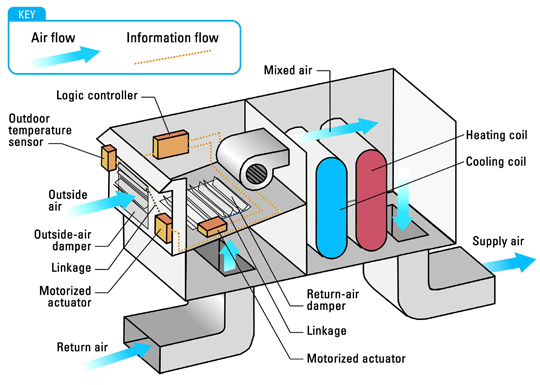
Preheating is very useful for reducing the energy needed to change a substance’s temperature. In addition, heat exchangers a very efficient way to exchange heat between surrounding fluids. So what if we were to combine these two mechanisms? This is the fundamental idea behind devices known as economizers, which have become a commonplace in homes all over the world.

How Renewable Energy is Helping Grid Stability

How Renewable Energy is Helping Grid Stability

How Renewable Energy is Helping Grid Stability

10/16/17

“How can renewable energy increase grid stability?”


Numerous critics of renewable energy believe that by increasing its usage will make the grid more unstable due to the fluctuating nature of the sun and wind. However, a leaked six-page document from the U.S Department of Energy has found that such claims are unfounded and that the increased use of energy efficiency, battery storage, and demand response was actually making the grid more reliable! Just goes to show that with a little bit of science even the most intuitive of perspectives can be proven untrue.

LEED certification

LEED certification

LEED certification

10/15/17

“How can we quantify the sustainability of buildings?”
Buildings are amongst the most important facets of our civilization. Because of them, we can live, work, and play freely. But like most things created by humans, they take up environmental resources. And since we want to be as sustainable as possible, we need some way to measure the environmental impact of each building. That’s why the United States Green Building Council has developed a certification system called LEED. LEED works by giving “points” for each sustainable activity the building does, whether it be brownfield redevelopment energy optimization, or using regional materials. Based upon these points, the building may be awarded a LEED certification (with levels specified by the figure) and become eligible for incentives such as tax credits. Because of the system’s success, numerous countries around the world have expressed interest in the system, including the rapidly developing India and China.

Robot Welding

Robot Welding

Robot Welding

10/14/17

“How can we use robots to do welding?”


Welding is one of the most important industrial processes. Because of it, we are able to construct machines with intricate metal designs. However, if it is performed by human hands, then things can become prone to error and harm the welder. So how can we use our engineering mindset to solve this problem? Well, what if we were to simply use industrial robots to weld? Well, engineers have already thought of this a long time ago, and now robot welding has become a mainstay of factories around the world.