Every day, you probably hear about how the levels of greenhouse gas concentration in the atmosphere are growing exponentially, and how much of that derives from the use of petroleum vehicles. However, why do such machines cause so much harm? Well, let’s use our scientific mindset to figure this out. Upon analysis, one would be able to obtain that the exhaust gas emitted by vehicles are composed of carbon dioxide, carbon monoxide, sulfur dioxide, nitrogen oxides, and hydrocarbons. These pollutants are potent greenhouse gasses, and can not only impinge upon the health of the atmosphere but the health of human society through the instigation of smog and other health hazards.
With the advent of hydroponics, the roots of plants have been liberated from the soil, allowing for far more sustainable agricultural systems to develop. One of these methods actually involves suspending the roots of the plant in the air and then filling the environment with a nutrient mist. Scientists have termed this process aeroponics, and allows for a higher density yield and allow for the roots to more efficiently absorb oxygen. However, one drawback is that this system must be constantly sprayed with a 35% hydrogen peroxide to prevent the spread of impinging fungi and bacteria. NASA uses aeroponic systems to grow food for astronauts on year long missions.
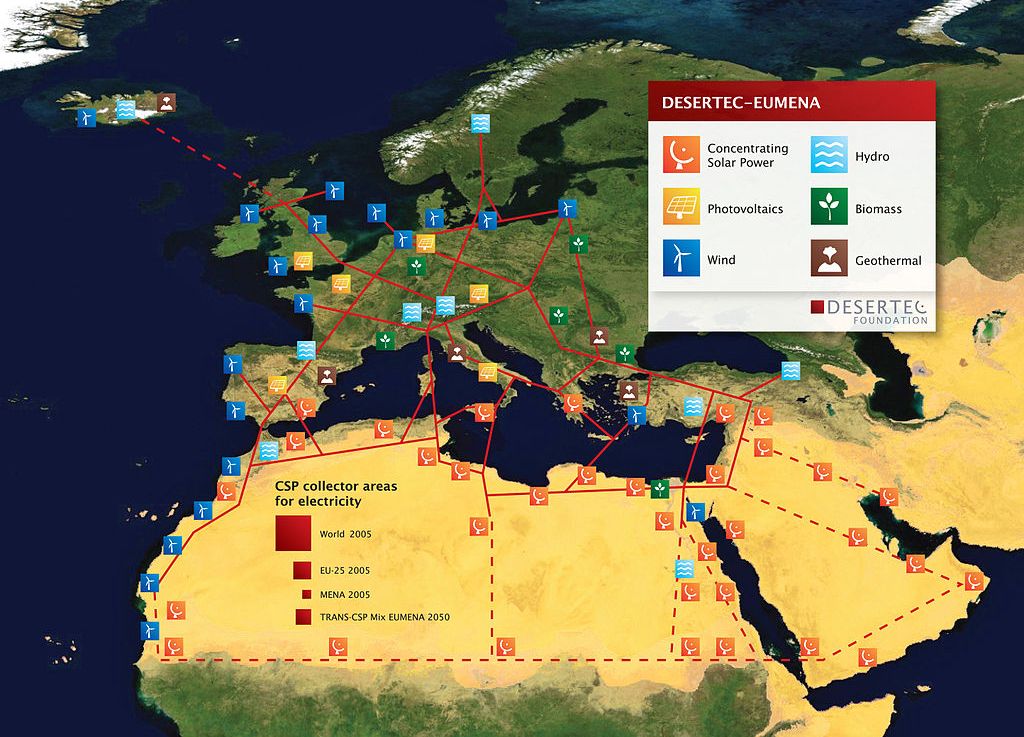
“Could we make a grid that could cross continents?” Imagine this. What if at some point in the future there could be an electrical grid system so advanced that it would be able to span entire continents, such that solar energy from sun-kissed areas such as Sub-Saharan Africa or Israel would be able to power dreary countries such as the Netherlands or Poland, or wind power from Brazil traversing its way through the amazons to light up the Peruvian capital of Lima before sundown. Well, believe or not, this technology is in development as we speak. Researchers from around the world are working on creating a technology known as a supergrid. Supergrids are HVDC-based grids that can surpass the past roadblocks of more primitive DC networks by using circuit breakers to cut malfunctioning power lines from contaminating the rest of the grid.
“Is it possible to use solar power to power artificial skin?” Many individuals on this planet suffer from skin related wounds, whether it originates from combat, accidents, or sustenance abuse. But with the advance of prosthetic engineering, artificial skin capable of intercommunicating with the human brain is coming out of the realm of science fiction and into science fact. However, since these machines are contingent upon electrical signals, power is needed to be provided for operation. So how can we use our engineering mindsets to solve this problem? Well, luckily for us, Dr. Ravinder Dahiya of the University of Glasgow school of Engineering has developed a solution using one of my favorite technologies, solar energy. In a recent paper published in the journal Advanced Functional Materials, Dahiya and his team illuminate us on how a graphene-based artificial skin can be underlaid with thin-film solar photovoltaics to provide all necessary power! This is an astounding discovery and one that is sure to assist the lives of many individuals in a most benevolent way. Dahiya states that further work needs to be done on creating an energy storage system to capture all energy generated by his system, which could then be used to power external electrical systems.
“How can we create another iteration of an active solar water heater?” Batch-collector solar water heaters are one way of heating water using solar power, but as engineers, we are never satisfied with just one way of doing things! So, how can we innovate on this design to create a new system? Well, let’s think about it. We know that using a cylinder to store heated water is a well thought out design choice. But how about we were to modify how it is heated up? Instead of just having a passive system where the cylinder is warmed by the sun, let’s instead extract it using a solar powered pump, push it through a solar panel, and let it come out back into an isolated part of the cylinder as heated water, which has a pump to escort it to the user’s house. These pumps will come equipped with two ball valves to stop the pumps in case the solar panel is no longer in use.
“How is Nigeria combating climate change and rural poverty in a most ingenious way?” Nigeria is a country in western Africa which is home to nearly one hundred million people without electricity. In addition, because of it’s geographic location, it will be disproportionately affected by climate change. Luckily, this country is not a complacent one, and has already begun fighting back. A company called Lumos based in the Netherlands has developed a “micro micro grid” for the Nigerian market in which a single 80W solar panel will be attached to a housing unit which provides energy to a suitcase size battery which will power a home. These units have an upfront cost of only $75.00, and the electricity can be paid for using simple mobile phone text. after four years of using a model, the users will no longer have to pay for ongoing electricity use! This technology has the potential to electrify millions of rural homes in a safe and sustainable manner.
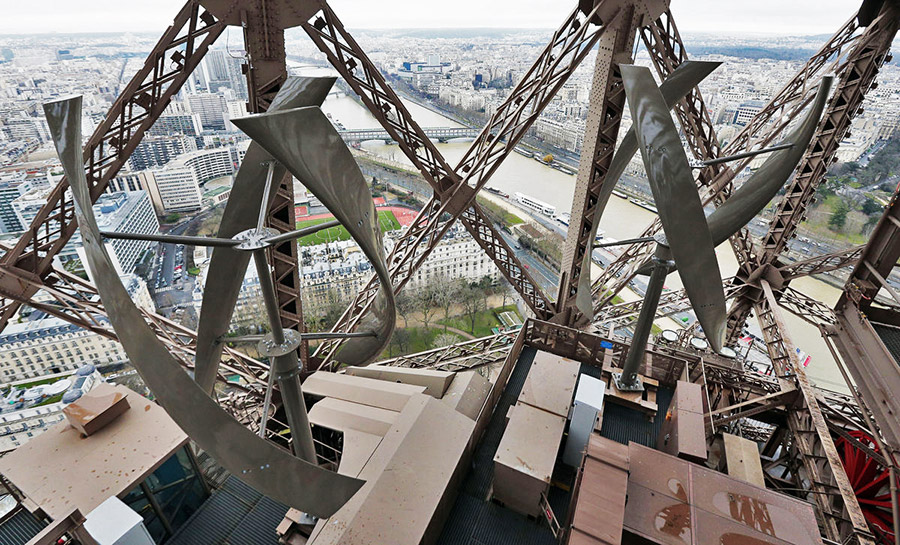
“Is renewable energy becoming so popular that even the Eiffel tower is starting to use it?” Interest in renewable energy is skyrocketing around the world. Investors have taken note that prices have fallen so low in many areas that renewables are now cheaper than their pollutive non-renewable counterparts. In fact, renewable energy is becoming so popular that even national monuments are starting to use them. As of 2015, The Eiffel tower in Paris, France has become outfitted with two wind turbines to increase power generation. These turbines utilize a vertical axis design that is 5.2 meters in height and 3.2 meters in width which can be expected to produce 10,000 kilowatt-hours of electricity per year!
“Is there a way to generate solar power without using photovoltaics?”
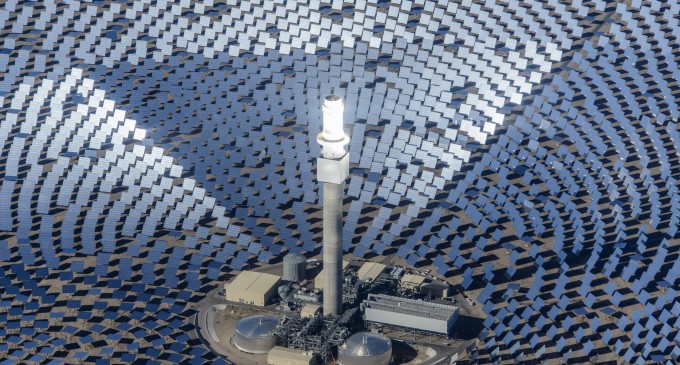
Solar PV systems are one of the most ingenious gifts that technologists have bestowed upon humanity. However, engineers are a rather creative people and like to do the same thing in multiple ways. So how can we “re-invent the wheel” when it comes to solar power? Well, we know that the sun produces sun rays. And if we focus these sun rays onto a focal point, then a large amount of energy can be transferred to an object that point. So what if we were to take a large array of concave lenses, focus all of the sunlight onto a source of water, and use the resulting energy to turn said water into steam to drive a turbine that generates electricity? This is the operating principle behind a system known as concentrated solar power and is commonly used in highly irradiated areas such as California, Spain, and South Africa.
“Could we make wind turbines more efficient by adding a second rotor?” The wind turbine is one of the finest inventions that humanity has conjured. It is simply amazing how these machines can take in the kinetic energy of the wind and transfer it into power to be used by humans. However, the designs of these machines often come with a problem. The rotor of the turbine, one of the most important components of the device, disrupts the surrounding wind, inducing turbulence and lowering the amount of energy to be obtained. So how could we use our engineering mindsets to solves this problem? Well, Aerospace Engineers Anupam Sharma and Hui Hu of Iowa State University made a thorough investigation on this problem, and discovered that one way to solve this problem is actually to add a second rotor to the turbine! This would not only increase the amount of energy absorbed, but also prevent much of the unwanted turbulence. This team is currently working on optimizing the design, such as the location of the turbine, the direction it should take, the size, and what kind of airfoil the dual rotor wind turbine should have.





 Isaac's Science Blog