Tag: Quantum

Quantum tunneling

Quantum tunneling

   Quantum tunneling        04/29/16


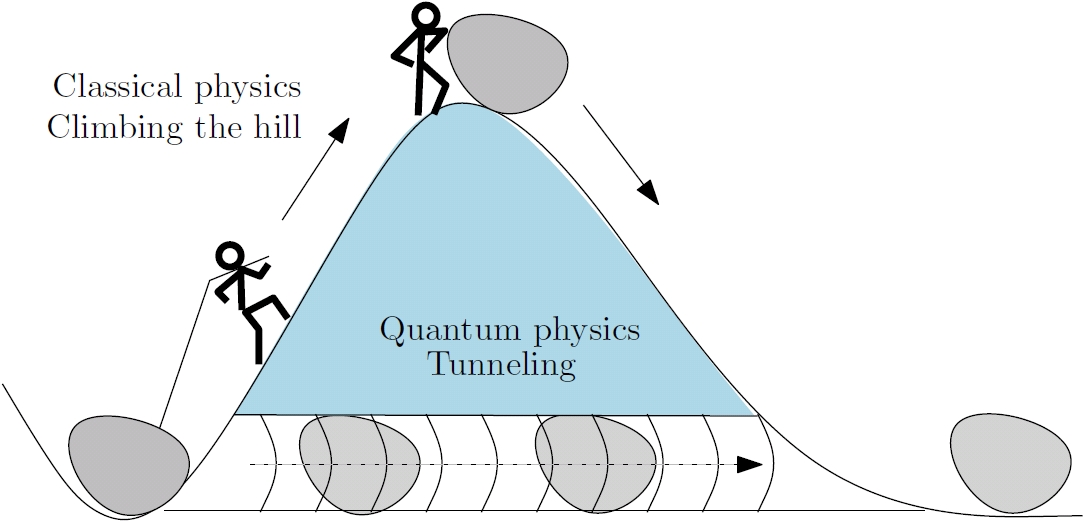
One of the most interesting effects in the universe is known as Quantum tunneling. In Quantum mechanics, it is possible for a particle to pass through a barrier without having enough internal classical energy! To illustrate, let’s use a ball being rolled up a hill an analogy. Under classical mechanics, a ball (particle) can only roll up a hill if it has enough energy to surmount it (break the barrier. In quantum conditions however, there is a certain percentage that the ball can absorb energy from it’s surroundings to finish the job! What is extremely extremely fascinating is that water has been shown to exhibit this effect! Imagine the possible consequences, such as water being able to pour through a substance without needing to cross classical barriers.

The Electric force

The Electric force

The Electric force         02/14/16
A most useful riveting concept found in the study of electromagnetism is the electric force. The electric force is defined as the at-a-distance interaction between two charge particles, described by the equation Felec=q1*q24**0*r2 . As one can discern, the Force is proportional to the strength of the two charges, a constant,  and the square of the distance between them. This equation is kindred in nature to the Universal Gravitation equation, substituting mass for electric charge and changing around the constants, a most intriguing symmetry found in physics. However, there is one glaring incongruity in the fact that the electrically charged particles can be either positive or negative, while mass can only exist in a positive value.

Nuclear force

Nuclear force

Nuclear force             02/11/16
One comes in to an interesting quandary while studying the atom under Newtonian physics, if the protons and electrons are of opposite charges, then why don’t they attract each other and collide? The answer lies in the fact that there is a force present in the universe called the Nuclear force. The nuclear force is an enigmatic phenomena, being one of the most powerful forces in the universe but only present between particles at distances up to 1 ferometer (1*10^-15 m!). When active, this force is what keeps the electrons floating around in the orbit of the nucleus.

Neutrons

Neutrons

         Neutrons                      02/10/16
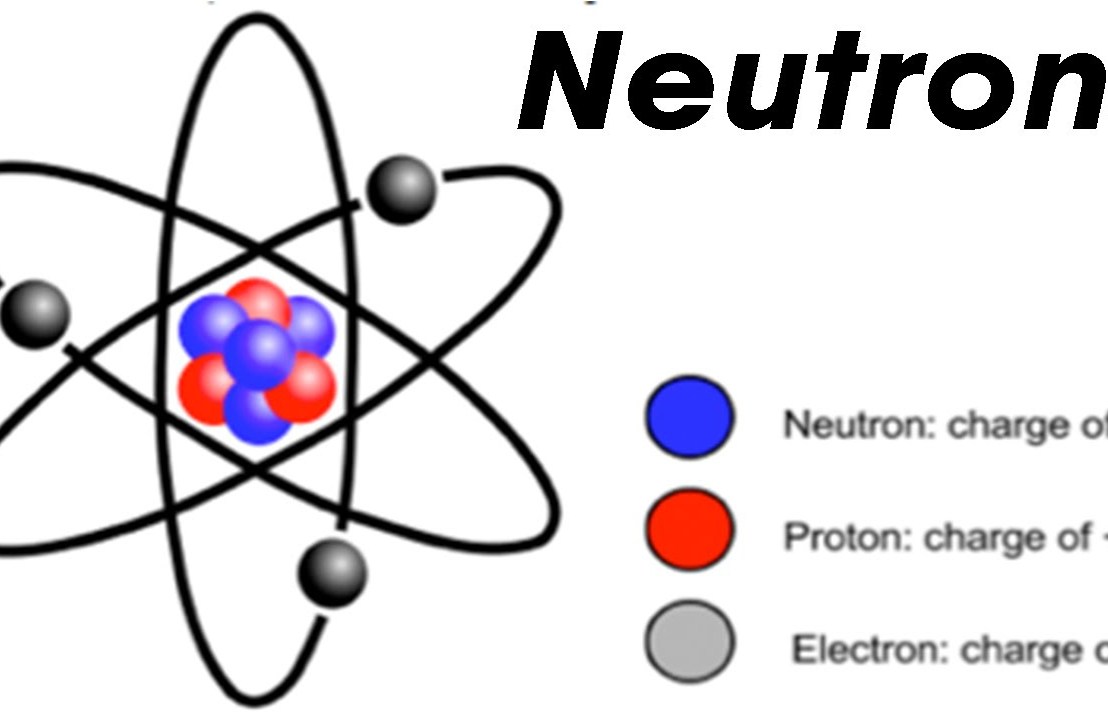
Neutrons are one of the most fundamental particles in the universe.Neutrons are located in the nucleus (along with protons) and have no observed electric charge, hence the name Neutron. Neutrons, protons, and electrons are bound together by the nuclear force, which will be explained later. An excess of neutrons in an element can make an atom a heavy one, which in turn makes it more prone to radioactive decay.  

Protons

Protons

  Protons   02/04/16
Symmetry is one of the most omnipresent facets of the universe. Protons are the natural counterbalance to electrons. Protons are positively charged particles that surround the nucleons in the atomic nucleus. The number of protons are what determines an element (for example, water has one proton, if another proton is added, then it becomes Helium, and so on). Protons balance out the electrons, if there is an imbalance, then then the atom is called an ion. Ions are considered “positive” (cation) if there is a dearth of electrons ( since the total positive charge of the protons will outbalance the total negative charge of the electrons) and vice versa for negatively charged ions (anions).

Electrons

Electrons

Electrons  02/03/16
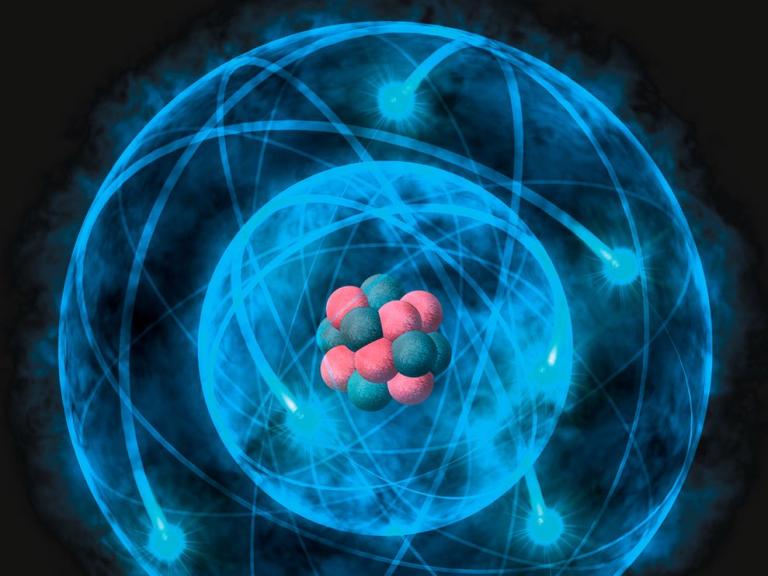
Electrons are some of the most flummoxing part of the universe. Electrons are subatomic particles with a negative charge. Contrary to popular notion, electrons do not orbit the nucleus of the atom, but as a consequence of the laws of Quantum Mechanics, they form a probability shell around the nucleus of an atom, with the probability density being weaker the further away from the distance is to the center. When a molecule loses or gains an electron, it becomes an ion, which means that it now has a net charge.

Quantum superpositioning

Quantum superpositioning

Quantum superposition          01/27/16
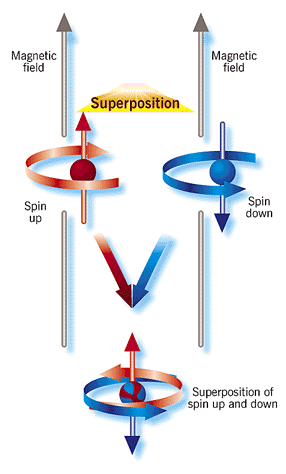
One of the most riveting facets of Quantum mechanics is the phenomena of Quantum superpositioning. Objects on the Quantum mechanical scale become contiguous with one another upon collision, analogous to waves superposition. Consequently, Matter on the quantum scale has no definite location, instead being in probabilities of locations, such as being 30 percent in one part of space and 70 percent in another. This phenomenon has a sumptuous application to the world of Computer Science in the form of quantum computation. In a classical computer, informations can only exist in true forms, true or false. However, with a quantum infrastructure, information can be a superposition of forms, therefore, it is possible to have data stored as 2/3rds true ⅓ false. This has praxis with regards to higher complexity algorithms. To visualize an example, imagine an algorithm’s whose purpose is to find the quickest way out of a maze. A conventional program would willow through each path individually, while a Quantum computer would be able to solve all possible routes simultaneously! The NSA and google are already investing in such machines to do the jarring task of spying on people.