“How can we keep batteries from being overcharged by solar panels?”
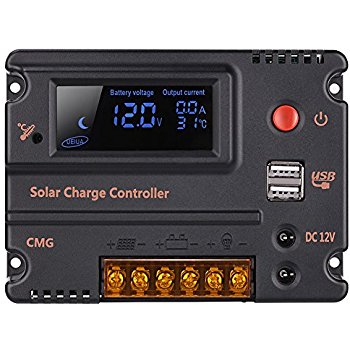
Solar Plus Storage Systems are a revolution in the renewable energy industry. Their ability to not only capture but store energy from the sun allows for true grid integration. However, often times there is a voltage mismatch between the solar panels and the batteries. If left unchecked, then the batteries can sustain great damage. But how can we use our engineering mindsets to solve this? Well, what if we were to simply put in a form of control to regulate the incoming and outgoing voltage and current? This is the fundamental principle behind Solar Charge Controllers, almost a must-have for Solar Plus Storage Systems.
“How can we build products so that they work as a general function?”
In the past, most products were built to a user’s specifications. However, many are now built with general guidelines and then sold to a company. These are known as turnkey projects and are prominent in the solar industry.
“How can we make an Op-Amp amplifier without inverting the output?”
Inverting Op-Amps are great for changing the sign of a signal, However, sometimes we would like to simply amplify instead of invert. So how can we accomplish this using our engineering mindset? Well, What if we were to simply reverse the inputs to the op-amp? That way, we can create a Non-Inverting Op Amp, whose gain is represented by 1+R2/R1, with R2 being the second resistor and R1 being the first.
Solar energy is growing at a rate that makes the adoption of computer technology look feeble. However, with this increased adoption comes increased instabilities, such as extreme variability in power generation. So how can we use our engineering mindset to solve this problem? Well, we know that if we were to add something to dampen the sudden influx of energy, we can smoothen out operations. So what if we were to add a form of Ramp Rate Control through techniques such as batteries and control strategies? Well, it turns out that this is the exact idea behind many modern grid control strategies.
“How can we control voltage levels using an Op-Amp?”
Op-Amps are great for modifying voltage levels in a circuit. But sometimes things happen during the lifespan of an Op-Amp that can affect how it performs. So how can we design these components to self-regulate? Well, what if we were to connect part of the output circuit to the Op-Amp input. Therefore, the voltage levels would be the same as the input, and any change on one side would affect the other. This technique is known as Op-Amp Feedback and is one of the fundamental concepts of modern circuitry.
Op-Amps are vital for signal processing. However, how exactly do they work? Well, it turns out that they work as follows. The circuit will be connected to an input and an output at the left-side. These will allow for their voltage levels to be near equipotential. There will also be a voltage gain associated and a supply voltage. This is the contour of how op-amps work.
Circuit components such as sensors have all sorts of voltages. However, sometimes we want to modify them in some way. So how can we use our engineering mindset to accomplish this? Well, what if we were to simply use an extra component to do this? These are known as Operational Amplifiers and are a vital part of mechatronic systems.
How the Portuguese island of Porto Santo is Using Smart Technology to Become More Sustainable
04/01/18
“How is the Portuguese island of Porto Santo is Using Smart Technology to Become More Sustainable?“
The Portuguese island of Porto Santo has struggled with energy adoption for years. Being a small piece of land under 42 square kilometers an hour, it had to import most of its energy from fossil fuels.
…..Until recently.
Thanks to a series of collaboration between industry and the island authorities, Porto Santo is now making strong headway into using smart and sustainable technologies to combat its energy problems. This includes deployment of Vehicle to Grid Technology, Solar Storage Management Systems, and Charging Control Systems.
“How is small-scale solar a cheaper alternative to large-scale grid distribution?”
Conventional wisdom holds that bigger is better. However, this turns out to not hold true in the arena of solar energy. A recent study has shown that when taking transmission and feedback into account, locally generated building-side distributed solar is more cost-effective than its grid-side alternative! Just goes to show the potential of renewable energy.



 Isaac's Science Blog