Tag: Global warming

How Accurate Weather Prediction can Help Grid Resiliency

How Accurate Weather Prediction can Help Grid Resiliency

How Accurate Weather Prediction can Help Grid Resiliency

09/06/18

“How can weather forecasts help stabilize the grid?”


Weather forecasts have become apart of our daily lives. But did you know that they can also help with grid resiliency? By being able to forecast the future, we can obtain how large our cooling loads will have to be. And with this knowledge, we can get ancillary reserves ready when the time comes. This way, Accurate Weather Prediction can Help Grid Resiliency!


Resilience Outcomes

Resilience Outcomes

Resilience Outcomes

08/01/18

“How can we evaluate resilience performance?”


Resilience Performance is great for seeing how well a system can cope with sudden disasters. However, sometimes we will also need to analyze how effective its response is. This is where we can apply the metric of Resilience Outcomes. Common examples of Resilience Outcomes include reduced damage from disasters and resumed economic activity growth.

Resilience Inputs

Resilience Inputs

Resilience Inputs

07/28/18

“What are the building blocks of Resilience?”


With the ever-changing climate, critical infrastructure systems are going to have to become more resilient. To develop this, engineers and policymakers have developed a series of metrics to quantify the resilience of such systems. The most fundamental of which is the Resiliency Inputs to a system. Inputs are the like the bones of a skeleton. Although they compose the physical structure, on their own they are ineffective. Examples of Resilience Inputs in energy systems are budgets, equipment, spare parts, and personnel to support recovery operations.

Urban Tree Cover

Urban Tree Cover

Urban Tree Cover

07/20/18

“How can we increase urban climate resilience with trees?”


With each passing day, more and more people are living in cities. However, dense urban conglomerations are prone to drastic climate change events, such as deadly heat waves worsened, exacerbated pollution, and flooding from rainfall. But one simple way to combat this is to plant more trees. This Urban Tree Cover lowers temperatures, absorbs pollution, and protects from rainfall flooding. This is just a simple illustration of how a little bit of scientific knowledge can help increase climate change resilience.

Flood Control

Flood Control

Flood Control

07/10/18

“How can we make our built infrastructure resilient to unpredictable floods?”


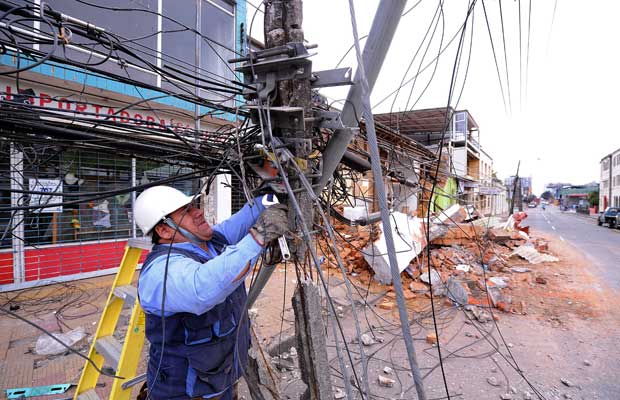
As the climate continues to warm, floods such as those in Houston are becoming more common. To act in accord with climate change adaptation, societies can make implement flood control into their infrastructure. This includes measures such as constructing floodgates or zoning buildings away from flood zones.  

The Paris Agreement

The Paris Agreement

The Paris Agreement

06/03/17

“What is the Paris Agreement?”


Ever since some particular orange haired man decided to pull out of the Paris Agreement, people have been wondering what exactly it is and what a pull out what mean. Well, as I always say, let’s use our scientific mindsets to find out.

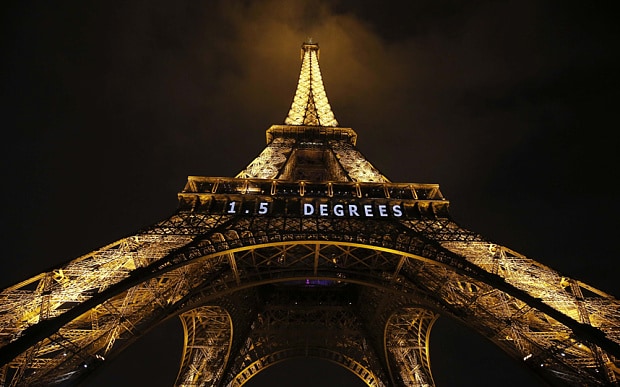
Ever since the beginning of the industrial revolution, the climate of the Earth has been rising at an exponential rate, so much so that we have come to the point that immediate global policy must be taken. Back in April 2016, nations from all over the world convened in the city  of Paris to sign a treaty that stipulates the following:

  1. Keep the future global average temperature below 2 degrees Celsius above pre-industrial levels
  2. Aim to limit this temperature below 1.5 degrees Celsius to avoid environmental catastrophes
  3. Curb global emissions as much as possible
  4. For all nations to come together every 5 years to set more ambitious targets as required by science
  5. Report to each other and the public on how well they are doing to implement their targets,
  6. Track progress towards the long-term goal through a robust transparency and accountability system.
  7. For developed countries support and assist developing countries in implementing such policies and curbing emissions

By withdrawing from this agreement as one of the heaviest global polluters, the United States will become a dead weight that will slow the rest of the world to achieving all of these goals. If you are reading this and are an American citizen, please, call your senator to urge the president to rescind their previous statement regarding withdrawal.

Volcanic eruptions’ effect on climate change

Volcanic eruptions’ effect on climate change

Volcanic eruptions’ effect on climate change

05/12/17

“How do volcanic eruptions affect climate change?”


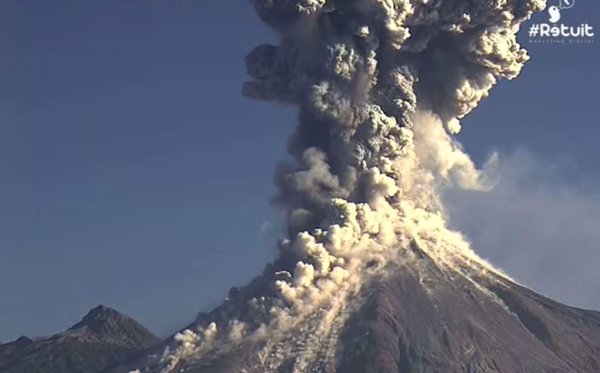
Volcanoes are famous for their mighty and breathtaking eruptions. However, many astute individuals are curious about how such phenomena can affect global temperatures. Well, let’s use our scientific mindset to find out. When volcanoes erupt, a multitude of particles is launched from the Earth’s interior and into the atmosphere. Some of these particles are composed of elements such as sulfur dioxide that block the sun’s rays and induce local cooling, while others are made of heat-trapping greenhouse gasses such as carbon dioxide. However, the effects of the latter are quite minuscule in comparison with the former, and if the particles are able to escape into the stratosphere, then a slight drop in temperatures over a large vicinity of the planet will be observed.

Greenhouse gases

Greenhouse gases

Greenhouse gases

12/06/16

“What causes global warming in our atmosphere?”


On the news and social media, you will probably hear much discussion relating to a planet destroying phenomena called “global warming” which raises the temperatures of the Earth’s atmosphere. However, what exactly causes this malignant circumstance? As scientific thinkers, let’s get to the bottom of this. To start with, it would be rational to understand what keeps heat on our planet in the first place. In our atmosphere, there are components known as greenhouse gases (namely carbon dioxide, methane, and others) which are capable of absorbing infrared radiation, thereby trapping the warmth emitted by our sun on to our terrestrial home. Before the beginning of the industrial revolution, the levels of greenhouse gases present were just enough to keep the Earth in a temperature equilibrium. However, the many fuel sources used by humanity such as coal, petroleum, and natural gas emit greenhouse gases themselves, therefore adding to this stockpile, and causally a higher amount of heat will be trapped. This rising buildup is most worrying to the future of humanity, with the amount of  CO2 in the atmosphere being over double pre-industrial levels and the average temperature rising over 2 degrees celsius! However, with the use of non-greenhouse gas emitting technology such as solar power and wind turbines, humanity can finally get of this trepidation-filled trend.