“When does a transfer function go to zero or infinity?”
Transfer functions are usually made up of two polynomials, one in the numerator and one in the denominator. When the polynomial in the denominator (known as the pole) goes to zero, the transfer function will become infinitely large, while when the ones in the numerator go to zero, the function becomes a zero (hence the term zero for such functions). If a transfer function has more poles, then it becomes more unstable, while more zeros will make it more stable. Because of this, controls engineers try to maximize the pole-to-zero ratio.
“How can we predict how a system will react based on how it reacts right now?” When working with control systems, we often have some desired output in our mind. However, frequently the actual performance of our systems diverges greatly from what we want. So how can we use our engineering mindset to correct this problem? Well, let’s think about it. We can tell a computer how we want a certain system to behave. And we can also create a log of its outputs. So what if every time we gave an output, we took its data, compare it to our desired, and try to minimize the difference with the next iteration? Well, this is the fundamental idea behind model predictive control and is used in industries spanning from building controls to renewable energy to intelligent transportation systems!
“How can we prevent a grid overload using a simple technique?”
We have a problem. We would like the demand usage for the electric grid to be as equalized as possible, such that the electricity drawn in at one time would look the same as the electricity drawn in at another. But this is almost never the case. Instead, the demand for the grid varies greatly throughout the day. And sometimes these demand peaks are so high that they destabilize the grid! So how can we use our engineering mindset to solve this problem? Well, what if we were to just shift electricity usage from times of peak load to times of less intensive load? This is the fundamental idea behind demand response and can be accomplished with economic incentives and through smart electricity control.
“What houses the controls for cyber-physical systems?”
Mechatronic systems require controls software in order to function correctly. However, how is this implemented physically into the system? Well, let’s use our engineering mindset to find out. We know that microcontrollers can perform simple controls tasks. So what if we were to hook a number of them together and program them with software to make a controls unit focused on one task? Well, this piece of technology is known as an embedded system and can be found in electro-mechanical operations worldwide. Examples of embedded systems include braking systems in vehicles, thermostats, and the motors on NASA’s Mars Curiosity Rover!
“Can we make a computer from just a single integrated circuit?”
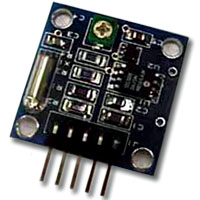
Modern day computers are complex behemoths, employing dozens of integrated circuits to perform computational work. However, is it possible to have much simpler computers that only work with one integrated circuit? Well, it turns out that not only is this possible but that such machines can be seen every day in the form of microcontrollers. Microcontrollers are simple computers that are used for mechatronic control tasks, whether it be in dictating the motion of servo motors for robotic manufacturers or in controlling electric braking systems. Microcontrollers are easily purchasable and have a large number of dedicated hobbyist followers.
“How can engineers control the temperature of machines?”
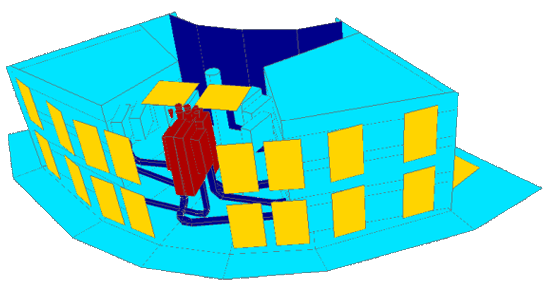
Machines do a lot of work. Whether it be an assembly robot making a solar panel or a spacecraft launching into space, work is done. However, these machines often need to operate within a certain temperature range. So how can we ensure that our engineering systems can be kept within their safety zone? Well, let’s use our engineering mindset to find out. We know that we can use sensors to monitor the temperature and that we can also use devices to change this temperature. So what if we were to simply implement this? Well, this is known as a thermal control system and can be found in mechatronic systems all over the world.
“Why do computers seem to be getting exponentially faster with time?”
If you are keen on technology, then you have probably seen a pattern. Specifically, it seems that computers are getting exponentially faster with time. Well, why exactly is this? Well, after many years of speculation, Intel co-founder Gordon Moore noticed that the number of transistors that could be held in an integrated circuit were doubling every two years, leading to a proposition called Moore’s law. In recent years, Moore’s law seems to be leveling off since transistors are now getting so small that quantum tunneling effects are beginning to appear, rendering transistors inoperable.
“How can we integrate tiny of electronic components onto a small area?” Electronics are composed of tiny resistors, capacitors, and transistors. And often times these components can be of an extremely small size, on the microscopic level. However, this size can make it hard to integrate onto an electric board. So how could we make a platform that can hold all of these electronics? Well, let’s use our engineering mindset to figure this out. We know that semiconductor wafers could hold many materials on a very small scale. So what if we were just to put these components onto one? Well, this set up is known as an integrated circuit and is used in all forms of modern day technology.
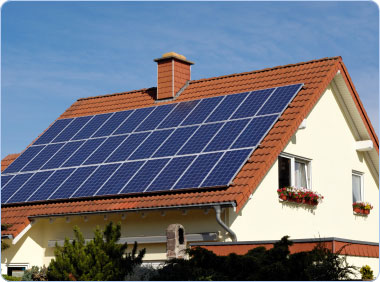
“Can everyday people generate their own energy?” When people talk about generating electricity, they usually mean things like giant power plants or solar panel arrays. However, electricity generation does not need to be that large. In fact, it can be done in your very own home! This activity is called microgeneration, and can be accomplished through a variety of means, whether it be by installing solar PV or through recycling waste heat




 Isaac's Science Blog