Regional Differences in Electric Vehicle Charging Load
03/24/18
“How does Electric Vehicle Charging vary between regions?”
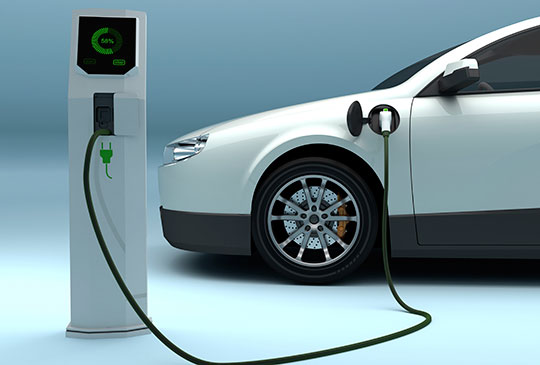
When we think of electric vehicle charging, we often think that it should be uniformly distributed within a utility’s area. However, nothing can be further from reality. Take for example the Northern Californian giant Pacific Gas and Electric. Within their region of coverage, cities such as Fresno have only a 2.4 hybrid vehicle penetration rate for new cars while in Berkeley that number climbs to 18 percent. As a result, when making choices about the future of our grid, we must take into account regional differences in electric vehicle charging load.
How Microgrids Can Help Communities Recover From Disasters
03/23/18
“How can we use microgrids to help communities recover from natural disasters?”
Communities all over the world are in danger of natural disasters. Whether it be the fires in California or the hurricane that recently Puerto Rico. However, how can we use our engineering mindset to help people endure these mishaps? Well, one of the most common problems with natural disasters is electricity generation or lack thereof. But with the advent of distributed resources and microgrids, communities can create their own energy and even sell it to one another! Therefore, distributed resources and microgrids to help communities recover from natural disasters.
Water is one of the most vital parts of human life. Whether it be for quenching our thirst, cooking our food, or running our industrial processes, water is somewhere to be found. However, in many communities around the world, not only safe drinking water difficult to come by but also access to electricity. So how can we use our engineering mindset to solve both of these problems in a sustainable manner? Well, what if we were to use a solar panel to power an electrolysis device? This way, we can purify water anywhere we are at a low cost. This process is known as Solar Water Disinfection and is a smart method to help solve access to clean water.
Vacuums are some of the most important phenomena in modern day engineering and physical science research. By being able to measure them, we can determine what is and what is not a vacuum. One way to do this is by using a hot-filament ionization gauge. Hot-filament ionization gauges work by running electrons through a wire coil, which are then attracted to a central grid. These electrons will collide with gas molecules and will ionize. A measurement of the amount of ionization will tell us how many molecules are in the vacuum, and therefore what percentage of the surrounding medium is a vacuum.
Thermocouples are very useful for measuring temperature differences due to their quick response times and low costs. However, in order to operate accurately, they must be connected to a zero degree reference point. So how can we use our engineering knowledge to solve this? Well, what if we were to simply connect the thermocouple leads to copper wires in ice water. These would create reference junctions in which the thermocouple leads would be compared against values at 0 degrees Celsius. This system calibrates the thermocouples to much greater accuracy, but extra care must be taken.
“Can we control the conductivity of a circuit with Voltage?”
When working with electrical systems, sometimes we may want the conductivity of an element to change for different applications. However, how can we do that without doing too much work? Well, let’s use our engineering mindset to think of a solution. First, let’s build a semiconductor with two n-type depletion layers that are disconnected from each other by a p-type substrate. Then let’s position a metallic “gate” near to the two n-type inversion layers. Finally, let’s put a current source to one and a drain to the other. When we apply an electrical voltage to the gate, negative particles from the positive substrate will be pulled in its direction and p-type pushed out. This will create a bridge between the two n-type regions, and allow current to pass through. The more voltage applied, the more current can be passed. If no voltage is applied, then no current can pass! This device is known as a metal-oxide-semiconductor-field-effect transistor, or MOSFET for short. MOSFETs are some of the most used components in electronics and can be found everywhere from microcontrollers to voltage amplifiers.
How California Might Share its Renewable Resources
03/15/18
“Why and how might California share its renewable energy resources?”
For decades, the vast majority of energy in California has been controlled on it’s regional grid called CALISO. Because only California appointees can sit on its board, other U.S states have been reluctant to join. However, with the exponential rise of its solar energy resources, too much energy is being generated during the daytime. So much so, that California is thinking about working with its close neighbors Oregon, Washington, and Nevada to set up a regional energy grid. This way, overflowing energy from California can be sent to these states, and other forms of renewable energy can be traced back to California to manage its own demand!
“How can we make a MOSFET that can operate at lower voltages?”
MOSFETS are some of the most useful appliances in electronic circuits. It’s ability to act like a turn a circuit on or off just through a voltage spike has been a paradigm shift in electronics. However, many of these MOSFETs might require a voltage of around 10 V to operate, and sometimes we don’t have the ability to generate that amount (such as working with a microcontroller). So how can we use our engineering mindset to solve this problem? Well, what if we were to build a special MOSFET that can work under lower voltage levels? It turns out that these have been invented, and are called Logic Level MOSFETs.
“How can we make an electrical switch in our circuit?”
Switches are very useful in circuit elements. With them, we can turn parts of a circuit on and off. But sometimes we can’t mechanically activate them. So how can we use our engineering mindset to solve this problem? Well, what if we were to use an electromagnet that could actuate upon a switch based upon the current applied? Well, this is the fundamental idea behind electrical relays and are used in circuits applications worldwide.





 Isaac's Science Blog