Tag: Adaptation

Resilience Outcomes

Resilience Outcomes

Resilience Outcomes

08/01/18

“How can we evaluate resilience performance?”


Resilience Performance is great for seeing how well a system can cope with sudden disasters. However, sometimes we will also need to analyze how effective its response is. This is where we can apply the metric of Resilience Outcomes. Common examples of Resilience Outcomes include reduced damage from disasters and resumed economic activity growth.

Resilience Performance

Resilience Performance

Resilience Performance

07/31/18

“How can we quantify what is produced by critical infrastructure systems?”


Critical Infrastructure Systems are one the most important bedrocks of society. However, how can we apply a metric to quantify its outputs? Well, by applying something known as Resilience Performance, we can evaluate a system’s output. Examples of Resilience Performance include energy produced by solar panels or their fault tolerance. Resilience performance is commonly used to evaluate Resilience Capabilities.

Resilience Capabilities

Resilience Capabilities

Resilience Capabilities

07/30/18

“How can we measure how effective resilience capabilities are organized?”


Resilience Capacities are necessary to organize Resilience Inputs. But some have more flexibility than others. So how can we apply a metric to this? Well, by using Resilience Capabilities we can evaluate the effectiveness of how the resiliency response can be carried out, such as how the ability to repair damaged power lines.

Resilience Capacities

Resilience Capacities

Resilience Capacities

07/29/18

“How can we organize resiliency inputs?”


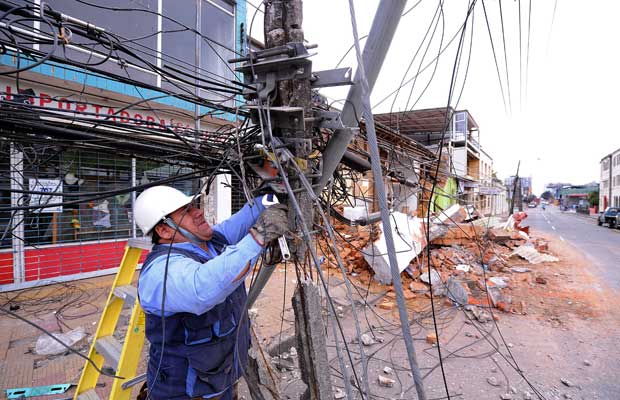
Resiliency Inputs are the foundation for creating long-lasting critical infrastructure systems. But without any form of organization, they’re quite useless. This is where Resilience Capacities come in. Resiliency Inputs to Resiliency Capacities is like bones to a skeleton. Examples of Resiliency Capacities include emergency response teams of repair workers to downed power lines after a natural disaster.


Resiliency Metrics

Resiliency Metrics

Resiliency Metrics

07/24/18

“How can we quantify a system’s  resilience ability?”


With the ascent of climate change, cities all over the world will have to change their infrastructure to be resilient against the winds of climate change. However, how can we quantify how resilient a given system is? Well, by breaking down an infrastructural system into multiple components (namely inputs, capacities, capabilities, performance, and outcomes), we can apply Resiliency Metrics to each to evaluate a system’s readiness. Resiliency metrics can be applied to any type of infrastructure, whether it be power systems, gas pipelines, or transportation networks.

Climate Change Resilience

Climate Change Resilience

Climate Change Resilience

07/23/18

“How can humanity adapt to climate change?”


Sustainability is the overarching goal of many people who work in energy, climate, and infrastructure. However, we must also take into account the concept of Climate Change Resilience. Simply put, Climate Change Resilience is the measure of a system’s capacity to withstand the increased external stresses of climate change. Take for example Puerto Rico during Hurricane Maria. When the extreme weather knocked down transmission lines and diesel plants, those who were dependent on them lost all power. However, people who had installed solar panels and microgrids were able to continue to use their electrical appliances despite the tumultuous events. Climate Change Resilience is used to quantify how much adaptation an area needs to do before becoming climate ready. By having infrastructure ready for the climate chaotic future, we can ensure human civilization a safe and resilient time on this planet.

Urban Tree Cover

Urban Tree Cover

Urban Tree Cover

07/20/18

“How can we increase urban climate resilience with trees?”


With each passing day, more and more people are living in cities. However, dense urban conglomerations are prone to drastic climate change events, such as deadly heat waves worsened, exacerbated pollution, and flooding from rainfall. But one simple way to combat this is to plant more trees. This Urban Tree Cover lowers temperatures, absorbs pollution, and protects from rainfall flooding. This is just a simple illustration of how a little bit of scientific knowledge can help increase climate change resilience.