Tag: Adaptation

Short Distance Climate Migration

Short Distance Climate Migration

Short Distance Climate Migration

04/27/20

“How will there be climate migration over small distances?”


When many people think of climate migration, they imagine massive waves of people crossing long distances to far-off countries. However, nothing could be further from the truth. Since people are tied to the places they inhabit, many will just move a small distance of around a few kilometers (if even!). Illustrations of this can be found in coastal Alaskan villages, where residents move to be as close as possible to their original sites. Short Distance Climate Migration will be a very visible feature in the future.


Planning for Different Levels of Sea-Level Rise

Planning for Different Levels of Sea-Level Rise

Planning for Different Levels of Sea-Level Rise

04/26/20

“How can we plan for different levels of sea-level rise?”


Sea-level rise is going to occur because of climate change. However, the level of rise depends on how much hotter the world is over pre-industrial levels. Since there are multiple possibilities contingent upon carbon emissions rate and time passed, urban areas are going to have to plan for different levels of sea-level rise. This can be accomplished by consulting local citizens and technical experts as well as performing risk and cost-benefit analysis. This is how Planning for Different Levels of Sea-Level Rise will work.


Computational Demography for Climate Adaptation

Computational Demography for Climate Adaptation

Computational Demography for Climate Adaptation

04/23/20

“How can computational demographic methods be applied to climate adaptation?”


With the advent of climate change, human populations will be migrating in an unprecedented manner. To study this, advanced social science methods will need to be utilized. Computational Demography will be especially useful given its novel structure and ability to process vast amounts of complex data. Examples could range from analyzing safe spots in Bangladesh for people to move away from perpetual flooding or categorizing social vulnerability to wildfires in a population. This is how Computational Demography for Climate Adaptation will become especially useful.

Why 3D Printing Is Effective for Disaster Response

Why 3D Printing Is Effective for Disaster Response

Why 3D Printing Is Effective for Disaster Response

04/18/20

“Why is 3D printing effective for disaster response?”


When a disaster strikes, supplies can often come up short. However, if a 3D printer is around, objects can be made on the spot. For example, during the 2019-2020 Coronavirus pandemic, an engineering student was able to 3D print facemasks for care workers when supplies came short.


Image credit https://www.sanluisobispo.com/latest-news/9ytlpk/picture242006431/alternates/FREE_1140/SLO_3Dprintercoronavirusmas(2)

How Water Monitoring Can Assist With Flood Resilience Preparation

How Water Monitoring Can Assist With Flood Resilience Preparation

How Water Monitoring Can Assist With Flood Resilience Preparation

04/17/20

“How can water monitoring assist with flood resilience preparation?”


With the advent of the new climate paradigm, floods are going to become more common and lethal. In order to prevent disruption, water levels in rivers, oceans, and ponds can be monitored. This way, if things start to become too unstable, preventative action can be taken. This is How Water Monitoring Can Assist With Flood Resilience Preparation.

Why WUI Maps Need to Take Into Account Wind Effects

Why WUI Maps Need to Take Into Account Wind Effects

Why WUI Maps Need to Take Into Account Wind Effects

04/08/20

“Why do wildfire maps need to take into account the effects of wind?”


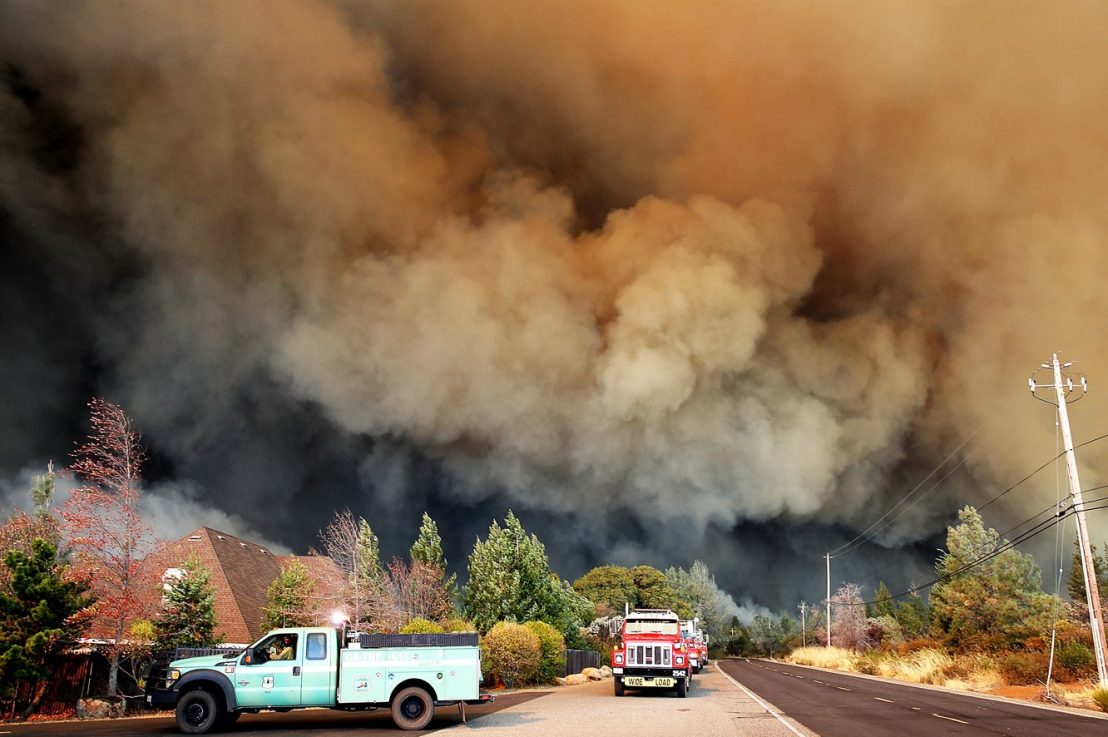
Wildland-urban interface maps are pivotal for community planners, emergency managers, and policymakers to understand their community’s vulnerability to wildfire. However, seldom do these take into account wind, which holds the potential to spread fires beyond the natural wildland-urban interface. This can be a critical factor and needs to be taken into account. This is Why WUI Maps Need to Take Into Account Wind Effects.

Image credit media.wired.com

Migration as Adaptation

Migration as Adaptation

Migration as Adaptation

04/06/20

“How can adaptation come in the form of migration?”


With the advent of climate change, certain regions of the world are going to become less habitable and certain regions will become more. This new imbalance will mean that people may have to migrate to a new area to be safer from climate change. One illustration of this can be found in Indigenous Alaskan village relocation, where villagers are moving their entire community to new land to escape sea-level rise. This is why Migration as Adaptation is a very useful concept.

Image credit worldatlas.com

Why California’s SB 902 Would Build Climate Resilience

Why California’s SB 902 Would Build Climate Resilience

Why California’s SB 902 Would Build Climate Resilience

03/30/20

“Why would California’s SB 902 by State Senator Scott Wiener build climate resilience capacity?”


California’s housing crisis is quickly merging with its climate crisis. To get this under control, more living spaces will need to be built in dense urban areas. California State Senator Scott Wiener of San Francisco may have an answer in the form of SB 902. SB 902 is a bill that (if passed) would loosen zoning laws such that multiplexes can be developed in non-wildfire prone areas and make it easier for cities to rezone areas closer to transit to higher density. This would allow for more housing capacity near public transportation and away from the wildland-urban interface, allowing for more people to move into newer housing in less disaster-prone areas. This is Why California’s SB 902 Would Build Climate Resilience.

Why California’s AB 3173 Would Increase Housing Resilience

Why California’s AB 3173 Would Increase Housing Resilience

Why California’s AB 3173 Would Increase Housing Resilience

03/26/20

“Why would California’s AB 3173 by California Assemblymember Buffy Wicks increase housing resilience?”


California’s cities have a great need to densify to stave off the worst of the housing and climate crisis. California Assemblymember Buffy Wicks’ bill AB 3173 would allow for the development of microunits (studios that share kitchens) in cities with greater than 400,000 people. This would allow for more density and affordable housing, increasing the safety of populations in the wake of natural disasters. This is Why California’s AB 3173 Would Increase Housing Resilience.