Category: Physics

Electrostatic discharge

Electrostatic discharge

          Electrostatic discharge           05/16/16


Have you ever wondered why you get shocked sometimes when you reach for a doorknob? This is due to the effects of electrostatic discharge. Electrostatic discharge is the sudden flow of electricity when two charged objects become contiguous with one another. Often times, an electric spark is created during the occurrence of the phenomena. Electrostatic discharge can have a very harmfull effect on hardware, so extra protection is often necessary to keep everything safe.

Lightning

Lightning

Lightning          05/15/16


As a young child, you probably had trepidations about lightning, but did you ever wonder how it worked? To illustrate, let us visualize a cloud. Often time, there is internal movement inside the cloud, which leads to movement of charge inside the cloud. This leads to Polarization of the cloud. This buildup of electrons will have further effects on the ground level, with the negative electrons being pushed away and the positive charge being attracted to the cloud. In fact, all objectives within the vicinity will become polarized. This buildup of opposing charges will create a voltage. If the voltage grows high enough, then a dielectric breakdown will occur through the air, turning it from an insulator to a conductor, and creating a bolt of lightning.

Non- Newtonian fluid

Non- Newtonian fluid

                     Non- Newtonian fluid           05/14/16


Non newtonian fluids are fluids in which viscosity changes with applied force. To illustrate, let’s examine how this is differentiated from a Newtonian fluid. In a newtonian fluid, if an object is placed in to a fluid, the fluid will coalesce around the object no matter the force. In a non-newtonian fluid, the fluid will become more viscous in response to the larger force. In fact, the particles of the system behave more like a solid. Some other Non-newtonian fluids have the reverse effect, with a larger force producing a lower viscosity. An example of the most strange effects of a non-newtonian fluid is corn starch. When one pours corn starch, it flows in a very smooth manner. However, if one attempts to hit the Cornstarch with a mallet, it acts almost as it is a solid. You can even jump up and down on the corn starch!!!

Shock waves

Shock waves

         Shock waves           05/10/16


When an item goes so fast through a fluid medium than the local speed of sound, a most disruptive phenomena known as a shock wave occurs. This occurs when the object shifts to a supersonic speed because before the object was moving at such a speed, the air molecules producing the sound were going faster than the object, and once the object reaches the speed of sound, the fluid molecules will be left behind the object, resulting in a traffic-jam like situation occurs in which the surrounding fluid molecules pile up and cause an almost inconceivable explosion of energy.  

The picture is a Schlirein photograph of a supersonic body

Wave power

Wave power

Wave power           05/06/16

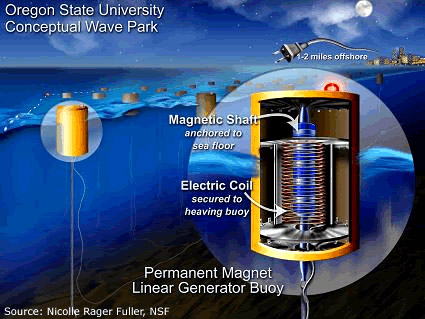
What if I told you that Engineers have built machines that are able to convert the kinetic energy of waves into usable power? This is the very principle behind Wave energy. By capturing the energy propagated by these waves, we can power up to around 40% of humanity’s energy needs.

Malleability

Malleability

      Malleability           05/05/16


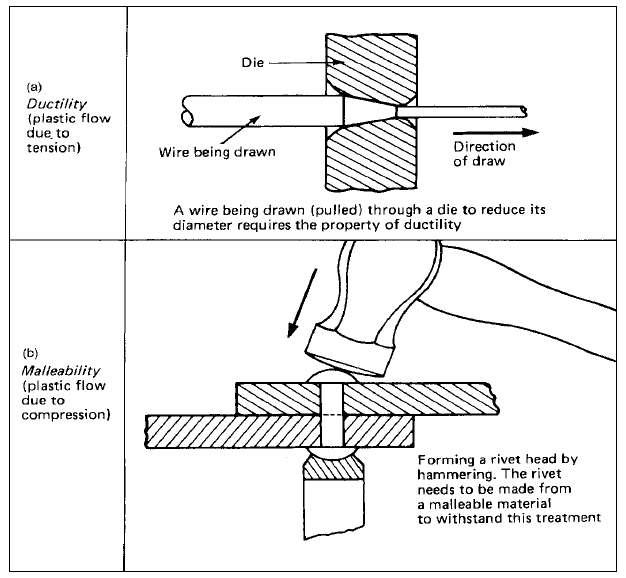
Malleability is the ability of a substance to deform under pressure. As such, Malleability is defined as being a physical property of materials. Most malleable materials are the ones numbered one through twelve on the periodic table of elements. Substances that are malleable are often able to be hammered into thin sheets.

Ductility

Ductility

Ductility                   05/04/16


Have you ever wondered why objects seem to stretch when a tension force is applied to them? Then you have just thought of the process of ductility. Ductility is the ability of an object to stretch when under stress. A highly ductile object may be stretched into a wire. Ductility is kindred to Malleability, or the ability of an object to be deformed under pressure.

Dark matter

Dark matter

Dark matter                            04/30/16


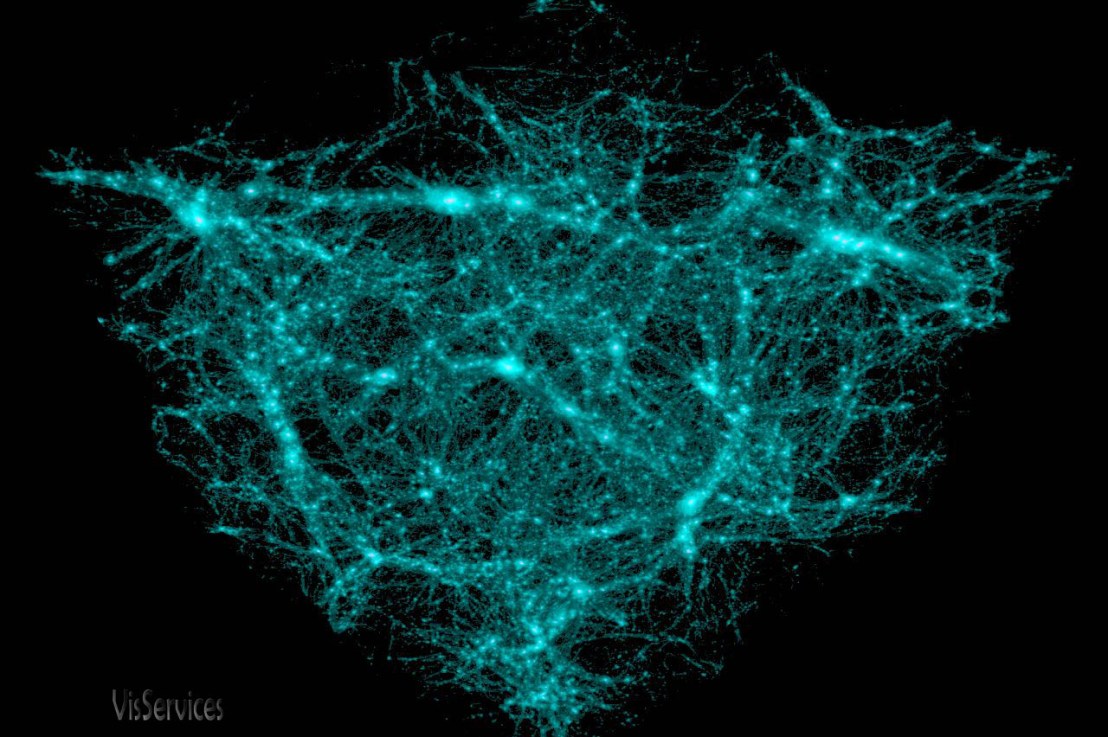
Theoretical physics has recently run into a startling contradiction. When analyzing mutually spinning galaxies, we find that the force needed to hold them together is far less than what their visible mass is composed of! What if it’s possible that there might be some possible extra mass that is not reactive to light? This possibility of mass is known as Dark matter. Dark matter is thought to comprimes as much as much as 85.0% of the universe, and what is most interesting is that it does not react with the electromagnetic spectrum.

The age of the universe

The age of the universe

             The age of the universe            04/30/16


Have you ever pondered how old is the universe that we inhabit? Believe it or not, some of the greatest minds of the human species have devoted their entire lives to that very question. There are two methods for finding the age. The first method involves some very intuitive reasoning. We know a few basic facts about the universe; first of all, galaxies are moving away from eachother at a similar velocity (adjusted for the acceleration of the universe, and second of all, we know (or at least we think we know, remember science is all about hypothesis) that at the beginning of the universe all matter was concentrated in a single point. Therefore, by measuring the speeds and the distance of galaxies, we can solve for the time elapsed in the universe. It’s like trying to solve for the time of a race if you know that everyone had a constant velocity and had a beginning spot! The second, more technical method involves analyzing globular clusters around the milky way and doing some really cool astrophysics stuff with them. By averaging both measurements, we get a value of 13.772 billion years! (with an uncertainty of around 59 million years, that’s science for you!)