Category: Physics

Electric Dipole

Electric Dipole

          Electric dipole           Isaac Gendler

        06/01/16

“What happens when you have a separation of equal and opposite charge?”

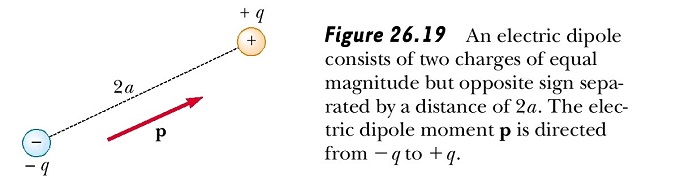
The answer to this interesting little question is that you would end up with an electric dipole. And electric dipole is the separation of an equal amount of opposite charges. Dipoles are characterized by their dipole moment, which is a vector quantity. The dipole moment points from the negative to the positive charge.

Pseudo-elasticity

Pseudo-elasticity

  Pseudo-elasticity          

        05/31/16

“Are there reversible responses to stress?”

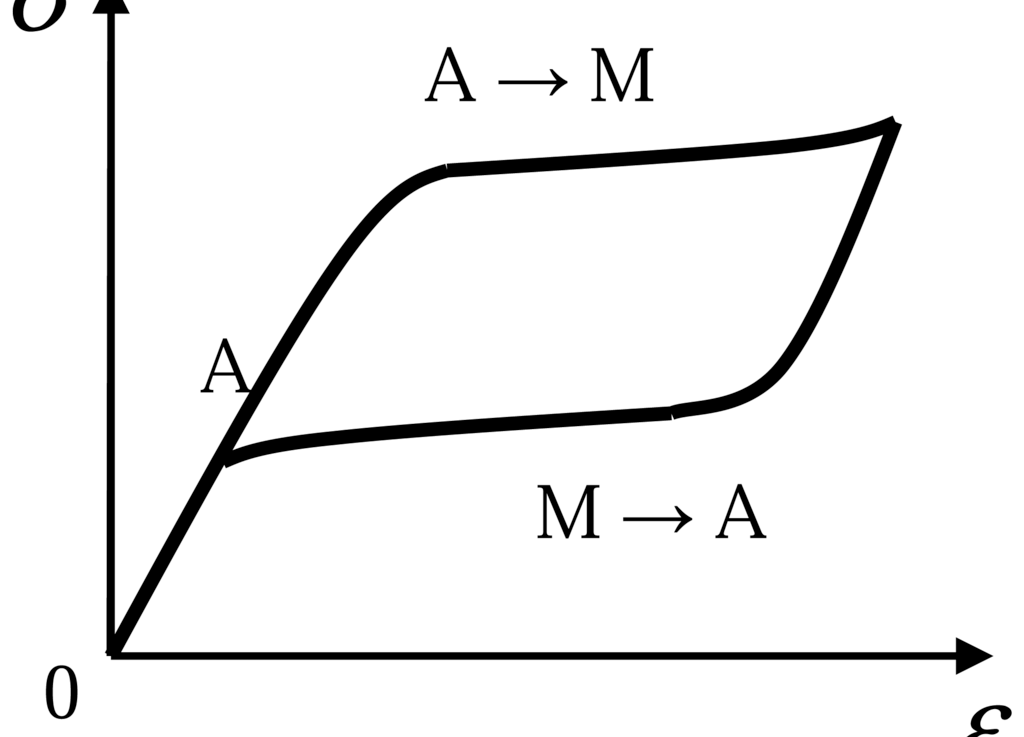
If you have thought about this, then I recommend that you research about a most interesting effect known as Pseudo-elasticity. Pseudo-elasticity is an elastic (also known as reversible) response to applied stress. This effects is a result of the crystal lattice structure of materials.

Shape-memory alloy

Shape-memory alloy

Shape-memory alloy                 05/30/16

Are there materials that “remember” their shapes such as the ones seen on television?

Believe it or not, the answer to this question is yes! Shape-memory alloys are alloys that have the ability to “remember” their original shape (which means that they return to their original form after a deformation). This effect is a result of the material’s unique crystal structures, which allows it to reverse after a deformation. Shape-memory alloys have a wide domain of applications (tweezers used to remove foreign objects), ranging from medical appliances to military technology and even into clothing!!!

Einstein’s general theory of relativity

Einstein’s general theory of relativity

Einstein’s general theory of relativity         05/24/16


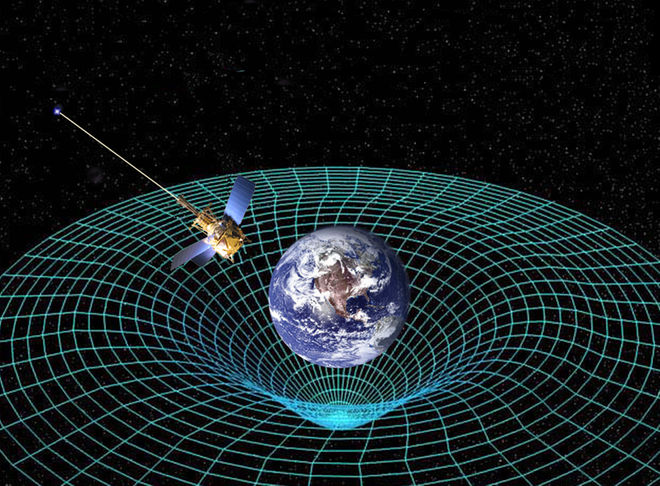
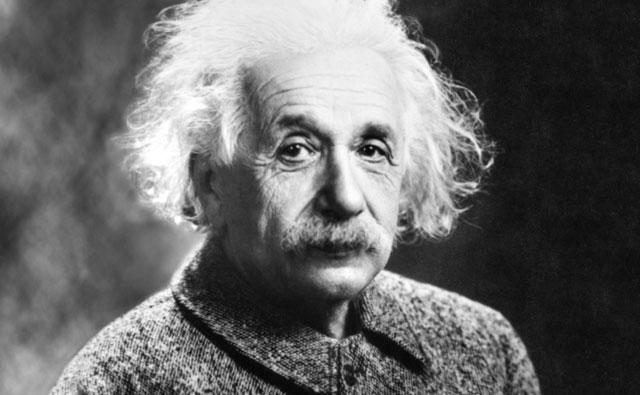
Einstein’s general theory of relativity is one of the most astounding accomplishments in the entire history of human thought. When Einstein originally published his theory of special relativity in 1905, it only worked for a constant velocity. But what if we take into account acceleration? Einstein pondered that, and spent the next 10 years working on such a ominous issue. After he was finished, he published his General theory of relativity. In General relativity, All of space is like a bedsheet, and objects like planets are like marbles. By putting one on the bedsheet, we cause a disturbance, which affects other planets. Also, space and time are not separate but one in the same! This is how higher masses cause disturbances in time as well as in gravitation. In this end, gravity is not a force but a geometric disturbance. This effect accounts for gravitational lensing

Einstein’s theory of special relativity

Einstein’s theory of special relativity

      Einstein’s theory of special relativity    05/23/16

Why can you not go faster than the speed of light?


This is one question that many great thinker have pondered ever since Maxwell demonstrated that the speed of light is fixed for every reference frame. How can it be possible to accommodate newtonian Mechanics, which states that all velocities are in reference to one another, with Electrodynamics, which states that there is an absolute limit for light? One great thinker who thought about this was known as Albert Einstein. After a considerable amount of thinking, he came up with his most brilliant idea in 1905. By taking the above two contradictions as postulates, he came upon to an amazing epiphany. All time is relative. Let us see how this works symbolically. Einstein came up with an equation for Time dilation t’=t1-v2c2, with t’being the shift in time, tbeing the change in time, vbeing the velocity, and cbeing the speed of light. If one were to have a velocity, then they would experience time as going slower around them. In this special theory of relativity, Einstein derived his most famous expression, E=mc2, which relates the mass of an object to the energy. What is even more amazing is that this shows that mass is directly proportional to energy, so if energy increase, mass increases! Furthermore, when an object approaches the speed of light, it’s mass increases so much that it becomes impossible to accelerate, therefore nothing can go past the speed of light.
N-body problem

N-body problem

N-body problem           05/22/16


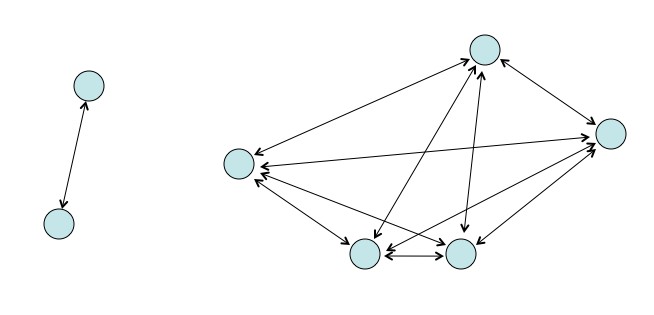
Earlier, we have discussed the effects of universal gravitational and how in a classical Newtonian framework a gravitational force acts upon all masses equal to FG=GM1*M2r2. Now, this makes calculations for two isolated interacting objects very simple, but what about more complex systems such as three or more astral objects? The attempt to discern a general equation for such a complexity is known as the N-body problem. Physicists have been trying to solve this conundrum ever since Sir Isaac Newton published the Principia Mathematica. Supposedly, the equations are even more difficult to solve when one factors in Einstein’s theory of relativity!

Computational physics

Computational physics

Computational physics        05/21/16


If you read last night’s episode of Isaac’s daily science lecture, you would have learned that Scientists and Engineers often use computational models to simulate complex systems. Tonight we will discuss the application to physics, often called Computational physics. Officially, Computational physics is defined as the study and implementation of numerical models to simulate complex physical problems. Computational physics as emerged as an entire methodology in it’s own right, with applications ranging from the simulation of the Nbody problem.

Isolated system

Isolated system

Isolated system             05/18/16


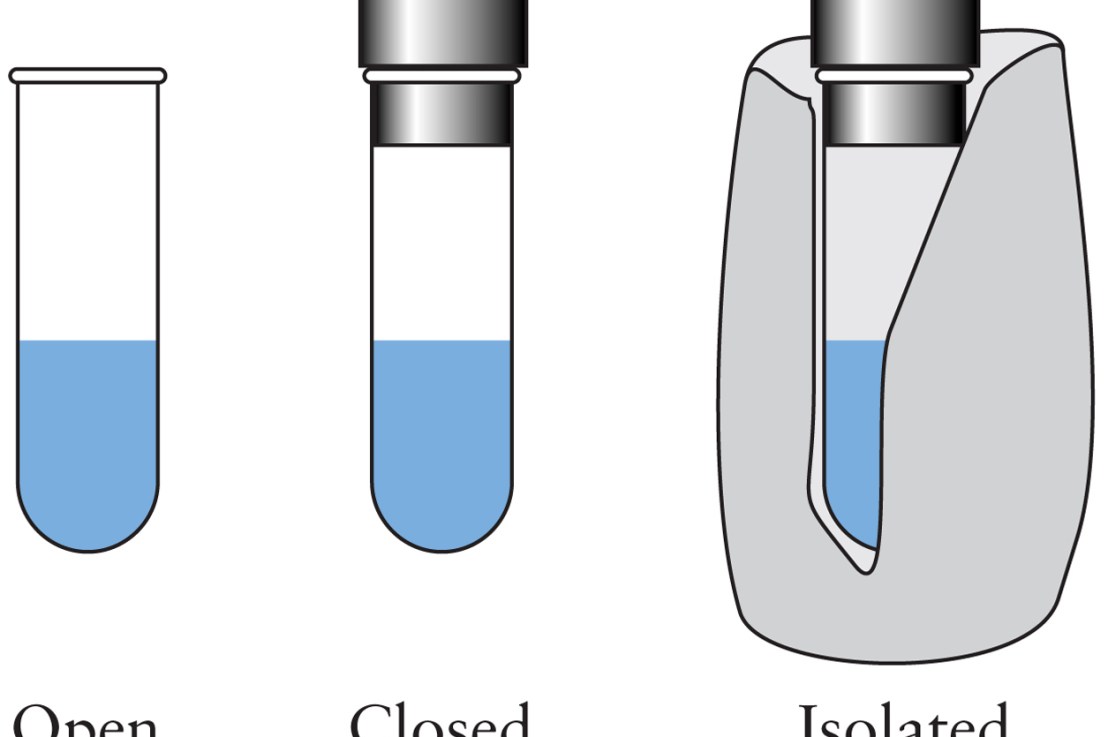
Within physical science and engineering, an Isolated system is a physical system that is so far removed from other systems that it is considered almost closed off from them. This differs from a closed system, in which the latter are isolated through an artificial boundary, while the former is due to causal distance. Isolated systems are useful for dealing with real world phenomena such as atoms and planets in the solar system.

Conservation law

Conservation law

       Conservation law           05/17/16


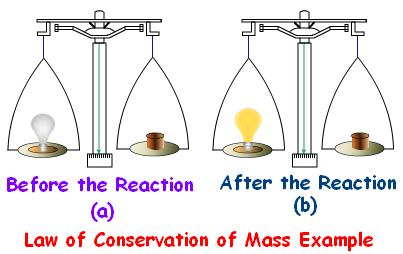
A Conservation law in physics is a property of an isolated system in which it does not change over time but remains static instead. Examples include the conservation of momentum, the conservation of angular momentum, and the conservation of energy.