Category: Engineering

Shock waves

Shock waves

         Shock waves           05/10/16


When an item goes so fast through a fluid medium than the local speed of sound, a most disruptive phenomena known as a shock wave occurs. This occurs when the object shifts to a supersonic speed because before the object was moving at such a speed, the air molecules producing the sound were going faster than the object, and once the object reaches the speed of sound, the fluid molecules will be left behind the object, resulting in a traffic-jam like situation occurs in which the surrounding fluid molecules pile up and cause an almost inconceivable explosion of energy.  

The picture is a Schlirein photograph of a supersonic body
Wave power

Wave power

Wave power           05/06/16

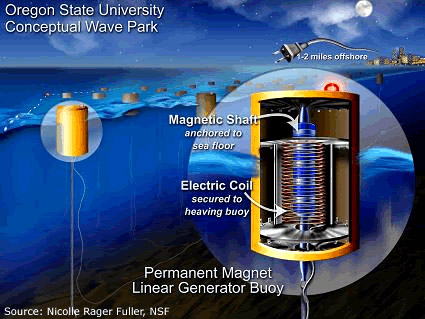
What if I told you that Engineers have built machines that are able to convert the kinetic energy of waves into usable power? This is the very principle behind Wave energy. By capturing the energy propagated by these waves, we can power up to around 40% of humanity’s energy needs.

Malleability

Malleability

      Malleability           05/05/16


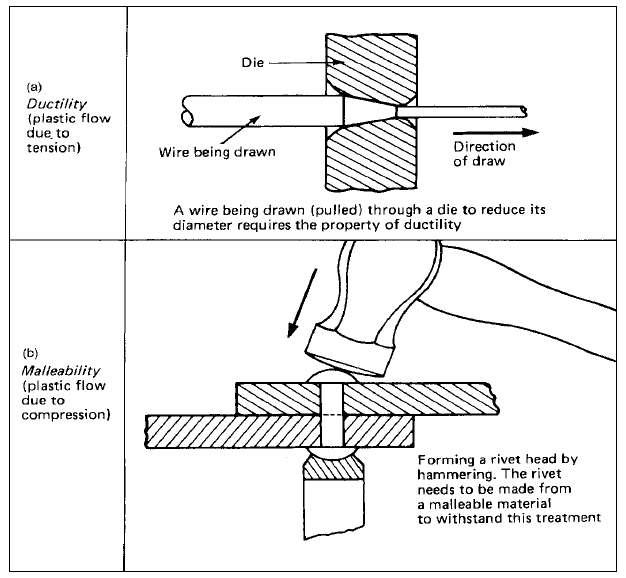
Malleability is the ability of a substance to deform under pressure. As such, Malleability is defined as being a physical property of materials. Most malleable materials are the ones numbered one through twelve on the periodic table of elements. Substances that are malleable are often able to be hammered into thin sheets.

Ductility

Ductility

Ductility                   05/04/16


Have you ever wondered why objects seem to stretch when a tension force is applied to them? Then you have just thought of the process of ductility. Ductility is the ability of an object to stretch when under stress. A highly ductile object may be stretched into a wire. Ductility is kindred to Malleability, or the ability of an object to be deformed under pressure.

Hall effect and applications

Hall effect and applications

Hall effect and applications                   04/29/30


Have you ever wondered what would happen if a magnetic field interacted with a conductive plate? If so, then you have just independently postulated the hall effect. Suppose we have a current going through a conductive plate. As one know, there is a net movement of electrons within the material. Also known is that a magnetic field will cause a deflection of charge, it’s direction depending on it’s charge. So wouldn’t it be logical that if a magnetic field were to come in contact with the plate which contains a net movement of charge, That the charges would become polarized to each side of the plate? And as a second order effect, the new disposition of charges would cause a voltage to be created?


One very important application of the hall effect to the field of Mechanical Engineering is known at the Wheel speed sensor. If we put such a device parallel to a rotating wheel, then the rotation of the  gears of the wheel would induce a magnetic field. If one is able to measure the changing magnetic field, then it would only be logical that we would be able to obtain a measurement for the RPM

Hydrostatics

Hydrostatics

Hydrostatics                  04/25/16


Hydrostatics is the study of the physics and applications of incompressible fluids at rest in stable equilibrium. The weight of a fluid displaced in water can be expressed symbolically as F=*V*g, where is the fluid density (assumed to be constant) Vis the volume, and g is gravity of the planet. The pressure on a liquid submerged in a fluid can be calculated at P= gh+P0, where Pis the pressure his the vertical displacement and P0is the atmospheric pressure (or the pressure at the top of the fluid surface). The study of hydrostatics is of fundamental importance to the field of Mechanical Engineering

Environmental stress cracking

Environmental stress cracking

   Environmental stress cracking                 04/24/16


One of the most common unexpected brittle failures of all thermoplastic materials is environmental stress cracking. ESC occurs when polymers are exposed to liquid chemicals that accelerate the crazing process, which results in cracking at pressures below standard air temperature. The study of ESC has application within the automobile industry, where the need to keep polymers stable is paramount

Brittleness

Brittleness

Brittleness          04/23/16


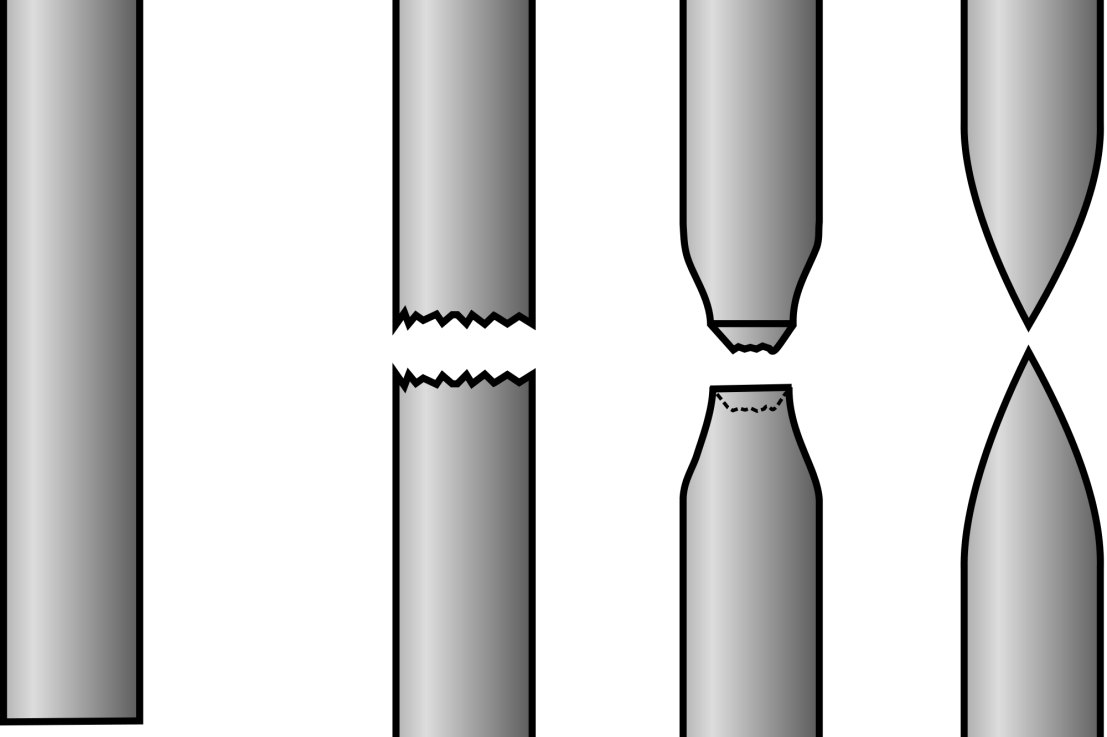
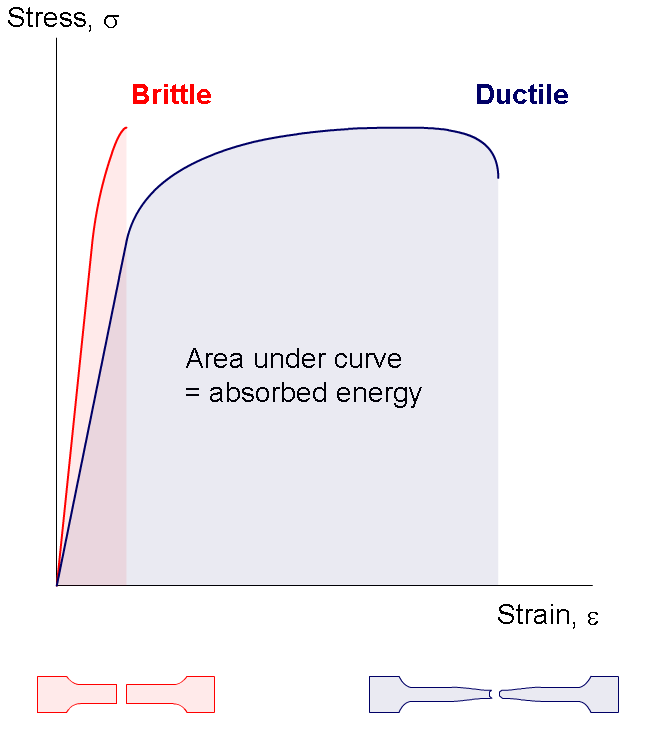
An object is considered brittle if it breaks from stress without significant deformation. Such an object requires little energy to be broken. The brittle strength of an object can be increased by subjecting it to pressure.

Thermoplastics

Thermoplastics

Thermoplastics         

        04/22/16


Thermoplastics are plastic materials that become pliable once a certain temperature threshold has been reached and revert back to being rigid once cooled to a certain temperature. The amorphous nature of thermoplastics are less susceptible to chemical attacks and environmental stress cracking due to lacking such a clearly defined structure. Teflon is an example of an application of thermoplastics