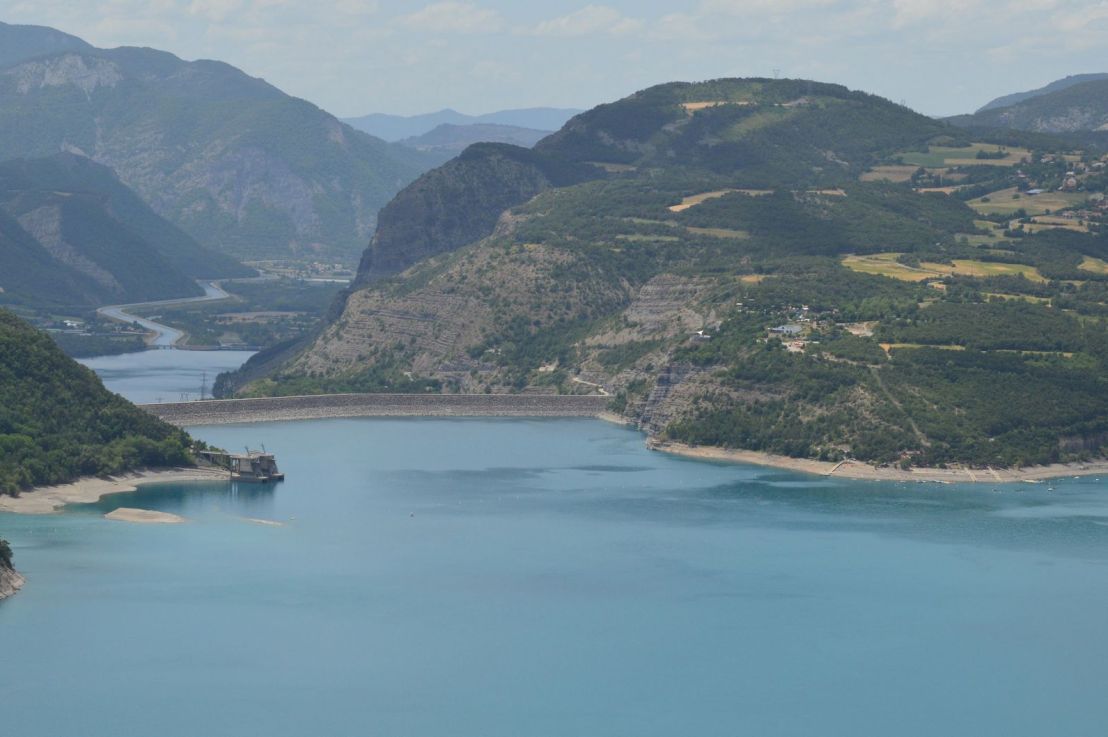
People can create reservoirs to store water. One way is to install a dam over a river, bringing its flow to a near halt and practically turning the water body into a lake. These Dammed River Reservoirs can hold vast amounts of water throughout the year. Water is typically still let out through controlled release. Dams can release enough water to generate hydropower. Dammed river reservoirs can protect against floods by concentrating water upstream and releasing only a paltry amount downstream. Dammed river reservoirs can be environmentally catastrophic (especially for Indigenous livelihoods), and people may remove dams to restore the natural environment. Damned river reservoirs are also liable to sedimentation buildup and algae blooms from the stopped flow.
“How can we create giant reserves of water for later use?”
Water is one of the most fundamental components of human life. Consequentially, water needs to be stored for people to avoid catastrophe. Reservoirs are large water storage bodies to fill this need. Reservoirs can be natural (like lakes) or artificial (like dammed rivers). Reservoirs can also release water to assist drought-stricken communities.
“Why can overpumping lead to saltwater intrusion?”
Pumps can suck up groundwater and create a cone of depression. If the system is pumping too quickly, then the pump can suck up saltwater. This Upconing phenomenon leads to saltwater intrusion, damaging surrounding ecosystems and infrastructure.
“How does a water table’s shape change when a pump is activated?”
Pumps can suck water out of aquifers. When a pump activates in an unconfined aquifer, it creates lower pressure near its mouth, causing the water table portion near the well to bend towards it. Because the water table portion further from the table is less affected, it will bend less, and a negative slope will form. Since the water table is affected equally in all directions, this slope will be circular and form what’s called a Cone of Depression. The slope of the cone of depression is contingent upon the pumping rate, pumping time, aquifer conductivity, and water recharge.
“How do we quantify the rate of new biomass by photosynthesizers after accounting for keeping themselves alive?”
Primary productivity measures the rate of new biomass growth by photosynthesizers. However, these organisms will need to use some of the energy they receive from the sun to keep themselves alive. Consequently, these organisms will only have the Net Primary Productivity, or biomass growth rate, accounting for the energy used to keep themselves alive. Photosynthesizing organisms use the former to grow themselves, and the latter to sustain themselves.
“How can we define an organism’s food chain position based on its energy level?”
Organisms at the bottom of food chains use primary production to gain biomass, while those higher up use secondary production. The higher up the food chain you go, the lower the energy potential there is. Ecologists have termed the food chain level an organism is at by their potential energy as their Trophic Levels.
“How can we quantify the rate at which ecological consumers create new biomass?”
Biomass is the amount of mass that exists within living organisms. Some organisms, like animals, fungi, and many microorganisms, consume organic matter to create their own biomass. Because this organic matter was not created by sunlight but by consuming other biological organisms, the rate at which the new biomass is created is quantified as Secondary Productivity. Secondary productivity is expressed in units of mass per volume per unit of time and conceptualizes how biomass is transferred from one part of the food chain to the next.
“How can we quantify the rate at which organic matter is created by photosynthesis in a given area?”
Certain organisms, such as green plants and algae, create organic matter/biomass from solar energy using photosynthesis. The amount of biomass created by photosynthesizing organisms in a given area per unit time is quantified as Primary Productivity. Primary productivity is the foundation of most ecosystems.
“How can we create large-scale underground stormwater storage with modular units?”
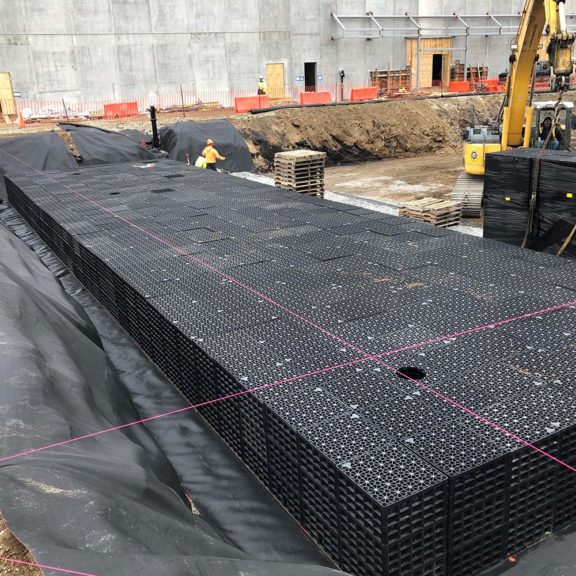
Stormwater storage can be a monumental problem when you don’t have enough space in your project. But what if we were to take modular storage units, put them underground, and then connect them to one another and to pipes feeding from above ground? This way, we can create a large storage system that’s expandable, dense, and flexible without taking up overland space. Well, this is the idea behind R-Tank Stormwater Modules. R-tanks are typically installed under impervious surfaces so they won’t take up infiltration potential. R-tanks can channel their contents to detention, retention, or water reuse systems.





 Isaac's Science Blog