How Climate Change will Make Renewable Energy Adoption in the Caribbean More Difficult
04/28/18
“How will Climate Change make renewable energy adoption in the Caribbean More Difficult?”
Caribbean Nations are doing their part to combat Climate Change by adopting renewable energy. However, this will become more difficult as global temperatures rise, since the increased frequency of rainfalls and hurricanes make installations more difficult. But by adopting climate change adapted technology such as hurricane-resistant wind turbines, the Caribbean will be able to build itself into sustainability.
“How can we measure the point in which saturation occurs?”
When it gets humid outside, it’s very easy for moisture to appear on surfaces. However, why does that happen? Well, the answer lies in a most interesting property called the Dew Point. The dew point is the temperature at which the gas in a given area will condense into a liquid. If an object cooler than this point comes in contact with air, then it is possible for dew to form. HVAC system engineers must keep this value in mind when designing dehumidifier equipment.
“How can we empirically analyze environmental quality?”
One of the most important tasks that an environmental engineer or scientist must do is analyze the health and quality of the surrounding environment. However, often times qualitative methods such as visual observation do not work. So how can the necessary quantitative information be obtained?Well, what if we were to simply take samples of the environment, whether it be the soil or air, and then place it into a lab for physical, chemical, and even biological analysis? Well, this process is known as Environmental Monitoring and has resulted in some of the most important discoveries, such as climate change and soil degradation.
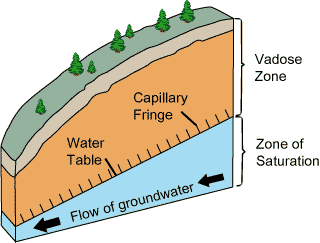
“What is the area underground where the pores and cracks are filled with water?”
Aquifers are natural underground water storage tanks. So naturally, if there are open areas nearby some of the water might seep out. This water usually ends up filling the pores of a region known as the Zone ofSaturation, also known as the Phreatic Zone.Zones of alienation worldwide are being polluted by unsustainable practices and depleted by global warming
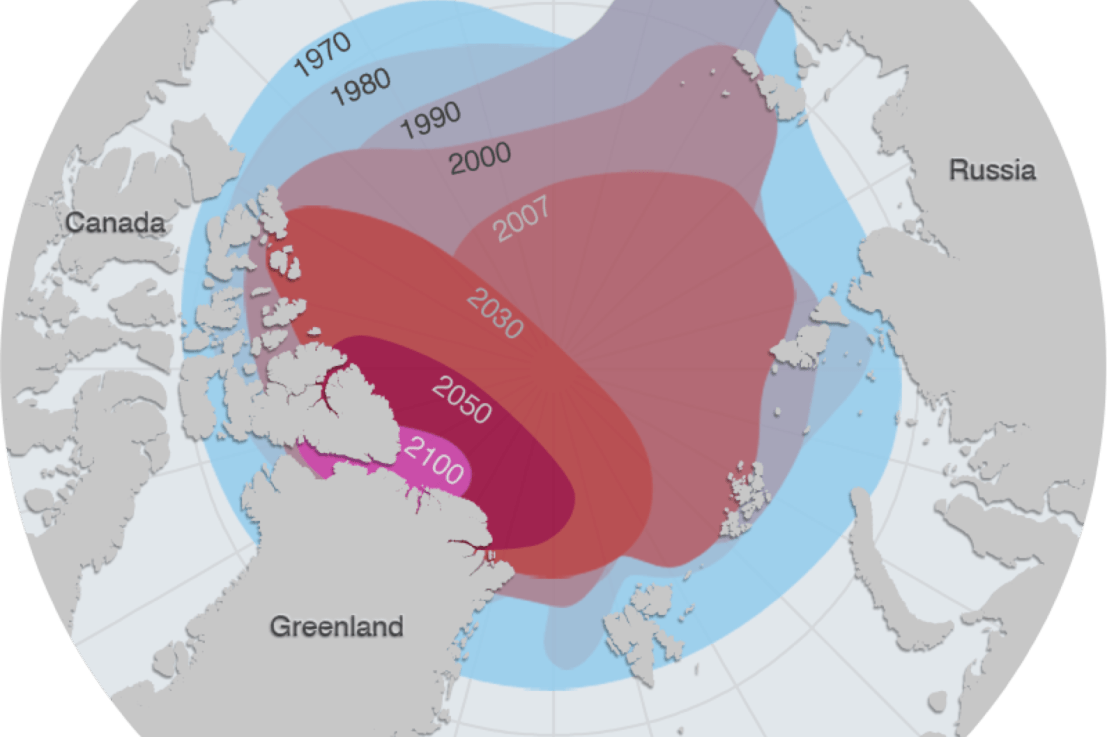
“How is climate change affecting the Arctic sea ice?”
Let’s think about something for a moment. We know that ice is more likely to melt when it is immersed in higher temperatures. And we know that the northernmost pole of the Earth (the arctic) is composed mainly of ice, and that climate change is causing global temperatures to rise. So wouldn’t it be logical that such a phenomena would be causing the arctic sea ice to recede? Well, it turns out that according to empirical evidence this is exactly what is happening, as ever since we have started taking satellite measurements of the polar ice caps in 1979 we have seen a 35% decrease in landmass!
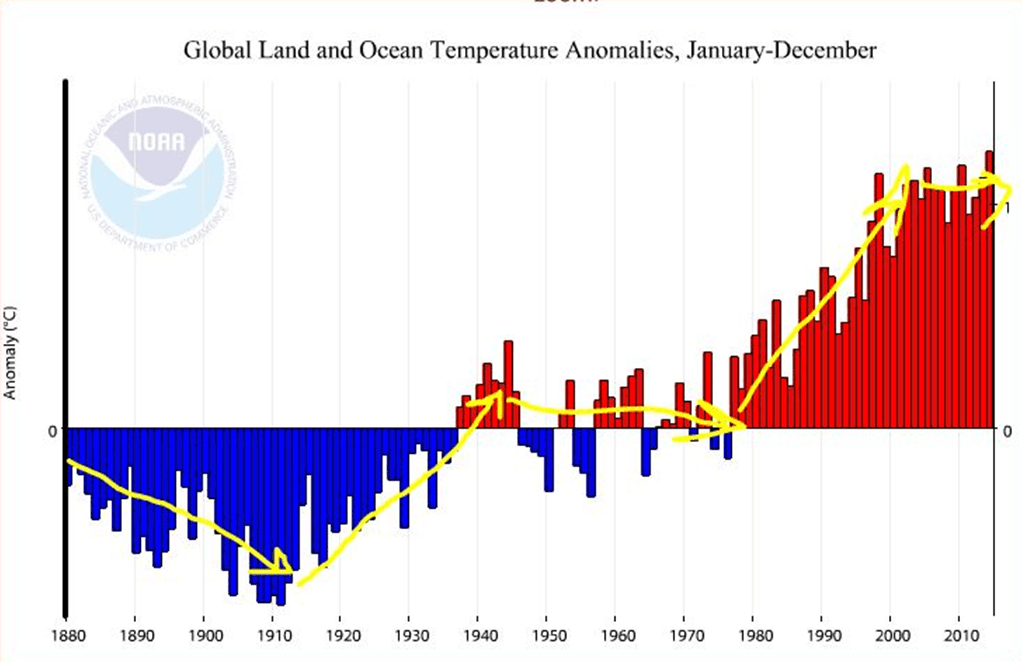
“Can we learn about climate change just by looking at ocean data?”
Climate change is something that is talked about every day. However, how can we get some evidence for it? Well, what if we were to look at the temperature of the most massive body of heat storage on the Earth, the ocean! By carefully observing its temperatures, we can observe that the ocean has gained 0.1-degree Celsius since 1969^1. Even though this does not seem like a significant deviation, we must remember that our global ocean is composed of around 1.4 * 10^24 worth of water (a substance with a substantial heat capacity), so any temperature change even an order of magnitude close to our observed value is quite drastic.
Levitus, et al, “Global ocean heat content 1955–2008 in light of recently revealed instrumentation problems,” Geophys. Res. Lett. 36, L07608 (2009).
“How can we fight pollution using economics?” There are many tools available to achieve sustainable development. The ones most often talked about on this blog are technological in nature. However, engineering is not the only way to fight for a cleaner future, and another tool at our disposal are those of economic nature. So let’s think of one possible solution using financial motivation. Well, it is commonly known that individuals do not like to have money taken away from them. So what if we were to take money away from people who pollute too much? This is the fundamental idea behind a carbon tax and can be used by policy makers to influence people to adopt more sustainable practices.
“How can we measure real world triangles accurately?”
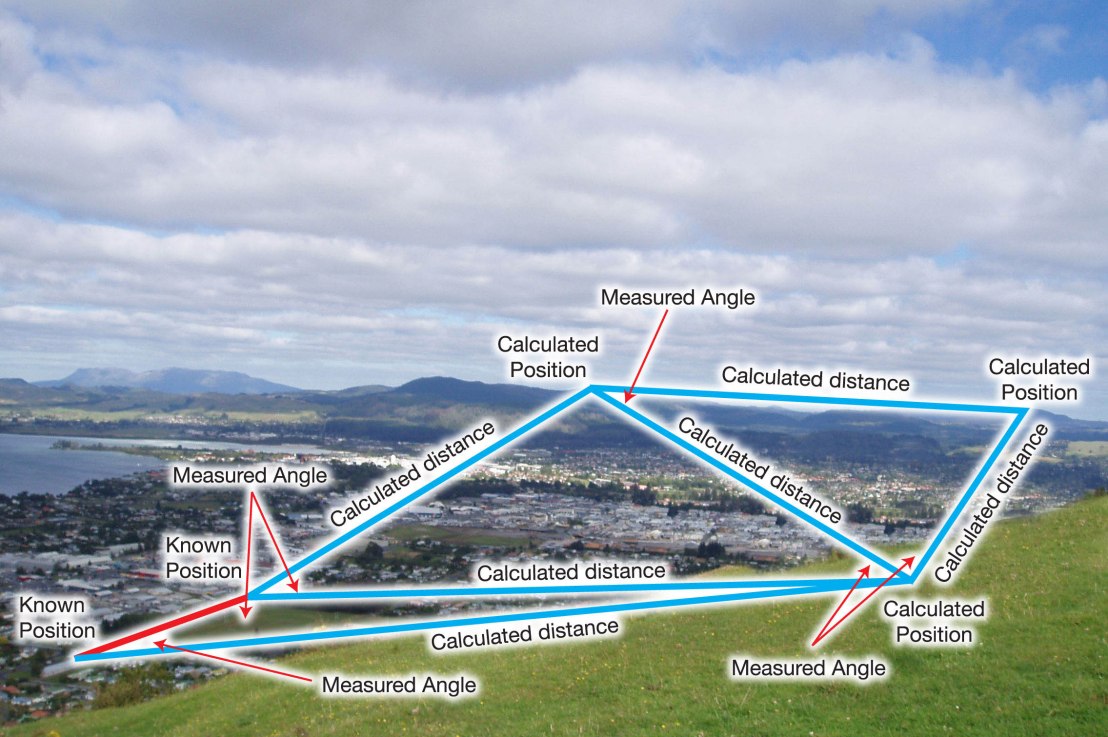
In surveying, it is often useful to measure triangular areas. However, how exactly is this accomplished? Well, let’s use our engineering mindset to find out. We know from high school trigonometry that if we can find the length and angle of one side of a triangle then we can find out the rest with ease. So how what if we were to apply this idea in reality successive lengths of rods whose length were accurately known? Well, this is the fundamental idea behind surveying triangulation and was the main surveying technique before the 1950s
“How do Engineers determine an accurate topology of an area?”
Civil engineering projects often involve large projects. And these large projects will often take up a large area. And in many parts of the world, this area might consist of uneven terrain. So how can we accurately find out the topology of an area? Well, let’s use our engineering mindset to find out. We know that with mechanical devices, we can easily gather information about irregularities in terrain. And by using computer technology, we can analyze this information to obtain a better view of the area. So what if we were to apply this concept to reality, and create an interconnected network of equipment to survey the land? Well, this is the fundamental idea behind engineering surveying, and it’s one of the most fundamental aspects of Civil Engineering.



 Isaac's Science Blog