“How can we quantify the transmissive capabilities of an aquifer system?”
When water is pumped out of an aquifer, the aquifer’s properties will determine how fast and how much water will come to the well pump. The rate at which an aquifer can horizontally transmit water is called Aquifer Transmissivity. Aquifer transmissivity is measured in area per time unit, proportional tothe product of the aquifer’s hydraulic conductivity and saturated thickness.
“What happens to an aquifer’s pressure head when a well is inserted?”
Inserting objects into an aquifer will change its properties. When a well is inserted, the groundwater’s hydraulic head is reduced. The closer a piece of groundwater is to the well, the more it is reduced. This decrease in pressure is known as Aquifer Drawdown. Aquifer drawdown is important for completing aquifer water production field tests.
“Why are some rock layers folded into themselves?”
Rocks undergo all sorts of deformations throughout their lifetimes. Rock layers may fold into themselves when they’re compressed and form Rock Folds, or curved layers of rocks. Rock folds are more common deeper in the Earth’s crust, where hotter temperatures and higher pressures make rock material more ductile. Rock folds made deep underground may surface to the Earth, creating beautiful geological marvels.
“How can we release water from a dam when it’s too full?”
Dams and reservoirs hold a certain amount of water. When there’s too much water, it can damage the dam and the surrounding area. So what if we were to design a mechanism that allows us to release a certain amount of water before overflow occurs? Well, this is the idea behind Spillways. Spillways come in all shapes and sizes and are a fundamental part of many water containment infrastructure systems.
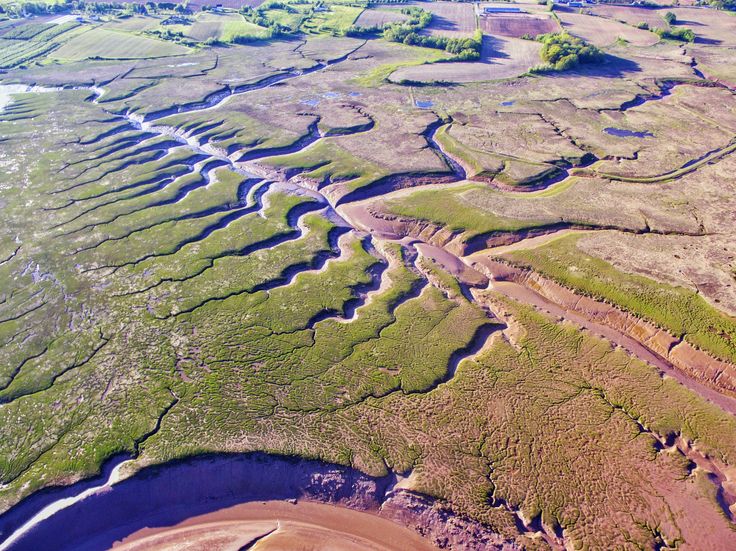
Drainage pattern shapes form based on the local geology. Sometimes, the surface might have alternating bands of resistant and non-resistant rock. When water flows over these surfaces, the non-resistant rock erodes more steadily and turns into a valley between the resistant rock bands. The main tributaries of these rivers will run through these valleys and form perpendicular streams down the edges of the ridges of the resistant layers. These Trellis Drainage Patterns are prone to flooding because the water flowing through the valleys can overflow during heavy rains. Bakudabakek/Wekwabegituk (also named “The Bay of Fundy” by the settler-colonial state of Canada) is an example of a trellis drainage pattern.
“What is the branch of geology concerned with rock layers and historical layering?”
Rocks layers and layering have so many different aspects about them. Whether it’s their lithology (physical properties) or how their physical relationship to each other explains their historical evolution, there’s something to explore. There is so much information about these rocks that there’s a whole field, Stratigraphy, dedicated to understanding this. Stratigraphy is a subset of geology that analyzes rock layers and their historical layering.
“How can we distinguish rock layers from each other?”
Rock layers come in all different forms. However, multiple layers might come attached to each other and we’ll need some way to differentiate them. Well, what if we were to categorize each layer by their physical properties? This is how we organize each layer into different Geological Formations. Geological formations are the basis of rock classification.
“Why do objects appear to roll upwards and defy gravity on some hills?”
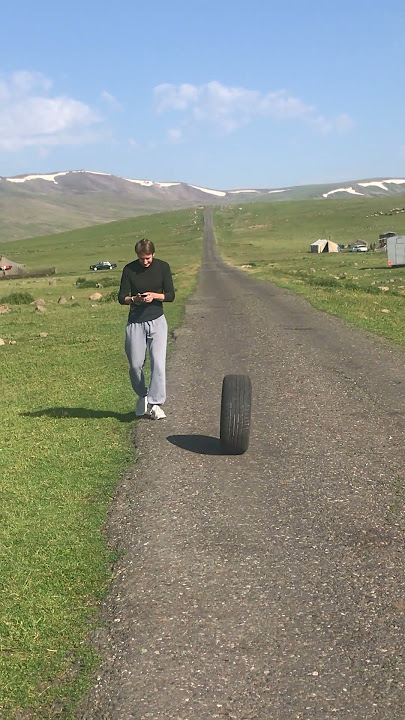
There are places where nature does not seem to obey the laws of physics. For example, on some hills, objects appear to roll upward instead of downward. There are countless videos on the internet showing the strangeness of these Gravity Hills. But what exactly is happening? Well, it turns out that the slopes of these hills are actually an optical illusion, making downhill look like uphill. These hills usually lack a clear horizon, making it difficult to accurately judge the real direction. Furthermore, a road might be at a slightly different angle than the incline, causing a visual cue mismatch. One example of a gravity hill is in Aragats, Armenia, as seen in the attached picture.
“How can we classify rocks according to physical properties and age?”
Rocks come in all shapes and sizes. However, we may want to know how rocks of a particular area are different from rocks of another. We can accomplish this by classifying rocks into Rock Units that differ by physical properties and age.Rock units are fundamental for understanding applied geological studies.





 Isaac's Science Blog