How A.I Can Be Used to Create More Efficient Wind Turbine Blades
01/31/21
“How can A.I be used to create more efficient wind turbines?”
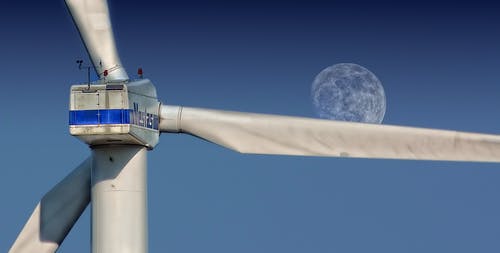
Most wind turbine blades are created by human sketching. Although many are adept at it, it is always prone to errors that can throw off efficiency at any margin. However, with the advent of A.I capabilities, we will be able to have wind turbines be designed to the most optimal flow pattern possible, greatly increasing efficiency. The wind industry will be revolutionized by this technique which will allow us to go further in our fight against climate change. This is How A.I Can Be Used to Create More Efficient Wind Turbine Blades.
Climate change emergencies are becoming more and more frequent with each passing year. One way to prepare for them will be to use computer technology to make Climate Emergency Simulations. This way, we can see how matters unfold and trains practitioners against them.
Climate migration is going to become a more important topic in the coming years as less land becomes habitable due to extreme heat, sea-level rise, and wildfires. To project how these changes will occur, Climate Migration Modeling can be undertaken by taking in climatic changes and economic drivers and seeing how demography will play out. This will be especially important for urban planners so they can design cities based on how many people will arrive or leave.
“How can we use a database to analyze maintenance operations for an organization?”
Industrial organizations always need maintenance, whether it be for manufacturing machines or work orders. With modern digital technology, we can keep track of all these operations using Computerized Maintenance Management Systems. Components include important topics such as inventory control and fault diagnostic and detection.
“How can machine learning be used to predict wildfires?”
With the advent of climate change, wildfires in Mediterranean climates are becoming more frequent and furious. To build resilience to this, we will need methods that can sense when and where these fires may occur. By using Machine Learning for Wildfire Prediction, we can take in prior data and parse it through scientific models to arrive at our solution!
“How does geospatial software estimate the slope of maps?”
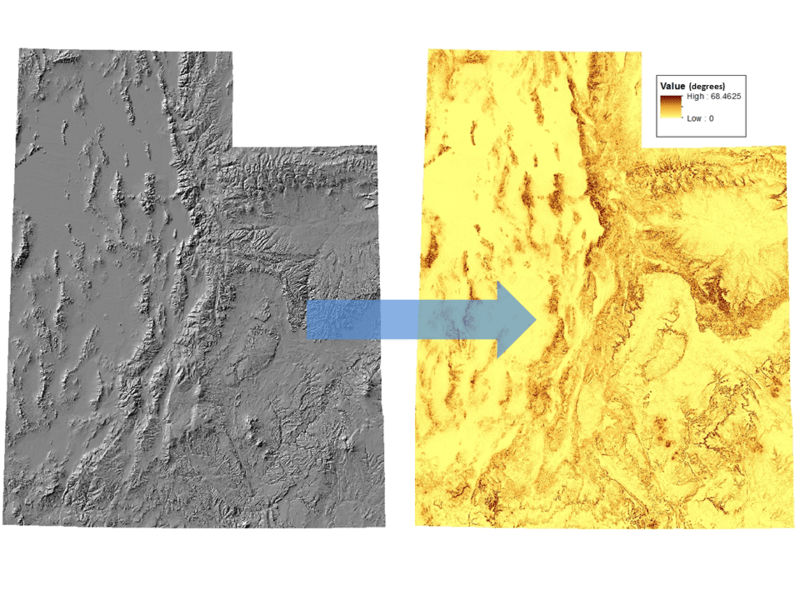
Slope analysis is extremely useful for numerous geospatial applications ranging from housing placement to wildfire risk estimation. However, how exactly is the sloe calculated? Well, what geospatial software usually does is take each data point of height and compare it to its eight neighbors to estimate the height difference. This is how Geospatial Slope Estimation is performed.
“How should we design simulations for urban wildfires?”
Most wildfire simulations are designed to compute wildfires that occur in rural forested areas. However, with the advent of climate change, these fires are overshooting and finding their way into urban areas. Since this can cause untold harm to the people who live there, Urban Wildfire Simulations will need to be developed in order to deal with these problems.
Social media is usually thought of as an innocuous way to connect with friends. However, it can also be used as a surveillance mechanism by malevolent institutions due to the fact that you are posting your data for free. For example, social media sites might be able to use facial data to hunt down activists. This is why one must take Social Media Surveillance seriously.
“How can social media networks use your pictures to aid authoritarian institutions?”
Uploading your profile picture to social media is a common medium of expression nowadays, whether it’s showing off your new look, most recent achievement, or unbelievable vacation. However, this all comes with a price. These social media sites will own data about your face, and can share it with authoritarian institutions to keep track of you and take action if you become a “threat”. For this reason, you must always be aware of the link between Social Media Networks and Facial Recognition. If you don’t act properly online then hiding your face from observation cameras may not always cut it.






 Isaac's Science Blog