Engineers and Scientists (both Natural and Social) analyze data to see what causes what. Often times, they will start with a set of factors that they think that is relevant, and trim down what does not have any effect. This is known as Feature Selection and is one of the underlying tools behind statistics and machine learning.
Binary numbers are fundamentally a one-bit system, either on or off. However, computational systems are now so large that sometimes reading all of those bytes can be difficult. So is there a way that we can shorthand it? Well, what if we were to use a system that could represent 4 bytes at a time? This is known as Hexadecimal Numbering. Hexadecimal Numbers 0-9 are represented by their respective numeric values, while 10 -15 are represented by A-F. Hexidecimal numbers are an underpinning of modern computational systems.
“How do most mechatronic industrial machines operate?”
Believe it or not, most modern day industrial mechatronic devices share a common operating principle. But how exactly does this work? Well, let’s use our engineering mindset to find out. When running through their cycles, they are in one state at a time. Whether it be an elevator changing floors or a car starting its motors. And if they want to change states, then a certain condition needs to be satisfied, such as reaching the destination floor or reaching full speed. Resultantly, this system architecture is called a Finite-State Machine and is one of the most common examples in the world.
“How can we apply Machine Learning to estimate electric loads?”
Electric Load Forecasting if vital for making informed decisions about how to use energy throughout the day. And thanks to modern computational technology, we will be able to do such work by applying Machine Learning in Electric Load Forecasting. A computer algorithm can learn the past behavior of electric loads, and then make models to predict future behavior. Electric utility companies are investing large amounts of resources into developing these systems to increase their infrastructure.
“How can we make an application based framework for sensing and control?”
The modern world of engineering is evolving more and more towards the internet of things. However, most appliances nowadays use proprietary means to connect with each other. This makes building a truly open internet of things nearly impossible! However, the good people for the U.S Department of Energy want to fix this, specifically in the area of energy utilization with the use of a little technology known as VOLTTRON. VOLTTRON is an application framework that software developers can use to import and manage data and actions collected by devices. This allows for greater control over their efficiency and can support real-time agent-based communications. VOLTTRON is language agnostic, meaning that it can be written in any desired programming language, making it easier for developers to get their hands on it. VOLTTRON has a wide range of appliances, from utility research to building automation systems and even to vehicle-grid integration!
“What is the communications protocol for building automation systems?”
Building automation systems are amazing for optimizing building energy systems. However, in order to operate, they need their own communications protocol. So how can we use our engineering mindset to solve this problem? Well, after many years of research, the good engineers of ASHRAE have been able to develop a protocol known as BACnet. BACnet stands for Building Automation and Control network and is the standard for all BAS systems.
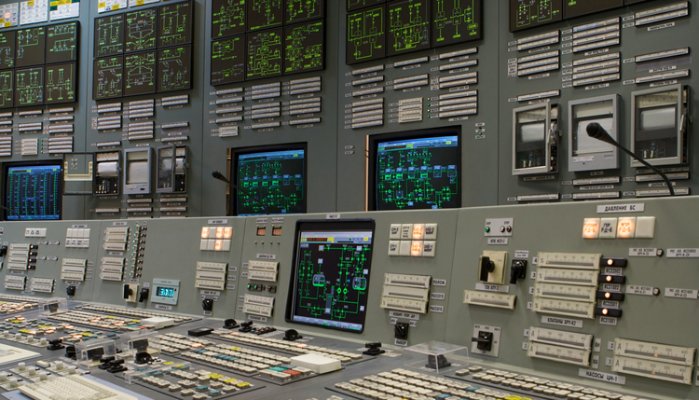
In Industrial operations, we often have to deal with large-scale control systems along with their instrumentation. Because of this, we will need to develop various types of special control systems to monitor and process everything. These constructions are known as industrial control systems and are one of the major underpinnings of modern-day industry.
“What are the points on a control diagram for comparing the output and the setpoint?”
What makes a closed-loop control system truly closed loop is the comparison of the output and setpoint for making the error value. However, how is this represented on a control diagram? Well, Control Engineers like to use something called a Closed-loop Summing Point. Closed-loop Summing Points are small circular elements on a diagram that takes in an input on one quadrant, the setpoint on another and then produce the error term. Depending on the signs of the quadrant, the input value might be positive (for a + sign) or negative (for a – sign)
“How can we have a self-correcting control system?”
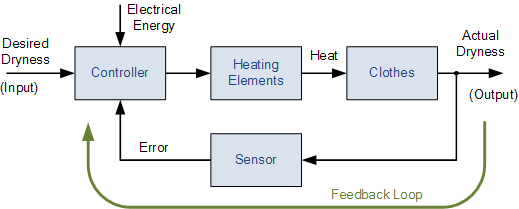
Open loop control systems may be affordable, but the lack of control over them (pun intended) makes them useful for only select applications. So how can we fix this problem? Well, what if every time our system was to produce an output, we compare it to our setpoint, and then modify the process to achieve our desired result accordingly? This is the fundamental idea behind a closed-loop control system and is used in a vast array of controls applications from electric vehicle battery life monitoring to drones and even laundry machine monitoring.



 Isaac's Science Blog