Category: Chemistry

Grain size reduction

Grain size reduction

Grain size reduction

03/11/17

“Is it possible to increase the strength of a material by reducing the grain size?”
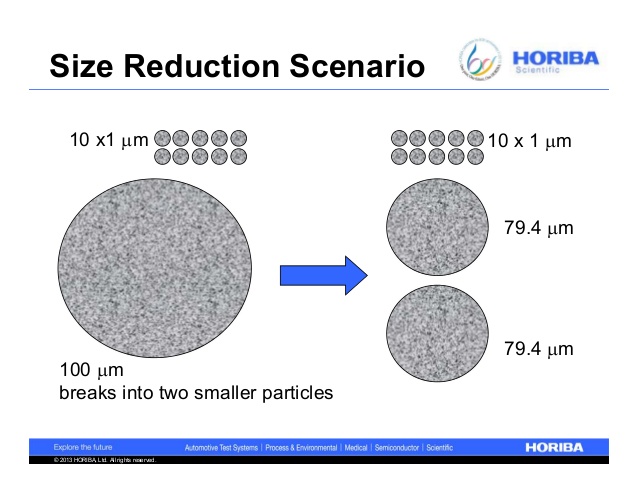
Many materials in their original form are not strong enough for practical engineering purposes. However, is there a way in which we could strengthen a material by modifying its grain structure? Well, let’s look into it. We know that the strength of a material is contingent upon its grain size. Specifically, the smaller the grain sizes are, the more of them will be able to be present within a material. So wouldn’t it logically follow that if we were to reduce the size of grains, the stronger our material would be? This is the fundamental principle behind grain size reduction, and modifies the yield strength of a material by the equation sigma =sigma_0+kdx, where sigma  is the new yield stress, sigma_is the original yield stress, k is a constant, and d is the grain size.
Precipitate hardening

Precipitate hardening

Precipitate hardening

03/10/17

“How can we use heat treatment to increase the strength of a material?”

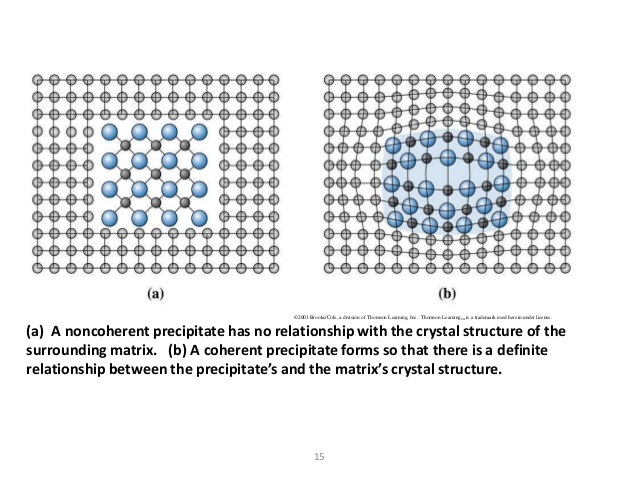
Often times, when we receive a material, it is not durable enough for our needs. So how can we use a readily available process to increase the strength of a material? Well, let’s use both of our engineering and scientific mindset to find out. Well, we know that if were to introduce an alloy into the crystal structure, then the material would be strengthened. However, if we were to increase the temperature of a material and then rapidly cool it, the material would form a highly regular crystal and the precipitates would seep into the grain boundaries, therefore greatly strengthening the material. This process is known as precipitate hardening and is used to make a variety of materials stronger ranging from everyday aluminum to the internal wing structure of a Boeing 767

Solution hardening

Solution hardening

Solution hardening

03/09/17

“What happens to a crystal structure when alloys are introduced?”
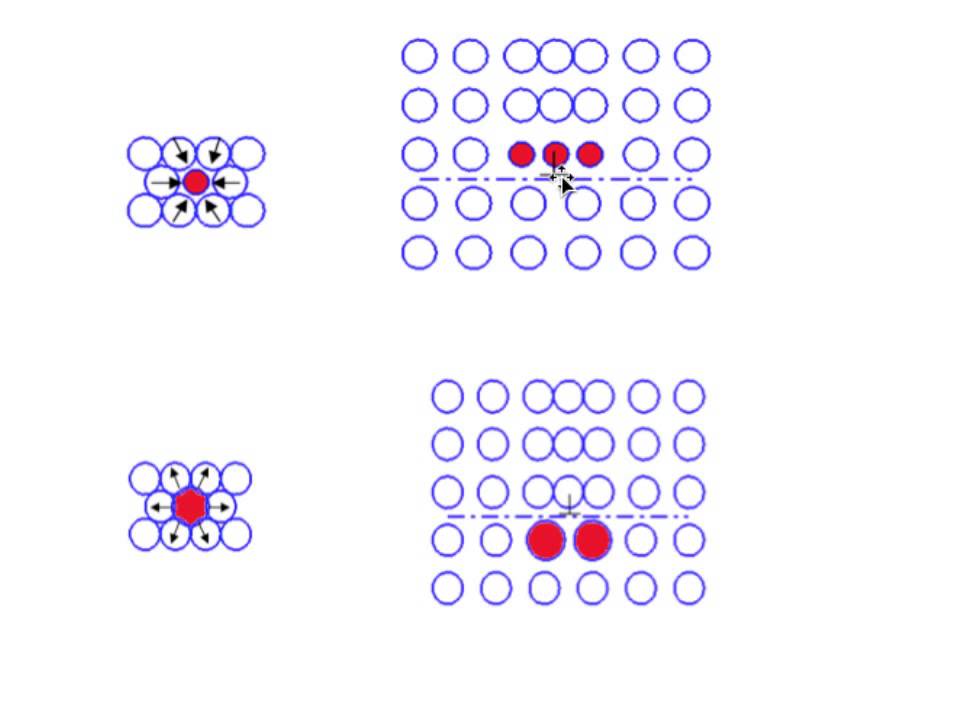
As pure elements, most crystal structures are fairly linear and homogeneous in nature. However, what happens when another element with a different atomic radius is introduced, disturbing this uniformness? Well, let’s use our scientific mindset to find out. We know that when these due to intermolecular forces that like elements will be more attracted to like elements. From this standpoint, we also can observe that this interlocking will impede further dislocations and lock the movement and slip of the atoms. This form of material hardening has been termed solution hardening my Materials Scientists and Engineers, and is dependent on the size of the inserted atoms.

Screw dislocation

Screw dislocation

Screw dislocation

03/03/17

“What happens when a shear stress acts upon a crystal lattice?”
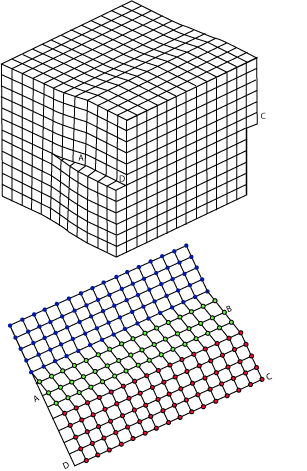
Crystal lattices are prone to imperfections, such as line defects. However, what happens when the crystal pattern experiences a shearing effect? Well, let’s use our scientific mindset to investigate this issue. Well, this will cause a rupture in the geometry which will result in a phenomenon known as a screw defect. Screw defects are so named due to the fact that if one were to walk from one edge of the dislocation to the other without jumping or falling, a screw like path would be formed.

Line defects

Line defects

Line defects

03/02/17

“How do we classify one-dimensional defects in crystals?”
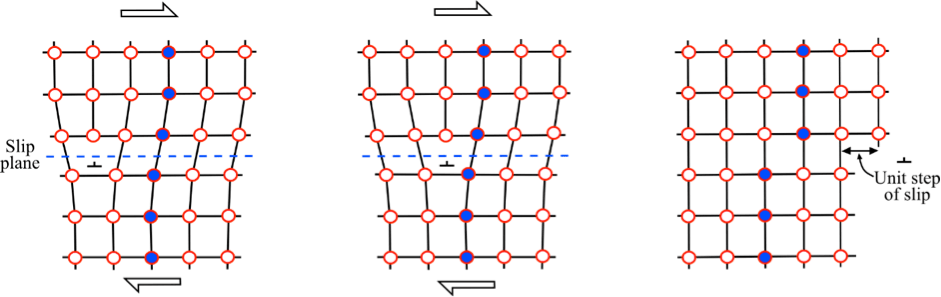
Crystals are well-known for their ever repeating structure. However, because of the intricacies of nature, these patterns are bound to have flaws. One such flaw is when the repeating pattern fails to be in a straight line, curving and bending. So how do materials scientists and engineers classify these materials? Well, after many years of hard work and research, these phenomena have been termed line defects. Owing to the fact that these defects are one-dimensional in a three-dimensional world, there are numerous forms of different line defects out there

Diffusion couples

Diffusion couples

Diffusion couples

02/26/17

“Why does diffusion happen between two solid materials?”
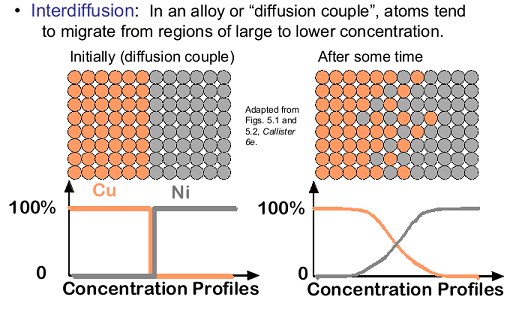
Diffusion is a most fascinating chemical and physical phenomenon, allowing a dense collection of an element to expand and suffuse itself into another. However, What is required for such an effect to occur between two solid items? Well, after many years of research, Materials Scientists and Engineers have discovered a little thing called diffusion couples. Diffusion couples are two items with point defects that are in close contact. When the temperature is elevated, then the atoms of these materials are more likely to moves around, and can “jump” into the holes of its neighboring material. As time approaches infinity, these two materials will become homogeneous with one another, therefore stopping the diffusion process.

Diffusion

Diffusion

Diffusion

02/21/17

“How do substances spread?”
Chemical substances can be found everywhere. However, these objects are almost always never in static position, and will constantly move around. So how can we classify the phenomena of the dispersion of chemicals? Well, after many years of research, Chemists have developed the concept of diffusion. Diffusion is when molecules from a high concentration (dense collection) diffuse into the surrounding environment until an equilibrium state is reached. Diffusion not only happens in fluids but can also occur in solids. Specifically, the atoms in solids are always vibrating, and if there are holes within the lattice, then atoms from neighboring gasses can enter the substance and effect its material properties. An example of this can be seen with piping. If the material of the pipes is not properly designed, then atoms of the transport fluid can merge with the solid material and cause brittleness which will eventually lead to breakdown.

Polycrystals

Polycrystals

Polycrystals

02/20/17

“How do we classify crystals that have their periodicity disrupted?”
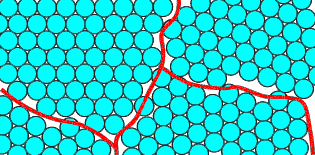
One of the most fundamental properties of crystals is their periodic structure. However, because of the sheer complexity of the physical universe, a perfect specimen is very rare to obtain. Specifically, the smooth periodicity is often disrupted, and the molecules of crystals will be forced into different grains going in different directions. Because these objects are so common, materials scientists and engineers have decided to term these crystals polycrystals. This interlocking nature makes polycrystals stronger than their monocrystalline counterparts as well as more heat resistant.

Crystals

Crystals

Crystals

02/19/17

“What is a crystal?”
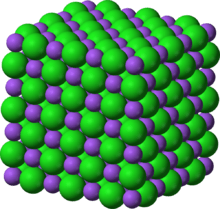
No other material has captivated the imagination of humanity more than crystals. These otherworldly structures have been used for all forms of practices, ranging from pagan rituals to pseudoscientific medical therapies. However, as scientific thinkers, we must not be satisfied with primordial definitions and must analyze what these objects are in their true nature. If one were to shrink down to the size of a molecule and explore the inner fabric of a crystal, then they would find an entire world of atoms fashioned in patterned arrangements. And this is exactly what constitutes a crystal, a solid with a patterned arrangement of atoms! Crystals tend to form when liquids cool and harden, since when the atoms cool they tend to gather together in an ordered manner to form a crystal lattice. Crystals have no “special magical powers” and are as bounded to the laws of nature and you and me.