Author: Isaac Gendler

Liquid meniscus

Liquid meniscus

Liquid meniscus

Isaac Gendler

“Why do liquids have a bent top when put in containers?”


Have you ever placed a liquid in a container, and noticed that there was a bend in the top it’s shape? And have you ever wondered why this happens? Well, let’s use our knowledge of science to find this out. As discussed earlier, we know that liquid molecules exhibit cohesive forces towards one another and adhesive forces towards molecules of other substances, such as a solid beaker. So what if these two types of forces do not cancel one another out? This would mean that one side (the beaker or the liquid) would have a greater force than the other side, causing a pull on the liquid towards it. This in turn would cause a “bent” shape called a meniscus to form in the liquid. If the liquid exhibits a concave shape, then the adhesive forces are more powerful, and if it exhibits a convex shape, then the cohesive forces are more powerful. The net forces resulting from a meniscus will frequently result in the spectacular phenomena of capillary action.  
Groundwater

Groundwater

Groundwater

11/17/16

“What is the water held underground like and how is it useful?”


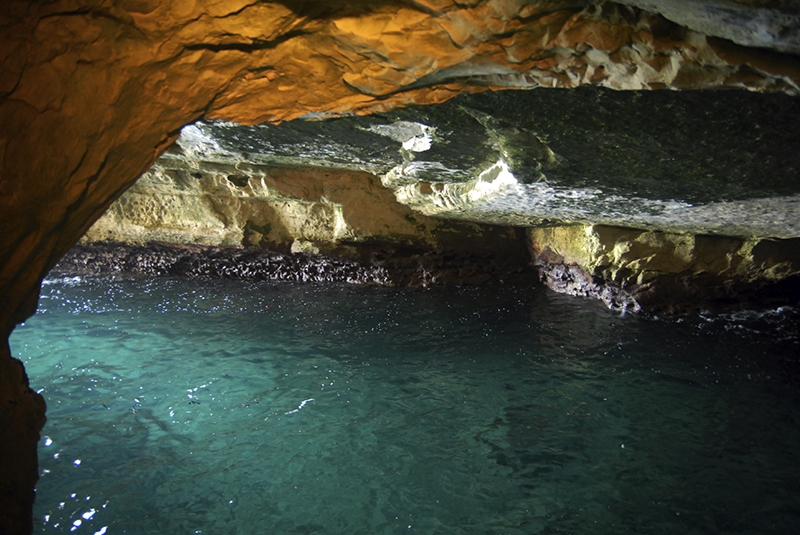
Water is one of the most important substances in the universe, if not the most important. It keeps humans alive, causes plants to grow, and generally causes life to exist. And luckily for us, water is also one of the most plentiful resources as well, with over 71 % of the surface area of the Earth being composed of it! However, water is not just found in the ocean, but in a myriad of other locations. In fact, an immensely important storage area for water is in the subterranean world. This water (termed groundwater by geologists) is contained in geological structures termed aquifers (the spaces between soil particles and pores in fractured rocks). Groundwater can be replenished when rain and melted snow seeps down into the aquifers, and water from aquifers can be discharged through lakes, streams, and springs. Groundwater is so plentiful that it supplies 51 percent of the drinking water to the residents of the United States and 99 percent of it’s rural inhabitants. Much of our civilization runs off groundwater, as a whopping 64 percent of American agriculture is produced using groundwater. Although humanity uses groundwater for a multitude of uses, groundwater can be easily polluted with the leakage of waste into aquifers, which in turn will cause damage to the nearby population. An event of this sort illustrates how humanity is not disconnected from it’s surrounding environment, as as such we must take care of it to take care of ourselves. 

Capillary action

Capillary action

Capillary action

11/16/16

“Why is it that liquids can move up against gravity in containers?”


Liquids are objects that we often see everyday, whether it be in the water that we drink or in the blood that runs through our veins. We also know that objects are held down to the Earth by gravity, but for some ominous reason liquids seem to have the ability to move upwards by themselves in a container against gravity. Why is this so? Well, like I always say, let’s think about it. When liquids are placed in containers, a concave meniscus will form from adhesive forces. If the diameter of the containing vessel is small enough, then the adhesive forces from the container will cause a vertical force on the fluid, and if these adhesive forces are more powerful than the internal cohesive forces will pull the liquid along with it, therefore causing vertical movement. Because this phenomena is so special not only has it been given a special name by scientists and engineers (Capillary action), it is found in many wonderful applications in nature. Plants use capillary action to absorb water from the soil using their roots, and human eyes utilize capillary action using two small diameter tubes called the lacrimal ducts to drain tear fluid in the eyes.

Lunar apogee and perigee

Lunar apogee and perigee

Lunar apogee and perigee

11/15/16

“What are the   furthest and closest distance of the moon from the earth?”


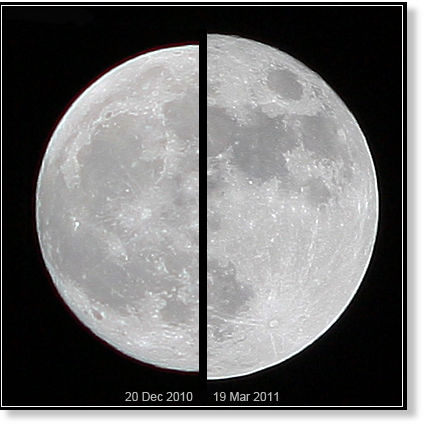
One of the most intriguing aspects of the moon is that it has an elliptical orbit. As a result, it will be closer to the Earth at certain time periods and farther at others. And since in science it is useful to classify special and important cases, astronomers have decided to term the closest point of the moon to the Earth as perigee (around 405,696 km) and the furthest point as apogee (around 363,104 km). A most fascinating consequence of these varying orbits is the varying size of the moon in the night sky, which can result in the most elegant phenomena known as supermoons

Supermoons

Supermoons

Supermoons

11/14/16

“Why is it that the moon appears larger in the sky some nights than others?”


Have you ever wondered why the moon appears to be larger on some nights than others? Well, let’s think about it. We know that the moon revolves around the Earth every night. In addition, this orbit is elliptical, meaning that the moon will be closer to the Earth at some times rather than others. So wouldn’t be logical when the moon is closer to the Earth in it’s orbit, it would appear larger in the sky? This is the very principle behind a supermoon. Supermoons occur at a frequency of once every 14 months, with the most recent one (as of writing) happening on November 14th, 2016 (The largest one in nearly 8 decades!). As a natural consequence of the close proximity of supermoons, the tidal force amplifies up to 19 percent!

What makes something edible?

What makes something edible?

What makes something edible?

11/13/16

“Why is it that my body can digest some foods and not others?”

As a human in order to survive, you probably need to consume food everyday.But in order for this to happen, our bodies must be able to break down this food to extract useful materials such as amino acids for protein. If the food material that we consume is unable to be broken down (or if the material contains toxic elements), then it will be rejected.

Hypersphere

Hypersphere

Hypersphere

11/12/16

“What does a four-dimensional sphere look like?”


Let’s think about something. A circle can be classified as an object in 2-dimensional space whose boundary is composed of all of the points equidistant from a center point, where the radius is composed of two cartesian coordinates ( r=sqrt(x^2+y^2)) and the area is proportional to the square of the radius (A=pi*r^2). A sphere in turn is the 3-dimensional version of this, where all of the points equidistant from a center makes up the object, with the radius being composed three cartesian coordinates and the volume is proportional to the cube of the cube of the radius (V=4/3 * pi * r^3 ), and if were to take a two-dimensional cross-section, we would obtain a circle. .But what if we were to take this concept into higher dimensions? Well, let’s explore the concept. A four-dimensional sphere (termed a hypersphere by mathematicians) would have to be described with four cartesian coordinates, and the “hyper-volume” would be proportional to the fourth power of the radius (V= ½ * pi^2 * r^4),and if were to take a three dimensional cross section of a hypersphere, we would find a regular three-dimensional  sphere. 

London dispersion

London dispersion

London dispersion

11/11/16

“What is the weakest of the intermolecular forces and how does it form?”


As a result of the nature of quantum mechanics, we know that in atomic structure, electrons do not orbit around the nucleus in a newtonian fashion, but instead are located in probability densities surrounding the core. Since electrons will move around in such a manner, the charge distribution of an atom is bound to become slightly asymmetric with time. Consequently, these asymmetric atoms will interact with other asymmetric atoms to form very subtle electric dipoles, resulting in a very weak intermolecular force. Scientists and Engineers have termed this phenomena to be London dispersion, and it is found to be the weakest of all the intermolecular forces. Despite this, as a result of it’s universal nature, all molecules are found to exhibit london dispersion
  

Microbeads

Microbeads

Microbeads

11/10/16

“What component of personal care products cause a high amount of pollution?”


Cleanliness is a necessity for modern day civilization. And as human civilization advances, so does our standards and means obtaining cleanliness. And one such advancement comes in the form of microbeads. Microbeads, also known as microplastics, are solid plastics that are less than 5mm in diameter that are used as exfoliating agents (meaning that they can wipe off dead skin cells) This small size combined with the cleansing property poises microbeads to be very useful in personal care products, but they come with a most unfortunate environmental consequence. When flushed down the drain, microbeads are able to pass through filters normally designed to catch larger pollutants, allowing them to seep into a body of water. The microbeads will stay around for a long period of time due to their lack of biodegradability, and nearby fish will consume these products  (believing them to be small eggs) which in turn will cause physiological harm. In an interesting turn of events, these fish can be harvested and consumed by humans, therefore causing detriment to ourselves. In summation, microbeads are a stalwart example of how humanity impinging on the environment will cause long-term impairment on humanity. Microbead pollution has become so prevalent that the Rhine river in central Europe is thought to contain one million particles per square kilometer! Luckily, numerous governments are already taking action, and in the United States the Microbead-Free Waters Act of 2015 will phase out microbeads in rinse off cosmetics by July 2017.