Author: Isaac Gendler

The Paris Agreement

The Paris Agreement

The Paris Agreement

06/03/17

“What is the Paris Agreement?”


Ever since some particular orange haired man decided to pull out of the Paris Agreement, people have been wondering what exactly it is and what a pull out what mean. Well, as I always say, let’s use our scientific mindsets to find out.

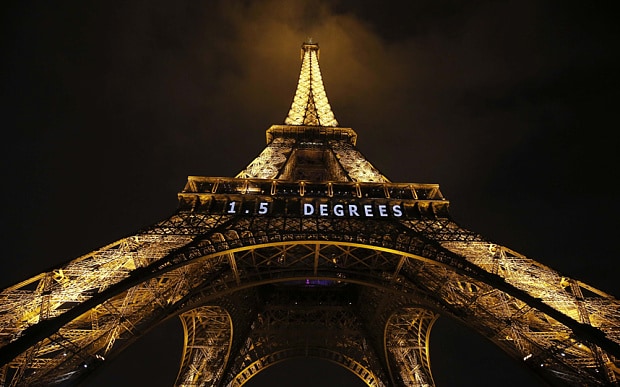
Ever since the beginning of the industrial revolution, the climate of the Earth has been rising at an exponential rate, so much so that we have come to the point that immediate global policy must be taken. Back in April 2016, nations from all over the world convened in the city  of Paris to sign a treaty that stipulates the following:

  1. Keep the future global average temperature below 2 degrees Celsius above pre-industrial levels
  2. Aim to limit this temperature below 1.5 degrees Celsius to avoid environmental catastrophes
  3. Curb global emissions as much as possible
  4. For all nations to come together every 5 years to set more ambitious targets as required by science
  5. Report to each other and the public on how well they are doing to implement their targets,
  6. Track progress towards the long-term goal through a robust transparency and accountability system.
  7. For developed countries support and assist developing countries in implementing such policies and curbing emissions

By withdrawing from this agreement as one of the heaviest global polluters, the United States will become a dead weight that will slow the rest of the world to achieving all of these goals. If you are reading this and are an American citizen, please, call your senator to urge the president to rescind their previous statement regarding withdrawal.
Bomb calorimeters

Bomb calorimeters

Bomb calorimeters

06/02/17

“How can we measure the calories present in food?”


In our modern health obsessed world, we would like to know the calories contained in all foods. However, how can this even be determined in the first place? Well, let’s think back to a bit of prior knowledge. We know that calories are another way of saying energy and that we can measure the energy content of fuels using calorimeters. So what if we were to make a special type of calorimeter to find the energy contained in foods? Well, let’s put our engineering mind to the test.


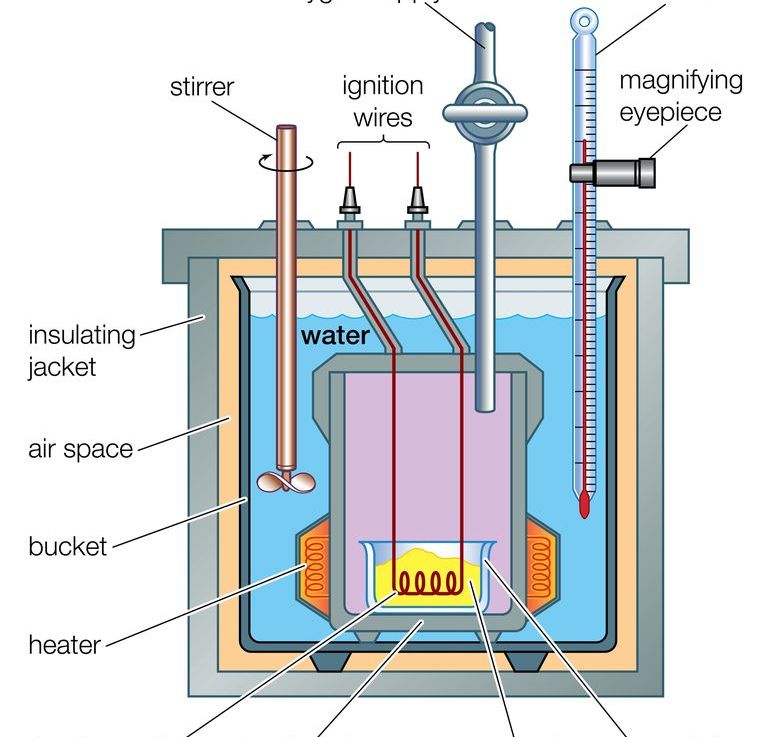
First, let’s get a big tub of water. Then, let’s take a sample of our food, place it in an insulating case with some oxygen, attach it to an ignition coil, and place everything in the water. When we activate the ignition unit, the ignition coil will cause our sample to explode and raise the temperature of the water. From the measured temperature change, we will be able to measure the calories contained in the sample! This device is known as a bomb calorimeter and is used in food labs all over the world.

Calorimeters

Calorimeters

Calorimeters

06/01/17

“How can we determine the energy composition of a fuel?”


Fuels are one of the most vital pieces of operation for modern transportation. However, how do scientists determine the amount of energy contained in them in the first place? Well, let’s think about it. We know that if we ignite fuel, then we can get a fire. And we also know that this fire can heat objects such a cup of water. And we also know that if we measure the change in temperature of this water, then we can obtain the amount of heat added. So what if we were to combine all of the processes to make an energy measuring device? Well, this is the fundamental idea behind a calorimeter and is used in industrial operations all over this planet.

Refractory materials

Refractory materials

Refractory materials

05/31/17

“Are there materials that retain their strength at exceedingly high temperatures?”


For processes such as nuclear power generation or incinerators, materials must be able to withstand heavy loads. However, the high temperatures that they operate at often destroy the useful properties of most materials. So are there materials that can withstand high temperatures? Well, after many years of hard work spent in research, Materials Engineers and Scientists have been able to classify such materials as refractory materials. Refractory materials can be divided into two types, acidic refractories with SiO2 content more than 93% used for their erosion resistance, and basic refractories for higher thermal resistance

Evapotranspiration

Evapotranspiration

Evapotranspiration

05/30/17

“How do we account for plants and ground bodies in the atmospheric water cycle?”


For every terrestrial object in the universe with a moisture filled atmosphere, there must be an exchange of water between the ground and the air. So how can we account for the water given back by ground-based objects? Well, let’s use our scientific mindsets to find out. We know that water present in soil and aquatic bodies can evaporate into a gaseous. And we also know that water from plants can transpire through its stomas. Since these two phenomena are highly similar, how about we combine these two processes in our model to form evapotranspiration? Well, it turns out that professional researchers do exactly this to simplify the water cycle model, and is one of the reasons why life can be sustained on the planet.

Electro-hydraulic actuators

Electro-hydraulic actuators

Electro-hydraulic actuators

05/29/17

“Can we optimize hydraulic actuators using electricity?”


Hydraulic actuators are ever so useful in their ability to move heavy machinery and can found in areas ranging from construction equipment to manufacturing machinery. However, these machines often suffer from a burdensome design, being forced to integrate numerous disparate components into one coherent system.


So how can we simplify the operation of these actuators?


Well, what if we were to replace the hydraulic pumps and tubing with electrical power? Not only will this simplify the system complexity but also increase the internal safety and reliability. These machines are known as electro-hydraulic actuators and can be found in applications ranging from aerospace vehicles to automobiles.

Fractional distillation

Fractional distillation

Fractional distillation

05/28/17

“How can we have distillation for materials with more than two substances?”


Distillation is the process of separating two substances using the science of evaporation and condensation in regard to different boiling points. However, how can we make this process happen for materials such as crude oil which are composed of many different substances? Well, let’s use our engineering mindset to find out. Let’s start out with a simple test tube. In this test tube, let’s also have another smaller tube at the midsection leading to a stationary beaker. Now let have the bottom portion of the main tube be immersed in a hot fluid. When we dispose a material into the tube, the hot fluid will heat the material until one of the substances evaporates. The gas from the evaporated substance will rise and move through the tube, eventually reaching the midsection tube, cooling and condensing into a liquid form in the beaker. Once all of this substance has been removed, we can swap out the old stationary beaker for a new one, replace the hot liquid with a bunsen burner, and repeat the process. This procedure is known as fractional distillation and is commonly employed for separating substances with numerous hydrocarbons.

Heat pump

Heat pump

Heat pump

05/27/17

“How can we transfer heat using machinery?”


Temperature is one of the most fundamental aspects of nature. And often times, we would like to transfer temperature from one location to another. Because this operation is so useful, engineers have created machines known as heat pumps to accomplish this. Heat pumps are one of the fundamental pieces in Air Conditioner Systems and are essential to the operation of human infrastructure


Scratch tests

Scratch tests

Scratch tests

05/26/17

“How can we determine the fracture strength and resistance of a material using simple devices?”


Determining the fracture strength and resistance of a material is of the utmost practical use to the engineering profession. However, how exactly can figure them out experimentally in a cost-wise fashion? Well, let’s think about this using our engineering mindset. We already know the strength of many other materials. And we also know that if one material is able to scratch another, then it is the stronger of the two. So what if we were to take this method and use it to organize all of the different materials we know? Well, this is the fundamental idea behind the scratch test, and it is used for economically conscious projects around the world.