Author: Isaac Gendler

Thermal control systems

Thermal control systems

Thermal control systems

07/26/17

“How can engineers control the temperature of machines?”


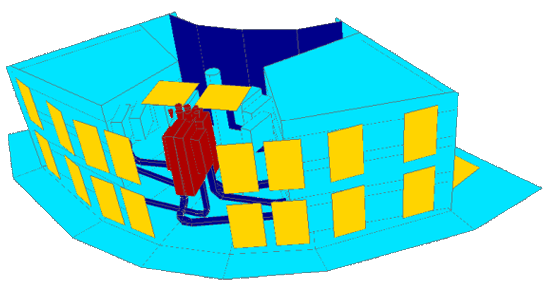
Machines do a lot of work. Whether it be an assembly robot making a solar panel or a spacecraft launching into space, work is done. However, these machines often need to operate within a certain temperature range. So how can we ensure that our engineering systems can be kept within their safety zone? Well, let’s use our engineering mindset to find out. We know that we can use sensors to monitor the temperature and that we can also use devices to change this temperature. So what if we were to simply implement this? Well, this is known as a thermal control system and can be found in mechatronic systems all over the world.

Moore’s law

Moore’s law

Moore’s law

07/25/17

“Why do computers seem to be getting exponentially faster with time?”


If you are keen on technology, then you have probably seen a pattern. Specifically, it seems that computers are getting exponentially faster with time. Well, why exactly is this? Well, after many years of speculation, Intel co-founder Gordon Moore noticed that the number of transistors that could be held in an integrated circuit were doubling every two years, leading to a proposition called Moore’s law. In recent years, Moore’s law seems to be leveling off since transistors are now getting so small that quantum tunneling effects are beginning to appear, rendering transistors inoperable.

Integrated circuits

Integrated circuits

Integrated circuits

07/24/17

“How can we integrate tiny of electronic components onto a small area?”
Electronics are composed of tiny resistors, capacitors, and transistors. And often times these components can be of an extremely small size, on the microscopic level. However, this size can make it hard to integrate onto an electric board. So how could we make a platform that can hold all of these electronics? Well, let’s use our engineering mindset to figure this out. We know that semiconductor wafers could hold many materials on a very small scale. So what if we were just to put these components onto one? Well, this set up is known as an integrated circuit and is used in all forms of modern day technology.

Big companies buying large amounts of wind energy

Big companies buying large amounts of wind energy

Big companies buying large amounts of wind energy

07/23/17

“Why are big companies buying large amounts of wind energy?”


There is a sustainable revolution going on, and it is being done by some of the least likely actors. Large companies such as Google, Amazon, and Walmart are beginning to purchase large swaths of wind energy to power their data centers and offices! Their reason? Because wind energy has achieved grid parity in some areas, it makes more sense to power your operations through renewable energy! This will increase the amount of sustainable energy on the grid and might convince more citizens to make the switch

Microgeneration

Microgeneration

Microgeneration

07/22/17

“Can everyday people generate their own energy?”
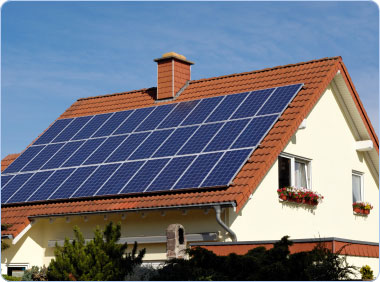
When people talk about generating electricity, they usually mean things like giant power plants or solar panel arrays. However, electricity generation does not need to be that large. In fact, it can be done in your very own home! This activity is called microgeneration, and can be accomplished through a variety of means, whether it be by installing solar PV or through recycling waste heat

Homogeneous and heterogeneous systems

Homogeneous and heterogeneous systems

Homogeneous and heterogeneous systems

07/21/17

“How do we classify thermodynamic systems?”


Engineering thermodynamics looks at heat, energy, and matter from a macroscopic, or non-atomic perspective. Because of this, objects and materials such as air appear to be uniform in composition. As a result, systems such as these are classified as homogeneous systems. Homogeneous systems stand in direct contract with heterogeneous systems such as a human body (which is composed of many different macroscopic layers). When working out thermodynamics problems, it is extremely important to know if your system is homogeneous or heterogeneous.

Fan heaters

Fan heaters

Fan heaters

07/20/17

“How can we use a heating element to heat up a room?”


During winter time we often need to heat up space. But making a fully built HVAC system can take a lot of time to warm a space. So what could we do to modify this? Well, let’s think of it from a systems perspective. We know that a heating element can be used to heat up a surrounding medium. And we know that fans can transfer one medium to another. So what if we were to combine both to take heat up and transfer air? This setup is known as a fan heater and is quicker but more expensive (due to the higher cost of electricity) than gas heaters.

Heating element

Heating element

Heating element

07/19/17

“How can we convert electricity into heat using a machine?”


When designing heating systems, we often need a quick, efficient, and non-pollutive way to generate heat. So how can we use our engineering mindset to accomplish this? Well, let’s first think back to our scientific knowledge. We know that we can make heat from electricity by passing it through a resistive element. So what if we were to implement this in a mechanical system using real life technology? Well, this type of object is known as a heating element and is used for thermal appliances such as radiative heaters.

Pathogens

Pathogens

Pathogens

07/18/17

“What do we term the activator of a disease?”
Disease is one of the most important studies in Biology. And diseases are caused when a vector carries the disease with it. However, what exactly do we term the activator that is carried? Well, after much debate, Biologists have settled with the definition of a pathogen to describe such organisms. Viruses, bacteria, protozoa, prions, and fungus are commonly pathogens, as well as other micro-organisms