Author: Isaac Gendler

Diffuser (thermodynamics)

Diffuser (thermodynamics)

Diffuser (thermodynamics)

09/08/17

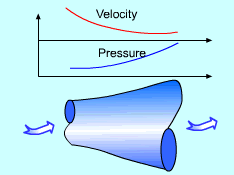
“How can we slow down a fluid while increasing its pressure?”


When working with fluids, we often want to modify its properties in some meaningful way. This could include changing more than one at once, such as slowing down its velocity while increasing its pressure. So how exactly can we accomplish this? Well, what if we were to just get a machine to do this? This is the exact idea behind a diffuser, which is the basis of operation for multiple types of HVAC systems.

Climate change and the receding of Arctic sea ice

Climate change and the receding of Arctic sea ice

Climate change and the receding of Arctic sea ice

09/08/17

“How is climate change affecting the Arctic sea ice?”


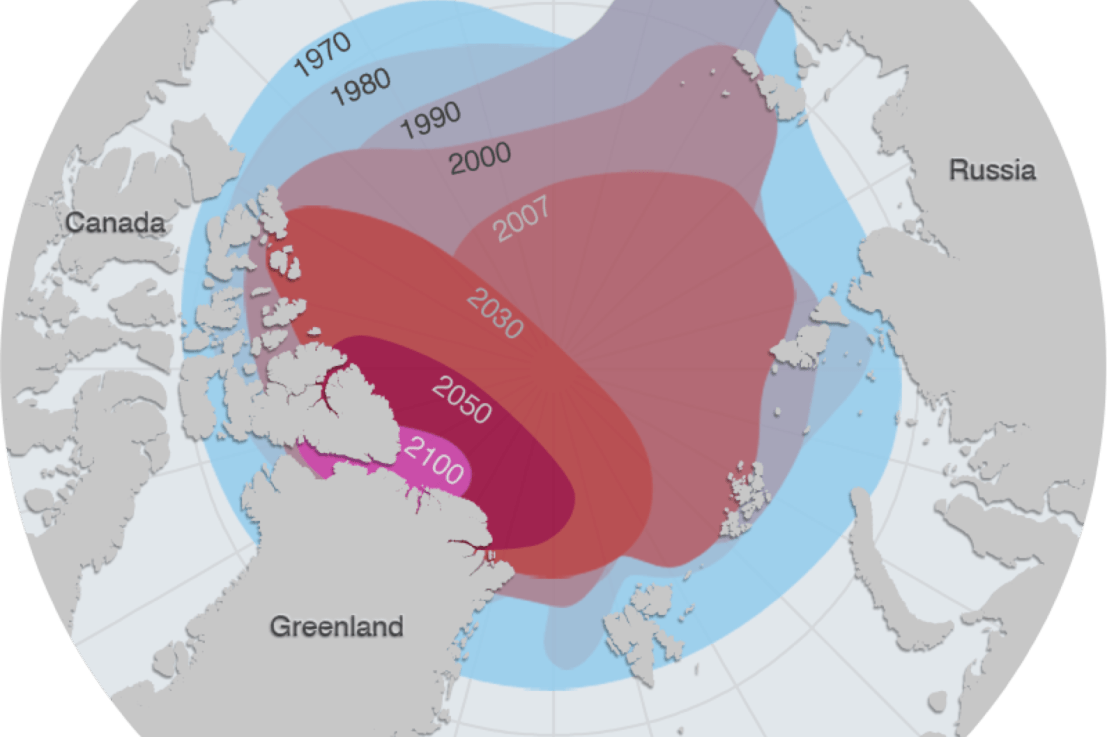
Let’s think about something for a moment. We know that ice is more likely to melt when it is immersed in higher temperatures. And we know that the northernmost pole of the Earth (the arctic) is composed mainly of ice, and that climate change is causing global temperatures to rise. So wouldn’t it be logical that such a phenomena would be causing the arctic sea ice to recede? Well, it turns out that according to empirical evidence this is exactly what is happening, as ever since we have started taking satellite measurements of the polar ice caps in 1979 we have seen a 35% decrease in landmass!

How we can infer climate change from the ocean

How we can infer climate change from the ocean

How we can infer climate change from the ocean

09/07/17

“Can we learn about climate change just by looking at ocean data?”


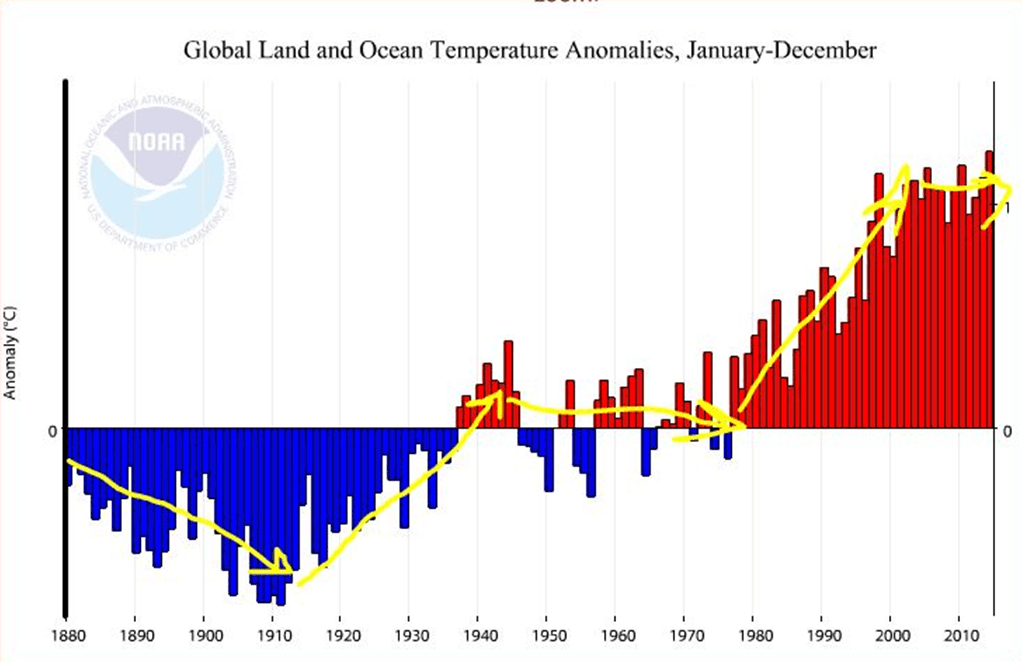
Climate change is something that is talked about every day. However, how can we get some evidence for it? Well, what if we were to look at the temperature of the most massive body of heat storage on the Earth, the ocean! By carefully observing its temperatures, we can observe that the ocean has gained 0.1-degree Celsius since 1969^1. Even though this does not seem like a significant deviation, we must remember that our global ocean is composed of around 1.4 * 10^24 worth of water (a substance with a substantial heat capacity), so any temperature change even an order of magnitude close to our observed value is quite drastic. 


  1. Levitus, et al, “Global ocean heat content 1955–2008 in light of recently revealed instrumentation problems,” Geophys. Res. Lett. 36, L07608 (2009).


Thermostatically Controlled Loads

Thermostatically Controlled Loads

Thermostatically Controlled Loads

09/06/17

“How exactly can we model loads that are controlled by thermostats?”


Machines take energy from the grid under many parameters. And some of them are controlled by environmental temperatures, such as temperature. And a portion of these units (such as HVAC systems, water boilers, and refrigerators) try to match their setpoints to a value on a thermostat. These machines are known as thermostatically controlled loads and are used in grid-building system modeling to generate predictions about demand side energy usage.

Deadband

Deadband

Deadband

09/05/17

“Do some control systems have a zone with no feedback?”
Ideal controls systems are available to take in all possible frequencies. Some controls systems have a zone where the input frequency will return nothing. This region is known as the deadband and can be used to prevent unwanted side-effects.

How to solve farsightedness using physics

How to solve farsightedness using physics

How to solve farsightedness using physics

09/04/17

“How can we correct farsightedness using scientific knowledge?”


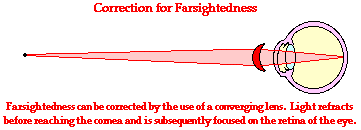
Although not as pervasive as near-sightedness, far sightedness is becoming an increasingly common problem, with 5-10 percent of Americans experiencing such a diagnosis. Nearsightedness, also known as hyperopia, is caused when the focal length of an individual’s eyeball is too large, causing the incoming light rays to focus on a point behind the eye (Make a link to how images form in the eye), which in turn will cause a fuzzy image. To correct this, we can insert a positive lens in front of the eye of an individual, which will cause the light to refocus at the back of the eye, enabling normal sight.

How to solve nearsightedness using physics

How to solve nearsightedness using physics

How to solve nearsightedness using physics

09/03/17

“How can we apply our knowledge of science to help nearsightedness?”


Nearsightedness is a pervasive phenomenon in modern day society, with nearly 40% of Americans being affected by the issue. This phenomena, also known as myopia, is caused when the focal length of individual’s eye ball lens is too short, causing its focal length to decrease, which causes these incoming light rays to be focused on a point in front of the back of the eye, which in turn will cause a fuzzy image to be received by the brain. So how can we use our scientific knowledge to correct this medical issue? Well, let’s think about it. Well, we know that we can change the direction of light using lenses. Furthermore, if we use a negative lens, then the incoming angle will go out in a higher direction. So what if we were to place a negative lens in front of our eye and let the light come through? Well, it turns out that this method can be found in nearly every single pair of eyeglasses, and is a prime example of how to solve nearsightedness using physics!

Tissue Microarrays 

Tissue Microarrays 

Tissue Microarrays

09/02/17

“What is a Tissue Microarray?”


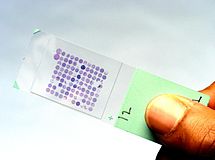
Tissue microarray is a recently-implemented pathological tool that provides high-throughput, multiplex analysis of different tissues and cells at the same time on a single histological slide. A single microarray actually consists of tissue samples that have been extracted from different paraffin donor blocks and re-introduced into a single paraffin block, at different array points.

This way, over a thousand tissue core samples can be analyzed simultaneously and cellular components such as DNA, RNA and proteins can be analyzed under similar standardized conditions, using the same diagnostic reagents on a single histological slide.
This technology facilitates the study of large sets of formalin-fixed, paraffin-embedded tissues both in prospective and retrospective sense.
What is so great about this technique is that it allows for maximal preservation and use of limited tissue resources. It provides a way to work around the rigid guidelines that back up the obtaining of human tissue. This way, scarce resources are used effectively.
Tissue microarray is commonly employed in immunohistochemistry, oncology analysis, and fluorescent in-situ hybridization.
History

One of the previous forms of tissue microarray was the multi-tumor “sausage” tissue block developed by Dr. Hector Battifora in 1986. The block consisted of a number of tissue samples thrown for the analysis of a single protein. Wan et al made an improvement to this technique in 1990: they used a 16-gauge needle to manually remove cores from tissues blocks and arranged them in a multi-tissue straw in a way they could identify the organ origin of the blocks. This was named accordingly as the “checkerboard tissue block”.

The final changes that made tissue microarray what it is today were made by J. Kononen and his collaborators in 1998.They developed a regular sample size by using a 4mm skin biopsy punch to remove a core from its donor block and recognize its position before transferring to the recipient block. This was how the more precise sampling technique of tissue microarray was born.

Procedure

The sampling technique in tissue microarray usually involves a hollow needle used to remove tissue cores as small as 0.6 mm in diameter from different organ regions of
interest. These tissue cores are then inserted into a recipient paraffin block in a precisely spaced, array pattern. This recipient block can then be cut into 5μm sections using a microtome. These sections are then mounted independently on microscopic  slides and are subjected to histological analysis. A single microarray block can be cut up into sections ranging from 100-500 in number, depending on the thickness of the block.

A variation in this procedure is seen in frozen tissue array in which up to 50 different sample cores, 2mm in diameter, of fresh frozen tissue are arrayed in a recipient block. The block is cut up in sections by a cryostat and then it follows the normal procedure of being mounted on a microscopic block and subjected to standard tissue analysis.

Tissue Microarray and Cancer

Tissue microarray has been recently implemented in the analysis of molecular markers in oncology research. It has been instrumental in tumor staging and in identifying new diagnostic and prognostic markers and targets in various human
cancers. It has a range of potential applications in basic research, prognostic oncology, and drug discovery. This technology has the potential to significantly accelerate cancer research.
 

HVAC Dampers

HVAC Dampers

HVAC Dampers

09/01/17

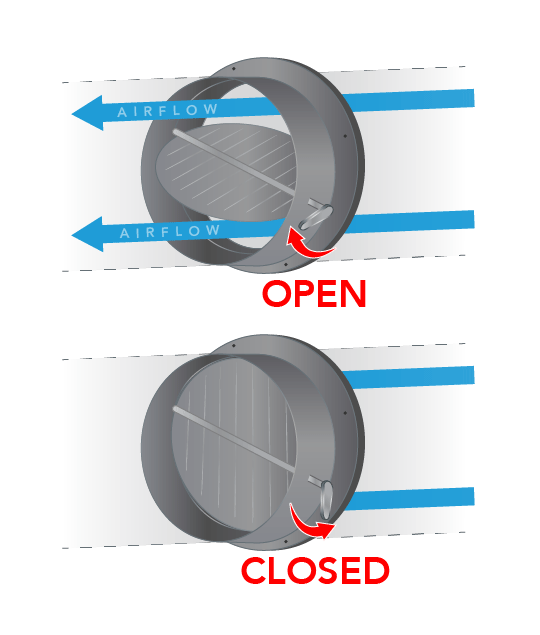
“How can we control the flow of air in an HVAC system?”


Many HVAC air systems operate by regulating the flow of air into a space. But how can we do so? Well, what if we were to use our engineering mindset to create a duct that would control the amount of air that would be transferred? This is known as an HVAC Damper and is commonly implemented in Variable Air Control Systems.