Author: Isaac Gendler

Resilience Inputs

Resilience Inputs

Resilience Inputs

07/28/18

“What are the building blocks of Resilience?”


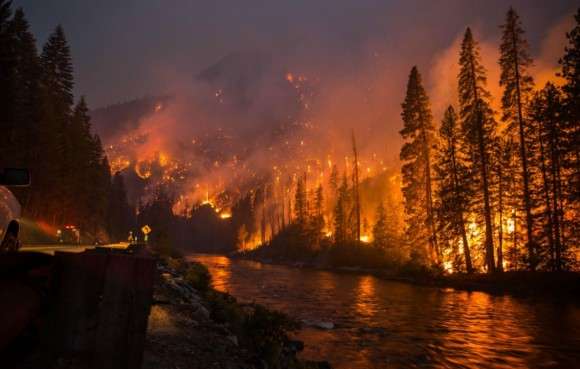
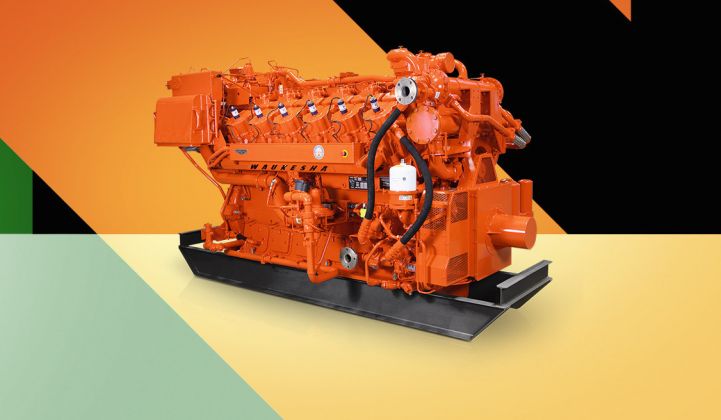
With the ever-changing climate, critical infrastructure systems are going to have to become more resilient. To develop this, engineers and policymakers have developed a series of metrics to quantify the resilience of such systems. The most fundamental of which is the Resiliency Inputs to a system. Inputs are the like the bones of a skeleton. Although they compose the physical structure, on their own they are ineffective. Examples of Resilience Inputs in energy systems are budgets, equipment, spare parts, and personnel to support recovery operations.

Sigma Heat

Sigma Heat

Sigma Heat

07/28/18

“How can we calculate the specific energy for humid air?”


Air can vary a lot in both temperature and humidity. And sometimes, we would like to know the specific energy for humid air under constant pressure at a reference temperature ignoring the effects of condensation. To do this, we can calculate by the Sigma Heat S = 17.86 (kj/kg) + 1.05 (kj/kg)*t + W(2501 (kj/kg) + 1.884(kj/kg)*t), where t is the dry-bulb temperature of the air (in °C), and W is the specific humidity of the air (no unit). The Sigma Heat equation is commonly used in mining engineering to calculate the temperature regulation of mine air.

A New Guide For High-Performance Energy-Efficient Buildings in India

A New Guide For High-Performance Energy-Efficient Buildings in India

A New Guide For High-Performance Energy-Efficient Buildings in India

07/26/18

“Is there a new guide for energy efficient buildings in India?”


India is a massive country. With an area larger than the Arabian Peninsula and a population size equal to four times the United States, it definitely has something to say about size. And every single one of those people probably lives, works, and plays in some sort of building. That must be a lot of buildings. And to keep everyone cool and productive in the hot Indian Climate, a lot of energy is going to go towards HVAC and Lighting Systems. Combine this with a large population growth and intense economic development, and it looks like more and more people are going to be in these buildings.


So like any nation with these factors, India should be looking to see how it could supply this future growth in energy. After much studying into this issue, the nation of the Ganges has decided that one of its primary directives must be to vastly increase energy efficiency in the building sector. After working with Lawrence Berkeley National Laboratory, the same center that produced The Rosenfeld Effect, a new Guide For High-Performance Energy-Efficient Buildings in India has been produced. This series of documents delves into how India can achieve its climate change reduction goals with regards to the building sector by addressing its unique workforce, construction activity, culture, and climate.


Bottom line, I recommend that everyone in the energy space should take at least a few peaks at it right here!

Breeder Reactors

Breeder Reactors

Breeder Reactors

07/25/18

“How can we make nuclear reactors that produce more fissionable material then it consumes?”


Nuclear reactors are commonly thought of as non-renewable resources. However, if we invest in technology the resight way, then we can do some very creative things. Since flying neutrons can be absorbed by non-fissionable Uranium 238 and be turned into fissionable Plutonium 239, placing these with Uranium 235 can allow for more fissionable material to be created over time. Reactors that use this process are called Breeder Reactors and have been developed in France.

Resiliency Metrics

Resiliency Metrics

Resiliency Metrics

07/24/18

“How can we quantify a system’s  resilience ability?”


With the ascent of climate change, cities all over the world will have to change their infrastructure to be resilient against the winds of climate change. However, how can we quantify how resilient a given system is? Well, by breaking down an infrastructural system into multiple components (namely inputs, capacities, capabilities, performance, and outcomes), we can apply Resiliency Metrics to each to evaluate a system’s readiness. Resiliency metrics can be applied to any type of infrastructure, whether it be power systems, gas pipelines, or transportation networks.

Climate Change Resilience

Climate Change Resilience

Climate Change Resilience

07/23/18

“How can humanity adapt to climate change?”


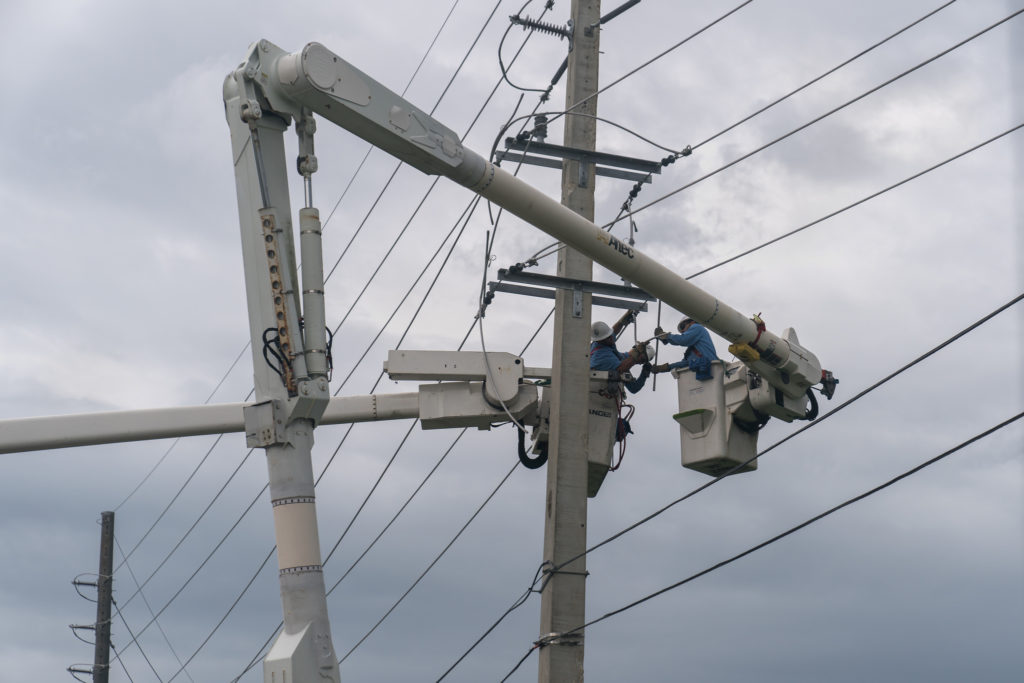
Sustainability is the overarching goal of many people who work in energy, climate, and infrastructure. However, we must also take into account the concept of Climate Change Resilience. Simply put, Climate Change Resilience is the measure of a system’s capacity to withstand the increased external stresses of climate change. Take for example Puerto Rico during Hurricane Maria. When the extreme weather knocked down transmission lines and diesel plants, those who were dependent on them lost all power. However, people who had installed solar panels and microgrids were able to continue to use their electrical appliances despite the tumultuous events. Climate Change Resilience is used to quantify how much adaptation an area needs to do before becoming climate ready. By having infrastructure ready for the climate chaotic future, we can ensure human civilization a safe and resilient time on this planet.

Electrical Ballasts

Electrical Ballasts

Electrical Ballasts

07/22/18

“How can we limit the amount of current entering an electrical load?”


Electrical appliances can be very sensitive to their supply conditions. One part of this is their supply current. If they receive too much, then they may burn out and stop working. To solve this, Electrical Ballasts have created to limit the amount of current entering a load. They may just be a simple resistor, capacitor, inductor, or a combination of these.

Mechanical Ballasts

Mechanical Ballasts

Ship Ballasts

07/21/18

“How can we provide stability to a vessel?”


One of the most important things that a vessel must watch out for is its stability. If the weight is not distributed correctly, then the entire ship can capsize! So how can we use our engineering mindset to solve this problem? Well, what if we were to add some additional weight to another part of the ship to increase its inertia and resilience. This extra weight is called a Ship Ballast and is an essential part of modern Seafair.

Urban Tree Cover

Urban Tree Cover

Urban Tree Cover

07/20/18

“How can we increase urban climate resilience with trees?”


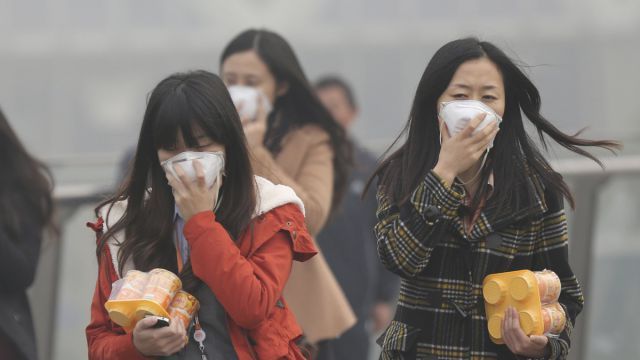
With each passing day, more and more people are living in cities. However, dense urban conglomerations are prone to drastic climate change events, such as deadly heat waves worsened, exacerbated pollution, and flooding from rainfall. But one simple way to combat this is to plant more trees. This Urban Tree Cover lowers temperatures, absorbs pollution, and protects from rainfall flooding. This is just a simple illustration of how a little bit of scientific knowledge can help increase climate change resilience.