Month: March 2020

How California’s SB 1410 Could Assist With the Development of Housing Resilience in California

How California’s SB 1410 Could Assist With the Development of Housing Resilience in California

How California’s SB 1410 Could Assist With the Development of Housing Resilience in California

03/22/20

“How could California State Senator Lena Gonzalez’s SB 1410 increase housing resilience?”


The dearth of affordable housing in California is causing a housing crisis, forcing marginalized communities to seek shelter in areas of the state more vulnerable to the effects of climate change as well as further away from job centers. One way to counter this would be to simply build more affordable housing. However, many municipalities in the state do not want to host these sites and try to block as much development as possible. But if California Senate Bill SB 1410 from State Senator Lena Gonzalez of Los Angeles becomes law, then projects that have been denied or given unreasonable requirements can be appealed to a newly created Housing Accountability Committee and get the initial rejection overturned. This is How California’s SB 1410 Could Assist With the Development of Housing Resilience in California.

How California’s SB 592 Would Allow For Greater Housing Shelter in California

How California’s SB 592 Would Allow For Greater Housing Shelter in California

How California’s SB 592 Would Allow For Greater Housing Shelter in California

03/22/20

“How would SB 592 by Senator Scott Wiener expand the amount of shelter in California?”


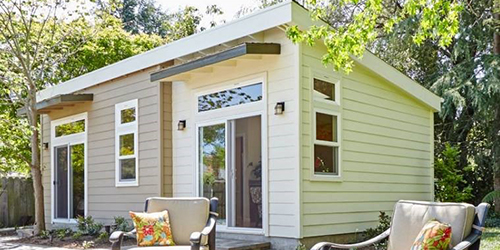
California is suffering under the strains of one the worst housing crises in its history, forcing many vulnerable individuals out onto the streets or unsafe housing. However, by increasing the amount of accessory-dwelling units (ADUs) in stock, more small square-footage low-cost housing can be put into the pipeline and allow for greater societal resilience. Senate bill SB 592 by Scott Wiener does exactly this by making ADUs protected by the Housing Accountability Act, which forces cities to approve housing that meets zoning guidelines. This is How California’s SB 592 Would Allow For Greater Housing Shelter in California.


Image credit sonomacounty.ca.gov

How California’s AB 2345 Can Help Build Housing Resilience

How California’s AB 2345 Can Help Build Housing Resilience

How California’s AB 2345 Can Help Build Housing Resilience

03/22/20

“How will AB 2345 by California Assemblymember Lorena Gonzalez-Fletcher help build housing resilience in the state?”


By all means, California has an affordable housing crisis, primarily driven by a lack of supply. However, AB 2345 by Assemblymember Lorena Gonzalez-Fletcher of San Diego promises to help change that. If enacted, AB 2345 would increase “density bonuses” for developers that set up to 15% of units in their projects that are within a half-mile of transit stops for lower-income and very low-income individuals. This would help these communities get out of urban sprawl and into newer, more resilient housing units. This is How California’s AB 2345 Can Help Build Housing Resilience.

How California’s AB 1851 Is Beneficial for Climate Policy

How California’s AB 1851 Is Beneficial for Climate Policy

How California’s AB 1851 Is Beneficial for Climate Policy

03/21/20

“How can AB 1851 by Assemblymember Wicks lead to more sustainable and resilient living in California?”


At present faith communities in the state of California are unable to build housing on parking lots that they own. However, this could all change with the introduction of a single bill. AB 1851 by Assemblymember Buffy Wicks of the East Bay would allow for faith-based institutions to replace any parking lots that they own with housing. Since a disproportionate amount of potential housing would be close to centers of faith, not only would it decrease car travel and therefore emissions but also increase societal resilience by allowing for greater cohesion and community. This is How California’s AB 1851 Is Beneficial for Climate Policy.

Why California’s AB 1924 Will Allow for Denser, More Resilient Housing in the State

Why California’s AB 1924 Will Allow for Denser, More Resilient Housing in the State

Why California’s AB 1924 Will Allow for Denser, More Resilient Housing in the State

03/21/20

“Why will AB 1924 from Assemblymember Grayson help build resilience in California?”


Right now, California housing policy does not require jurisdictions to assess fees on a per-square-foot basis. As a result, developers who want to build smaller, more affordable units will have to jump through hoops and loops and may have to pay multiple fees to break ground. However, California Assemblymember Tim Grayson wants to change this with his new bill AB 1924. If enacted into law, AB 1924 would require agencies to charge on a per-square-foot basis, simplifying the process and allowing for more units to come online at a faster rate and lower cost. The more new, dense, and affordable housing that comes online, the more resilient California will be to disasters. This is Why California’s AB 1924 Will Allow for Denser, More Resilient Housing in the State.

How California’s AB 3156 Will Increase Wildfire Resilience

How California’s AB 3156 Will Increase Wildfire Resilience

How California’s AB 3156 Will Increase Wildfire Resilience

03/21/20

“How will California’s AB 3156 make the state more resilient to wildfires?”


California’s housing crisis is exacerbating its vulnerability to wildfires. By pushing people, particularly those from lower-income backgrounds, away from the coast and into the wildland-urban interface, its two crises are coming together. To solve this, more affordable housing can be built by the coastline. AB 3156 by California Assemblymember Robert Rivas will allow for streamlining of housing approval by the California Coastal Commission, allowing for this housing supply to increase and host people away from wildfire territory. This is How California’s AB 3156 Will Increase Wildfire Resilience.

How California’s AB1907 Bill Could Increase Resilience for Its Homeless Population

How California’s AB1907 Bill Could Increase Resilience for Its Homeless Population

How California’s AB1907 Bill Could Increase Resilience for Its Homeless Population

03/20/20

“How could this California new assembly bill make its homeless population much safer to disasters?”


California has a homelessness crisis. Decades of neglect on social services and housing construction have forced psychologically and economically vulnerable populations out of homes and into the streets. With the advent of disasters such as the COVID outbreak  and the Paradise fires, being homeless in California is only going to become more dangerous. However, one new assembly bill Miguel Santiago of Los Angeles could make a change for the better. AB1907 would provide exemptions to CEQA requirements for any housing development directed for homeless or lower-income renters. This would allow for a greater amount of housing supply for individuals from these communities, providing them a safe space from the elements in newer housing units. This is How California’s AB1907 Bill Could Increase Resilience for Its Homeless Population.

The Impact of COVID-19 on the Construction Industry

The Impact of COVID-19 on the Construction Industry

The Impact of COVID-19 on the Construction Industry

03/19/20

“What is the impact of COVID-19 on the construction industry?”


As of writing, the coronavirus outbreak is freezing the economic engine of global capitalism. The construction industry is no exception to this. With the spread of the disease, people are being forced to stay at home or are becoming sick, resulting in a labor shortage. Global logistics are also going through a downturn, making it more difficult to obtain the necessary materials. All of these combine to cause a slump in construction, straining the already present housing crisis and potential recession. This is The Impact of COVID-19 on the Construction Industry.

Why the Oil Market Is in a Freefall Right Now

Why the Oil Market Is in a Freefall Right Now

Why the Oil Market Is in a Freefall Right Now

03/18/20

“Why are oil prices sinking to all new lows?”


Oil prices are sinking to dramatic lows. This has the potential to devastate industries and send the world community into an economic recession. But what exactly is causing this?


Near the beginning of the year, the need to limit travel because of the new coronavirus epidemic had caused flight demand to drop. This led to a decrease in oil demand, prompting OPEC to propose a limit on oil production globally to keep prices stable. However, Russia ignored these rulings and continued its production as normal, hoping to capture a greater share of the market. Saudi Arabia responded by slashing oil prices, selling below market value to ensure its stake in the market. Both countries (at the time of writing) are now proposing an increase in production in an all-out market war. Combined with the fact that oil demand is plummeting due to coronavirus restrictions, and you have a price that is soaring down. This is Why the Oil Market Is in a Freefall Right Now.