Month: May 2016

Non- Newtonian fluid

Non- Newtonian fluid

                     Non- Newtonian fluid           05/14/16


Non newtonian fluids are fluids in which viscosity changes with applied force. To illustrate, let’s examine how this is differentiated from a Newtonian fluid. In a newtonian fluid, if an object is placed in to a fluid, the fluid will coalesce around the object no matter the force. In a non-newtonian fluid, the fluid will become more viscous in response to the larger force. In fact, the particles of the system behave more like a solid. Some other Non-newtonian fluids have the reverse effect, with a larger force producing a lower viscosity. An example of the most strange effects of a non-newtonian fluid is corn starch. When one pours corn starch, it flows in a very smooth manner. However, if one attempts to hit the Cornstarch with a mallet, it acts almost as it is a solid. You can even jump up and down on the corn starch!!!
Temporal lobe

Temporal lobe

Temporal lobe         05/13/16


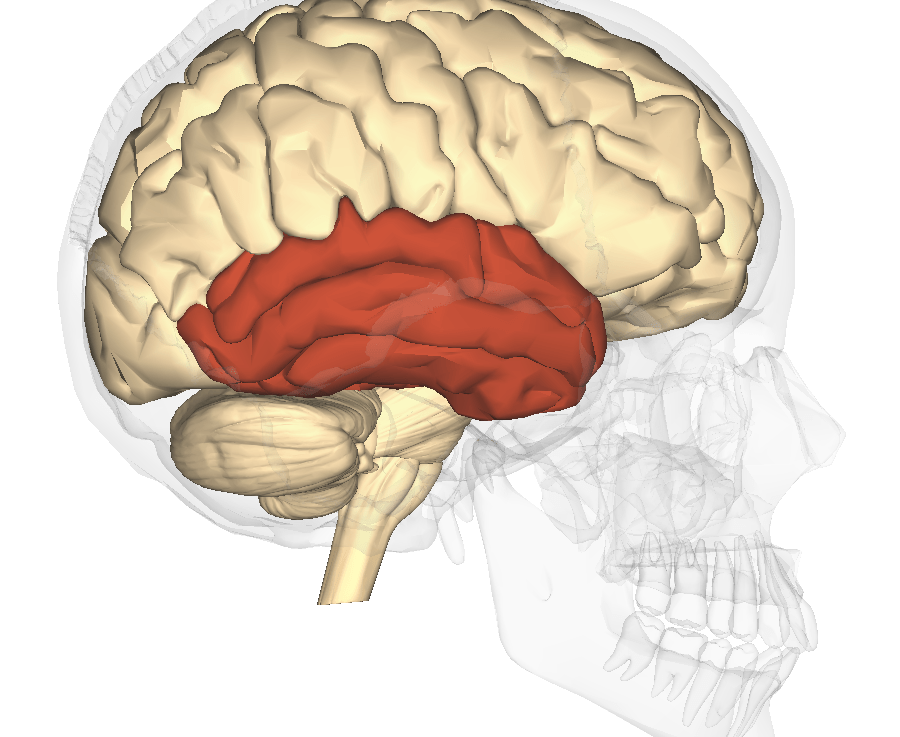
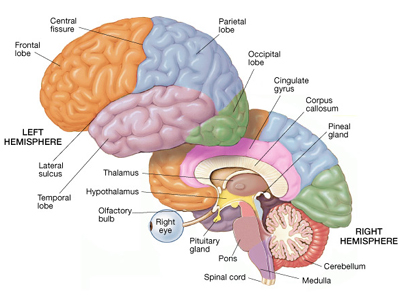
The temporal lobe is one of the four major lobes of the cerebral cortex. The temporal lobe is housed in the back-lower-left part of the brain. The temporal lobe is responsible for processing sensory input, , appropriate retention of visual memories, Language comprehension, and emotional association. The temporal lobe hosts the primary auditory cortex, which is responsible for semantics comprehension in humans. People with damage to the temporal lobe often have trouble recalling visual stimuli,

The cerebral cortex Part II

The cerebral cortex Part II

The cerebral cortex Part II                  05/12/16


Connecting the two hemispheres of the brain is a band of nerve fibers known as the Corpus Callosum. Furthermore, on the back end of the brain is a region known as the Frontal lobe. This is where the majority of our personality is housed, and gives us capacity for emotional and abstract thought. Two very important areas in this region are the Motor cortex (which houses the motor neurons, which in turns control the movement of our body) and the Broca’s areas (which gives us the ability to control our mouths and create speech). In addition, there are the Parietal lobes, which houses the Sensory cortex (which controls our sensory neurons, which allows us to feel sensations). In the back of the brain there is the occidental lobe which receives input from the eyes to create vision for individuals.


The cerebral cortex Part I

The cerebral cortex Part I

   The cerebral cortex Part I                    05/11/16


The cerebral cortex is by far the most important area of the human brain, granting it the capability for advanced reasoning skills, personal identity, and essentially what makes us human. The cerebral cortex occupies the covering surface of the brain. Because the human brain is so powerful, it takes up a larger than average percentage of our brain then average. Having a large head could have made childbirth problematic, but luckily evolution is an ever-so foresightful force, so it decided to pack the cerebral cortex into fissures that are found all over the surface. If you were to unfold the cerebral cortex, it would be as pig as full pizza! To streamline cognition, the cerebral cortex is divided into two hemispheres, the left and right hemispheres. Serious note: Contradictory to popular opinion, this brain divide has no influence on personality, having a preference for a certain part of the brain does not result in being more “creative” or more “logical”, such an idea is merely pseudoscience.  

Shock waves

Shock waves

         Shock waves           05/10/16


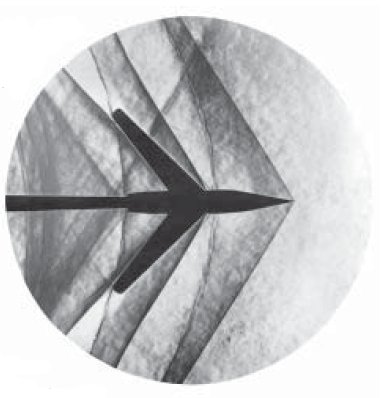
When an item goes so fast through a fluid medium than the local speed of sound, a most disruptive phenomena known as a shock wave occurs. This occurs when the object shifts to a supersonic speed because before the object was moving at such a speed, the air molecules producing the sound were going faster than the object, and once the object reaches the speed of sound, the fluid molecules will be left behind the object, resulting in a traffic-jam like situation occurs in which the surrounding fluid molecules pile up and cause an almost inconceivable explosion of energy.  

The picture is a Schlirein photograph of a supersonic body

RNA

RNA

    RNA                06/09/16


Have you ever what is responsible for creating and transmitting genetic information? Then you have just wondered about RNA.  RNA stands for Ribonucleic acid. The geometric structure of RNA is one of a single helix, this structure making it more resistant to damage by virulent ultraviolet waves.

The Mariana trench

The Mariana trench

                  The Mariana trench             05/08/16


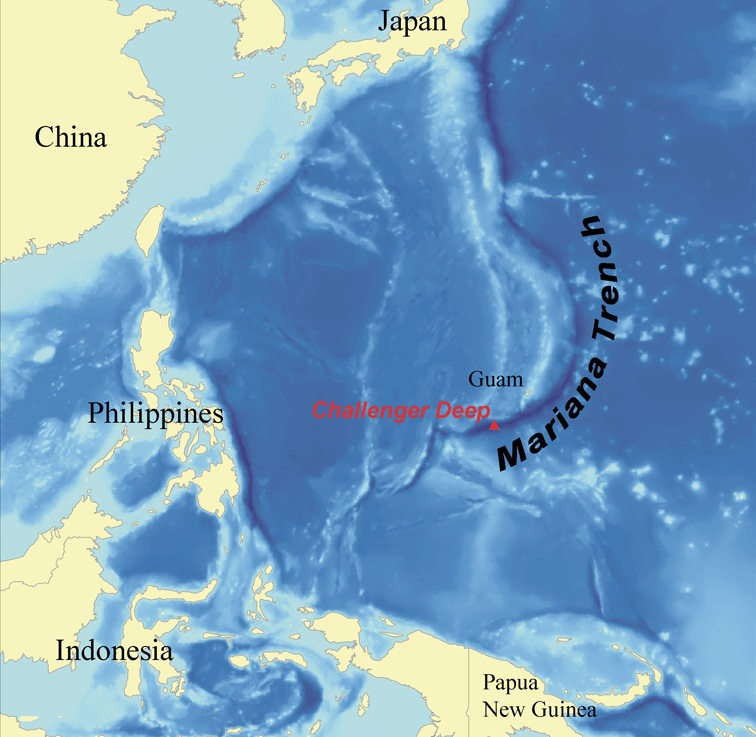
If you think that scaling Mount Everest is challenging, then wait until you hear about the Mariana trench. The tench is the result of the collision of two tectonic plates. The Mariana trench is the deepest part of the world’s oceans. This ominous area goes runs nearly 11 Kilometers deep (By comparison, Mount everest is only 8.4 Km). The Mariana trench is situated near the isle of Guam, putting it in U.S controlled waters.

Diastolic heart failure

Diastolic heart failure

           Diastolic heart failure      05/07/16


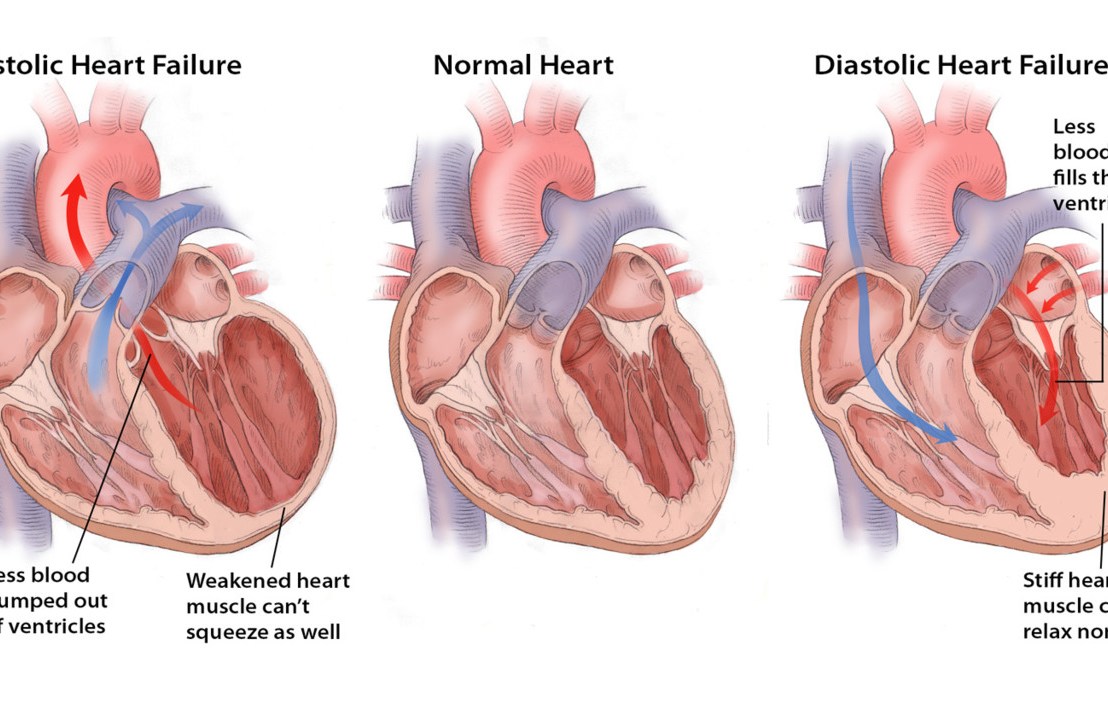
Diastolic heart failure  is when the heart’s lower left muscle becomes to stiff and weakened and to compensate the the heart increases the pressure in the ventricle to properly fill the vesicle. Resultant the lower left chamber is unable to be filled with blood, and much of the blood spills over in to the lungs. The effect is most often caused by aging of the heart.

Wave power

Wave power

Wave power           05/06/16

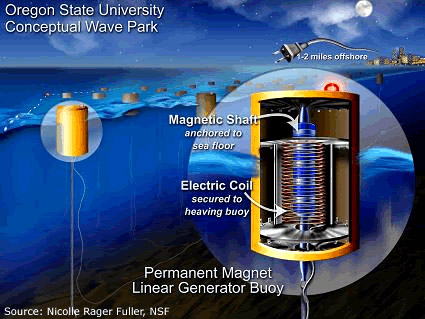
What if I told you that Engineers have built machines that are able to convert the kinetic energy of waves into usable power? This is the very principle behind Wave energy. By capturing the energy propagated by these waves, we can power up to around 40% of humanity’s energy needs.