Tag: Material science

Yield

Yield

Yield

08/29/16

“How can we measure when a deformation will be permanent on a material?”


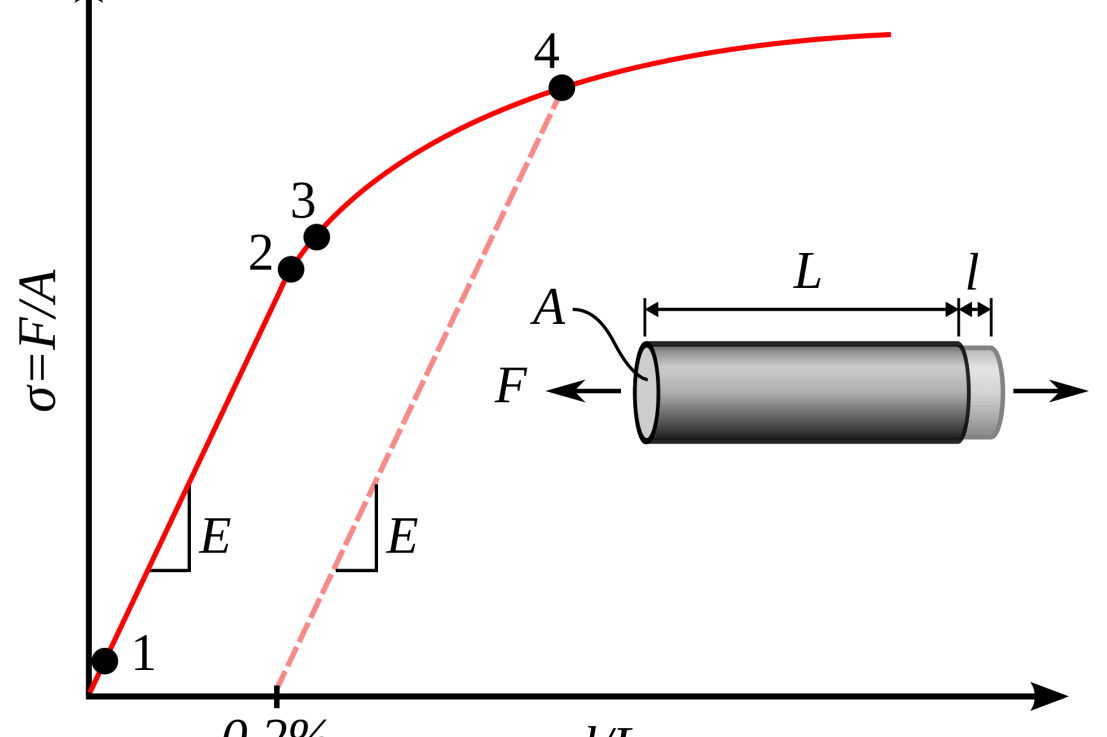
When you were young, you probably noticed that if you apply enough stress onto an object, there will be a point in which in the material will be permanently deformed. However, did you ever consider that we might be able to classify this point in some form? Well, after many years of research, structural engineers have termed this “point of no return” as the yield. In technical terms, the yield point or yield strength is a material property that measures the point at which the level of stress applied becomes so high that the material will no longer deform elastically (meaning returning to it’s original shape) and instead deform plastically (meaning that there is some permanent deformation). The yield strength of an object is very important for estimating the applied strength it can take, since it could be used for pre-emptive failure analysis.
Smart rubber

Smart rubber

Smart rubber

08/23/16

“Are there materials that can “heal” themselves when torn?”


Have you ever had the misfortune of having a rubber material rendered useless just because you’ve torn it? Wouldn’t it be nice to have some form of rubber in which the object can heal itself once it becomes damaged?

Well, how about instead of being in dismay over such an issue, we take action and use our technical mind to solve the problems! First of all, let’s think of the root cause. Rubber materials obtain their strength from the fact that they are composed of multiple polymer molecules being crosslinked through three different ways: Covalent, ionic, and hydrogen bonding. However, only hydrogen bonding can revert to it’s original structure after being deformed. So wouldn’t it be logical that if we only had the rubber composed of hydrogen bonds, then it would be completely mendable?

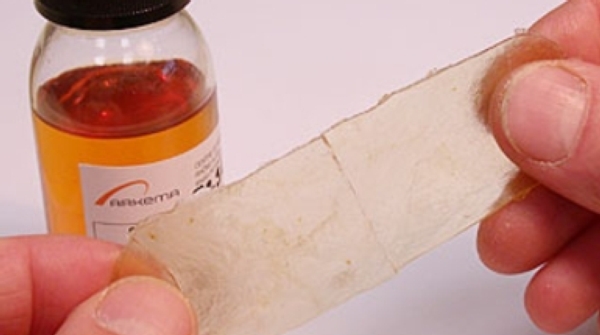
Well, this is exactly the working principle behind smart rubber. Smart rubber is rubber composed entirely of hydrogen bonds, so that it “heal” itself when necessary (at near room temperature). Smart rubber can be used to create items such as shoes and tires that can repair themselves after intense use. Smart rubber is better for the environment since it encourages less waste. The one downside of Smart rubber is that it is weaker than normal rubber by nature, as the material lacks the extra structure of the covalent and ionic bonds.