Tag: Material science

Diffusion couples

Diffusion couples

Diffusion couples

02/26/17

“Why does diffusion happen between two solid materials?”
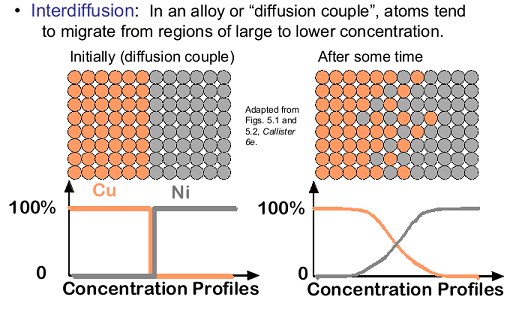
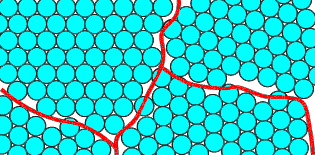
Diffusion is a most fascinating chemical and physical phenomenon, allowing a dense collection of an element to expand and suffuse itself into another. However, What is required for such an effect to occur between two solid items? Well, after many years of research, Materials Scientists and Engineers have discovered a little thing called diffusion couples. Diffusion couples are two items with point defects that are in close contact. When the temperature is elevated, then the atoms of these materials are more likely to moves around, and can “jump” into the holes of its neighboring material. As time approaches infinity, these two materials will become homogeneous with one another, therefore stopping the diffusion process.
Diffusion

Diffusion

Diffusion

02/21/17

“How do substances spread?”
Chemical substances can be found everywhere. However, these objects are almost always never in static position, and will constantly move around. So how can we classify the phenomena of the dispersion of chemicals? Well, after many years of research, Chemists have developed the concept of diffusion. Diffusion is when molecules from a high concentration (dense collection) diffuse into the surrounding environment until an equilibrium state is reached. Diffusion not only happens in fluids but can also occur in solids. Specifically, the atoms in solids are always vibrating, and if there are holes within the lattice, then atoms from neighboring gasses can enter the substance and effect its material properties. An example of this can be seen with piping. If the material of the pipes is not properly designed, then atoms of the transport fluid can merge with the solid material and cause brittleness which will eventually lead to breakdown.

Polycrystals

Polycrystals

Polycrystals

02/20/17

“How do we classify crystals that have their periodicity disrupted?”
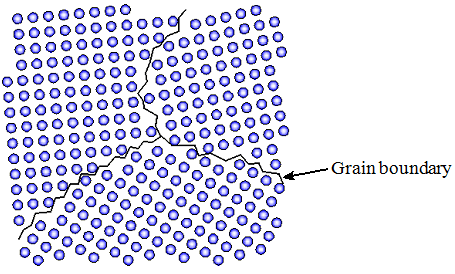
One of the most fundamental properties of crystals is their periodic structure. However, because of the sheer complexity of the physical universe, a perfect specimen is very rare to obtain. Specifically, the smooth periodicity is often disrupted, and the molecules of crystals will be forced into different grains going in different directions. Because these objects are so common, materials scientists and engineers have decided to term these crystals polycrystals. This interlocking nature makes polycrystals stronger than their monocrystalline counterparts as well as more heat resistant.

Crystals

Crystals

Crystals

02/19/17

“What is a crystal?”
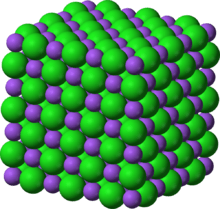
No other material has captivated the imagination of humanity more than crystals. These otherworldly structures have been used for all forms of practices, ranging from pagan rituals to pseudoscientific medical therapies. However, as scientific thinkers, we must not be satisfied with primordial definitions and must analyze what these objects are in their true nature. If one were to shrink down to the size of a molecule and explore the inner fabric of a crystal, then they would find an entire world of atoms fashioned in patterned arrangements. And this is exactly what constitutes a crystal, a solid with a patterned arrangement of atoms! Crystals tend to form when liquids cool and harden, since when the atoms cool they tend to gather together in an ordered manner to form a crystal lattice. Crystals have no “special magical powers” and are as bounded to the laws of nature and you and me.

Crystal defects

Crystal defects

Crystal defects

02/18/17

“How do we classify imperfections in crystals?”


Ideal crystals never exist. For every material arrangement out there, there exists some form of a defect within its structure. Specifically, there will be some form of irregularity through its patterned nature called a crystal defect.These defects can be classified into three distinct types: Point defects (when a single atom in the crystalline lattice is placed out of order), Linear defects (when atom groups are found to be erroneous), and planar defects (two-dimensional errors which include grain boundaries and other mishaps that occur between boundaries in a material). The word defect is actually a misnomer since these phenomena can actually strengthen the properties of a material

Grain boundaries

Grain boundaries

Grain boundaries

02/17/17

“What happens when multiple grains in a crystal collide?”
Polycrystalline materials have grains that flow in numerous different directions. However, to make a continuous object, these grains must coalesce with one another. So what exactly happens at this grain boundary? Well, believe it or not, these grain boundaries actually cause the strength of the material to increase! The reasoning for this is that fragmentation along a material occurs across a row in a crystalline grain, so anything that limits this row will act as a dampener to the system.

Crystal grain

Crystal grain

Crystal grain

02/16/17

“How do we describe when crystals have arrangements in different directions?”
Crystals are fantastic structures, with millions of different molecules being chained together in a uniform pattern. However, sometimes these chains will be in different directions from one another. Because these patterns are so prevalent, Materials scientists and engineers have decided to term this feature in crystals a grain. Grains are a very important property in materials and can have a large influence on the macroscopic behavior of a material

Body centered cubic structure

Body centered cubic structure

Body centered cubic structure

02/15/17

“How are materials such as Tungsten arranged on the molecular level?”
There are countless forms of materials that can be found in the universe. And the reason why these materials are different rests on the geometry of their subatomic arrangement. So let’s take a look at an arrangement called the body centered cubic structure. The atomic arrangement of the body centered cubic structure (commonly referred to as the BCC structure) can be discretized into a chain of cubic divisions. Each cube will contain two atoms, one in the center and ⅛ of another at each corner, giving this a packaging factor of 0.68. Because of this arrangement, materials that use a BCC structure such as tungsten and chromium are typically harder and less malleable than the average atomic arrangement.

Atomic packing factor

Atomic packing factor

Atomic packing factor

02/14/17

“How can we quantify how much of a crystal structure is occupied by its particles?”
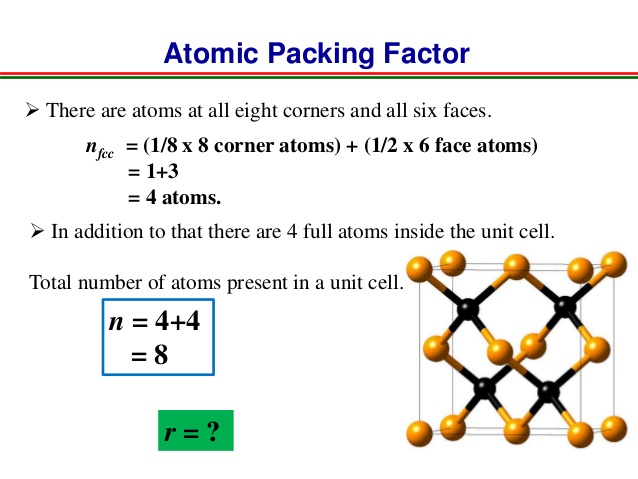
When working with crystals, it can be easy to forget that the entire volume of the structure is not occupied by its constituent particle. Because of this, it can be useful to quantify how much space is actually filled with material. After years and years of hard work and careful research, Materials Scientists have come up with a conceptual tool called an atomic packing factor. The atomic packing factor is calculated by taking the total number of particles in a crystal volume, multiplying it by their volumes and then dividing it by the total volume. This relationship can be quantitatively organized using the equation APF = (Number of atoms *Volume of atoms )/Volume of crystal. This procedure is useful for research in sustainable energy, as one would be able to analyze the properties of different types of photovoltaic crystals for solar panels.