Tag: Electromagnetism

Solar maximizer

Solar maximizer

Solar maximizer           06/05/16

“How can we maximize the effects of a solar panel?”

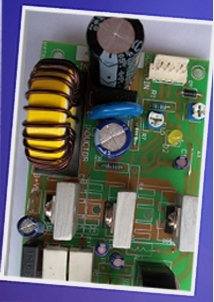
This a pertinent question for any renewable energy engineer. Let us illustrate one potential problems with solar panels. When a solar cells are in series, they are all linked together. Since they often cover a long distance, external effects such as temperature and dust will vary. Consequently, each solar panel will have a different temperature, and the higher the temperature, the less efficient it is. Since a series of solar cells are only as efficient as the hottest one, then we run into a major problem.

Luckily, humanity had the ingenuity to invent the solar maximizer. The Solar maximizer optimizes the solar cells to mitigate the impinging effects of solar cells in series.  
Power inverters

Power inverters

Power inverters            06/04/16

“Is it possible to change a DC current into an AC one?”

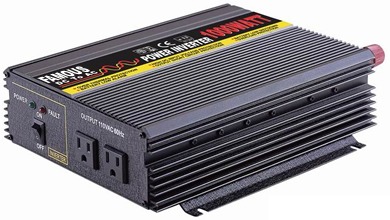
If you need to solve such a problem, then you can look to the help of a device known as a power inverter. Power inverters take DC current as an input current, and then transform it into an AC current using the magic of electronics. Furthermore, these currents can either be sinusoidal or in square form. Inverters can be used for a multitude of purposes such as taser technology and public transportation.

Diodes

Diodes

       Diodes           06/03/16

“Is it possible to limit AC current to only one direction?”

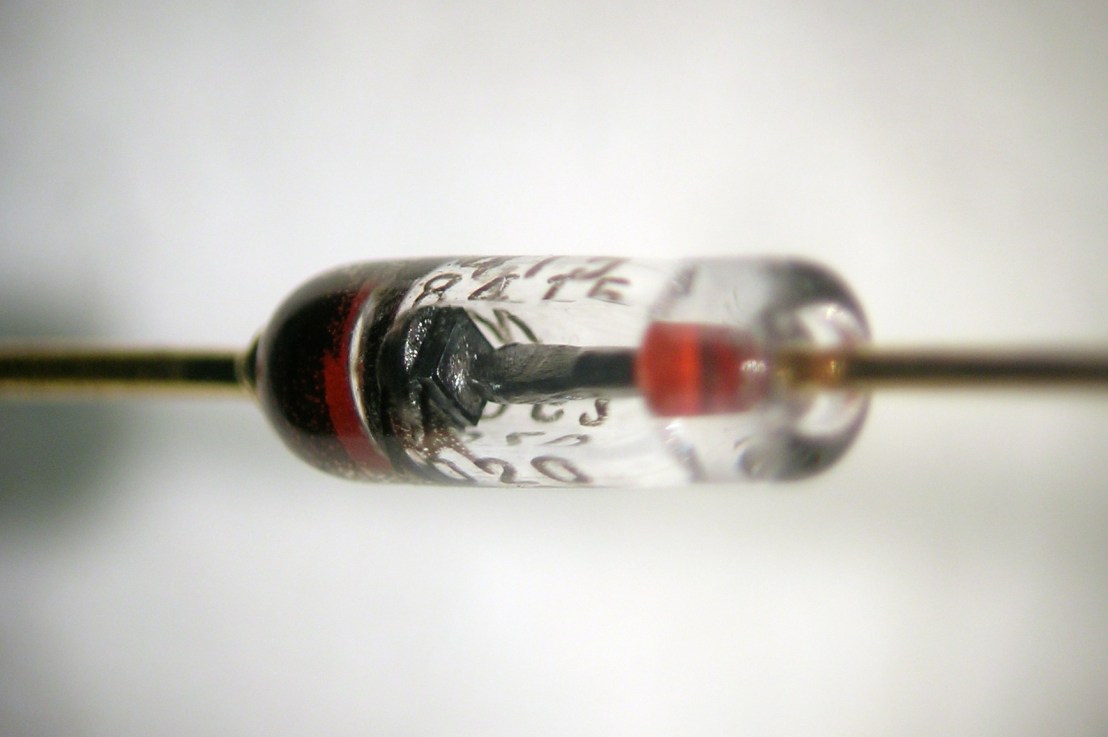
Why yes we can: With the use of a little machine known as a diode, we can accomplish precisely this task. A diode takes in a sinusoidal Alternating current and cuts off the half that is not wanted. This is very useful and can be used in a multitude of applications such as solar electricity

Electric Dipole

Electric Dipole

          Electric dipole           Isaac Gendler

        06/01/16

“What happens when you have a separation of equal and opposite charge?”

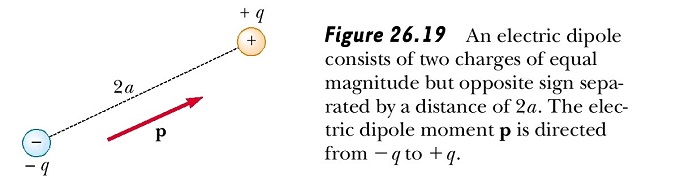
The answer to this interesting little question is that you would end up with an electric dipole. And electric dipole is the separation of an equal amount of opposite charges. Dipoles are characterized by their dipole moment, which is a vector quantity. The dipole moment points from the negative to the positive charge.

Potentiometers

Potentiometers

  Potentiometer 05/25/16

Is it possible to have an adjustable resistor?

If you ask that question, then you have just thought up of Potentiometers.  A potentiometer is simply a variable resistor that can be controlled by the user. Potentiometers accomplish this by having three terminal resistors forming and a load that connect the potentiometer and the voltage source in one loop and the potentiometer and the load in another. Potentiometers have a wide range of uses, ranging from CD players to Servo mechanisms.

Electric Generators

Electric Generators

    Electric Generators 03/14/16
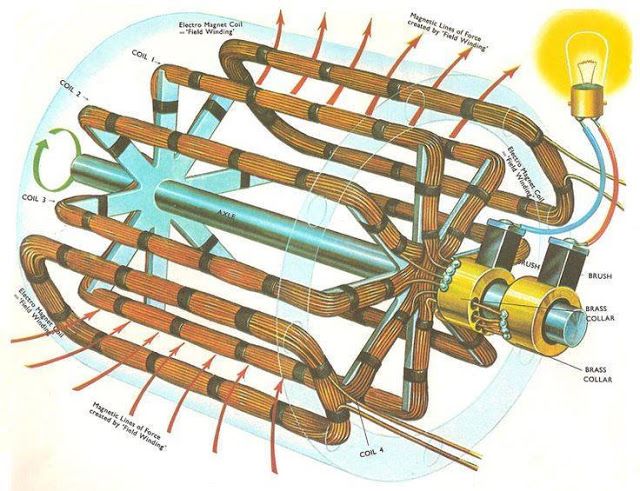
Have you ever wondered how a machine like a wind turbine generates electricity? This task is accomplished through the use of a machine called an Electric generator. The primary principle of an electric generator is to transfer mechanical energy into electrical energy. There are two types of generator: Dynamos and Alternators. Dynamos generate DC current while alternators generate AC current. Usually, the current is generated by using the relationship between electricity and magnetism to induce a current. There are many types of electric generators, ranging from the classical steam driven generator to the sublime magnetohydrodynamic generator.

Transformers

Transformers

Transformers     03/12/16
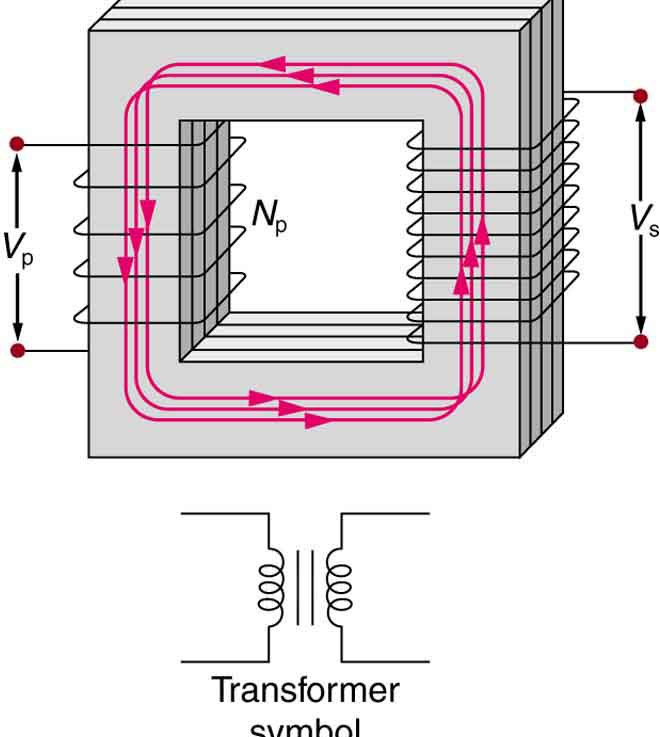
One of the most pertinent devices in the field of electrical engineering are transformers. The function of a transformer is very simple, it changes the potential difference from one value of wiring to another. The mechanism works a follows; The will be two wirings of coil, one on each each side of the transformer. The wire on the left will be hooked up to an alternating current which in turn will cause a magnetic field to be produced. As a by-product of Maxwell’s equations, there will be an voltage difference induced on the second coil. The voltage potential depends on the number of loops that the wire makes. If the wire has more loops then more voltage will be produced and it will be called a step up transformer. If there is less wiring there will be less voltage and it will be called a step down transformer. The equation for a transformer is VsVp=NsNp, with Vsbeing the secondary voltage Vpbeing the primary NsBeing the number of loops in the secondary and Np being the number of loops in the primary. As one can observe, The voltage ratio is directly proportional to the Loop ratio. Power also is assumed to be conserved for Mathematical purposes, so we can derive that V1I1=V1I1by using the fact that P1=P2and that P=IV.

Inductor

Inductor

         Inductor       03/07/16


Inductors are some of the most fundamental components of the modern day circuit. An inductor usually consists of conducting wire wrapped into a coil, and since a current will run through this wire, a magnetic field will be produced. As a result of Maxwell’s equations, the energy stored in the magnetic field will try to oppose any change in current and a voltage will be created in the inductor. The strength of an inductor is measured by it’s inductance. Inductance is defined as L=i, with Lbeing the inductance , being magnetic flux and ibeing the current. The voltage across an inductor can be symbolically derived by faraday’s law of inductance v=ddtwhich by using substitution leads to v(t) =L*didt. Inductors are widely used to tune out certain frequencies


Kirchoff’s laws

Kirchoff’s laws

Kirchoff’s laws 03/06/16
One of the most pertinent, practical, and sublime tools for understanding circuit theory in electronics is Kirchoff’s laws. Kirchoff’s first law states that the quantity of current going through a junction is conserved going out a junction, or I=0. For a more mechanical analogy, visualize water going through a pipe. In an ideal case all of the water going through one of the pipes will either be distributed to the other two or it will collide with another one to go down the third. Kirchoff’s laws work the same way. Kirchoff’s second law states that the change in voltage across a loop always amounts to zero. One can derive this analytically using the fact that the voltage drop is the same across two parallel lines in a circuit, so consequently their voltage must equal each other and their voltage drop must equal to zero.